The American Stroke Association, a division of the American Heart Association, has launched a new Spanish language website, DerrameCerebral.org, to address stroke prevention and awareness within the Hispanic and Latino community. This move targets the disproportionate impact of stroke on Hispanic individuals, where it is the third-leading cause of death among Hispanic women and the fourth among Hispanic men.
According to the American Stroke Association, this disparity is driven by unmanaged health risk factors, limited access to healthcare, lower health literacy rates, cultural barriers, and socioeconomic determinants of health. The new website offers a digital series of games and activities, the R.Á.P.I.D.O. Experience, designed to educate users on recognizing the warning signs of a stroke. It also provides accessible resources on stroke prevention, risk factors, warning signs, treatment, and recovery, including information for survivors, caregivers, and healthcare professionals.
Dr. Eduardo Sanchez, the American Heart Association’s chief medical officer for prevention, emphasized the importance of addressing language barriers to improve health outcomes. “By addressing the specific language needs of many in the Hispanic and Latino community, we are breaking a barrier that often stood in the way of prompt medical attention,” he stated. The initiative aims to teach the community about life after a stroke and prevention strategies, leading to better health outcomes.
This launch is part of the American Heart Association's centennial celebration, reflecting its commitment to expanding outreach to communities at high risk for stroke and other cardiovascular issues. The website leverages cultural relevance to develop tools and resources that support the Hispanic and Latino community, fostering better health outcomes.
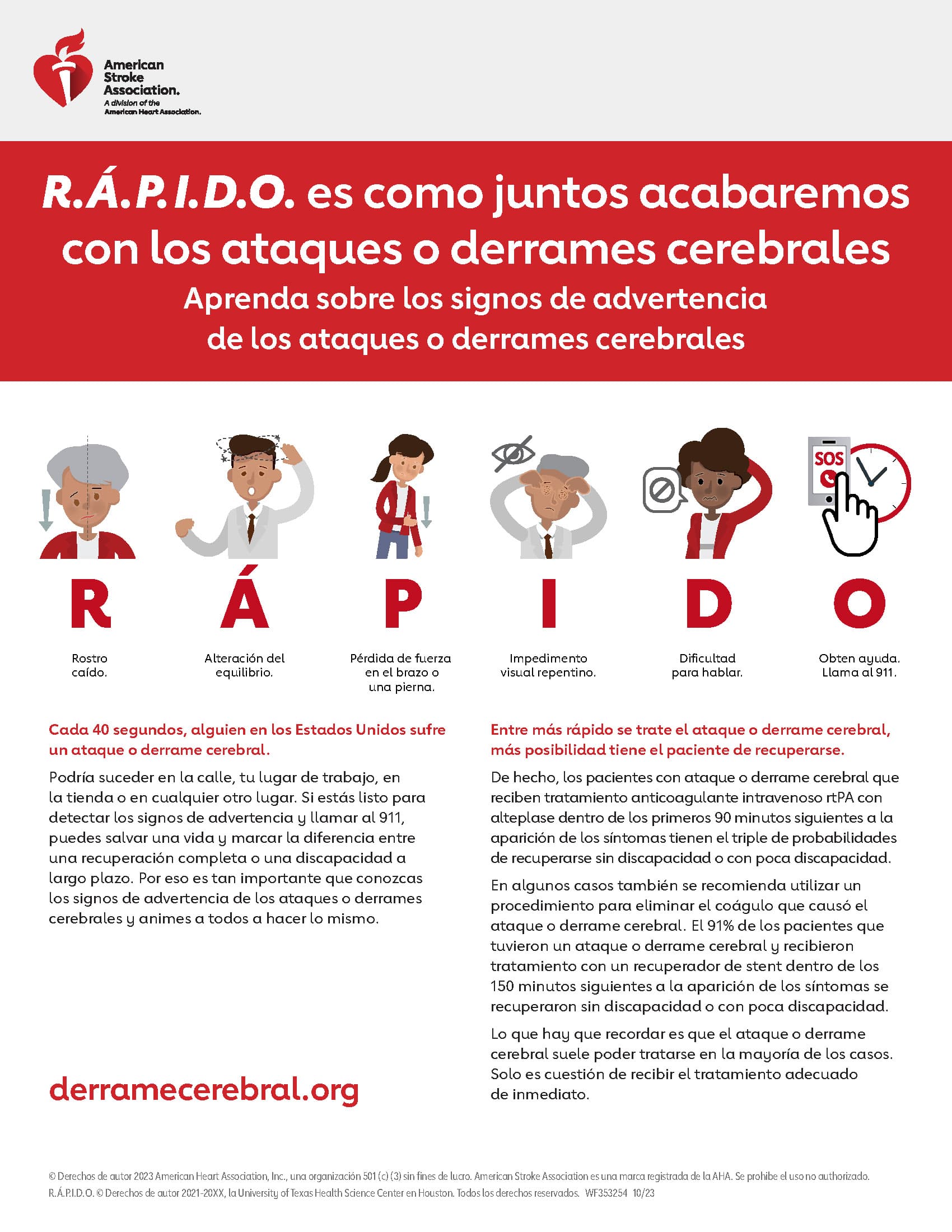
Immediate medical attention is crucial during a stroke, which can happen to anyone at any time. The American Stroke Association recommends learning the signs of a stroke and discussing risk management with healthcare providers. Last year, the Association launched its Hispanic and Latino stroke warning signs campaign with the Spanish acronym R.Á.P.I.D.O., which stands for Rostro caído (Face drooping), Álteración del equilibrio (Loss of Balance, or Lack of Coordination), Pérdida de fuerza en el brazo (Arm weakness), Impedimento visual repentino (Sudden vision difficulty), Dificultad para hablar (Slurred or Strange Speech), and Obtén ayuda, llama al 911 (Get help, call 911).
For more information about R.Á.P.I.D.O. and stroke awareness, visit www.DerrameCerebral.org.