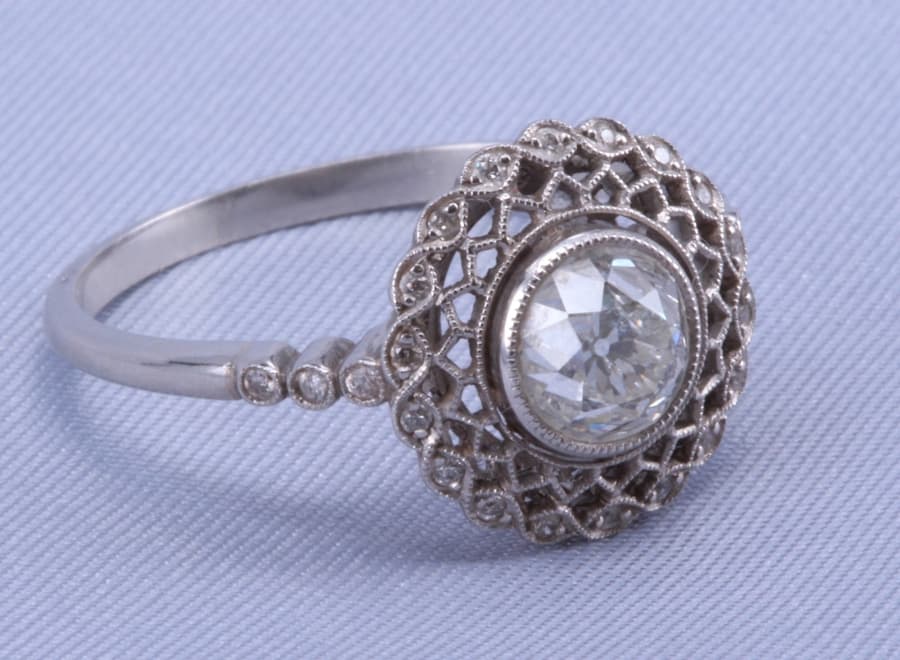
With the 2024 wedding season in full swing, there is a notable surge in interest for engagement rings set with antique cut diamonds, according to Carl Blackburn of C. Blackburn Jewelers in La Jolla, San Diego. Blackburn, a seasoned jewelry designer and second-generation estate jeweler, has observed this growing trend among couples who are drawn to the unique charm and historical significance of antique diamond cuts.
“While antique design accents like hand-milgraining and hand-engraving are always popular,” says Blackburn, “it’s been a bit of a surprise how many couples this year want to discuss antique diamond cuts like the Old European Cut and French Cut.”
Blackburn’s boutique in La Jolla is uniquely positioned to cater to this renewed interest, specializing in both custom-designed engagement rings and as a diamond estate jewelry buyer. Having worked with antique cut diamonds for decades, Blackburn brings a wealth of experience in setting these vintage stones into bespoke engagement rings and in buying antique diamond jewelry from clients.
The main types of antique diamond cuts that today’s couples may want to consider when creating a custom engagement ring include:
Old European Cut: Known for its round shape and high crown, this diamond cut features a small table and large facets that create a distinctive, romantic sparkle reminiscent of early 20th-century jewelry.
Old Mine Cut: Characterized by its cushion or slightly rounded square shape, this diamond cut has a high crown, small table, and a large, open culet, producing a warm, vintage charm.
Old French Cut: With a square or rectangular shape and large facets, this diamond cut is noted for its unique step-cut faceting that enhances the diamond’s brilliance and depth, popular in early 1900s jewelry.
Rose Cut: Featuring a flat base with a domed top covered in triangular facets, this antique diamond cut offers a soft, subtle sparkle and was popular in Georgian, Victorian, and Art Deco eras.
Jubilee Cut: Designed to commemorate Queen Victoria’s Golden Jubilee, this diamond cut combines elements of the Old European and modern brilliant cuts, showcasing exceptional fire and brilliance.
Antique Single Cut: A simple cut with 16-18 facets that delivers a star-like appearance, the single cut diamond is known for its understated elegance and was commonly used in early 20th-century jewelry for accent stones and smaller diamonds.
According to Blackburn, the most popular antique diamond cut is the Old European Cut, due to its romantic, vintage aesthetic, and distinctive sparkle, making it a beautiful choice for the center diamond of an engagement ring.
This trend towards antique diamond cuts reflects a broader desire among modern couples to personalize their engagement rings with elements that have historical and sentimental value. As more couples opt for these unique and timeless designs, the jewelry industry may see a resurgence in the demand for antique and vintage-inspired pieces.