

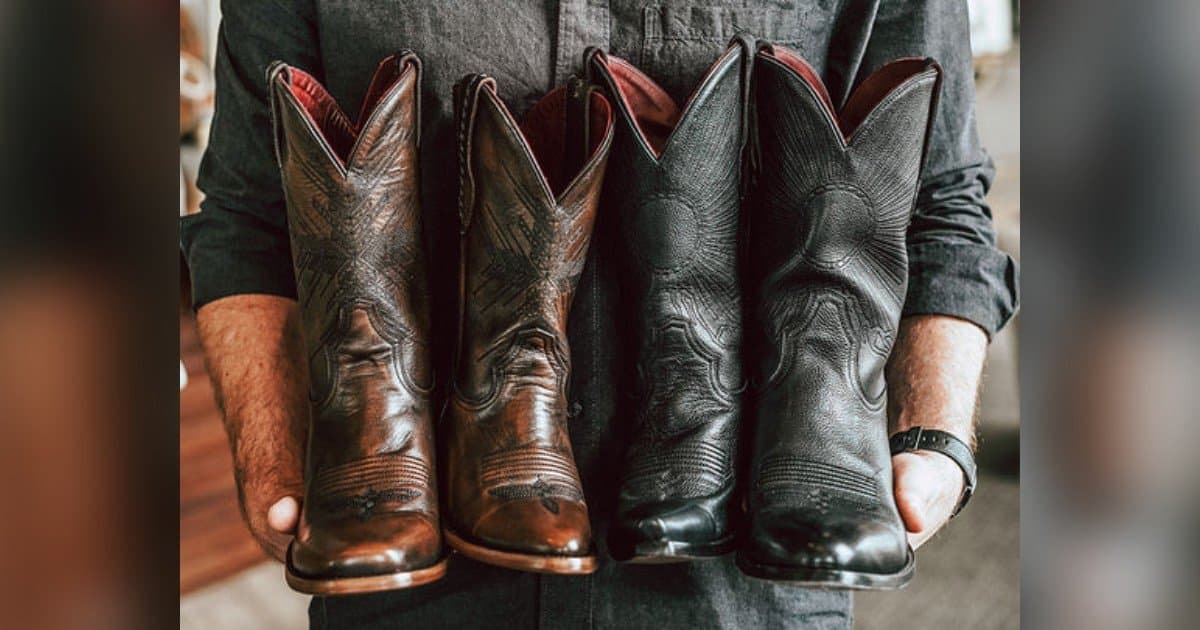
Chisos Boot Company, the Austin-based bootmaker founded in 2019 by Will Roman, is making a quiet but pointed argument about how cowboy boots should be made: start with the hide, not the marketing. The family-owned company does not use calfskin, instead choosing heritage cowhide from mature dairy cows because those hides are tough enough for boots meant to be worn hard, repaired repeatedly, and kept for decades. The choice also reduces demand for juvenile-animal harvesting. “We work with tanneries that source from dairy farms and we don’t use juvenile leathers,” Roman said. “We’re very particular about the standards that the entire supply chain is using when we pick a leather or any of our materials.”
That supply-chain focus extends to how the boots are built. Structural interiors—the hard insole, outsole, heel counter, and toe box—are vegetable-tanned leather, designed to conform to the foot over time, hold shape, and accept a cobbler’s work later. Chisos also describes a lead-free tanning approach and develops its own heritage leather character rather than chasing uniform, disposable fashion stock. On the outside, Goodyear welt construction with a leather channel welt allows the sole to be replaced without discarding the boot. Lemonwood pegs and brass nails move with the leather instead of fighting it, while a stacked leather heel and steel shank keep the architecture honest under daily miles. A removable comfort insole helps people actually wear the boots all day, turning “built to last” from a slogan into a life cycle. “We’re conscious of the durability of that boot, the longevity, how it’s going to move and adjust to you over time,” Roman said.
Channel welting takes more skill and more time, but Chisos does it anyway. “We think it’s the best way, and we think it’s worth it,” Roman said. In July 2026, the company followed its materials message with a care message: proper boot care is not a snap of the fingers after months of hard wear but a brush, conditioner, and time. Chisos sells its own leather balm so owners can keep leather conditioned, ready for weather, and improving with age instead of drying out. Roman’s practical list includes rotating pairs, pulling the comfort insole to let the boot dry, using cedar boot trees to manage moisture and salt from sweat, conditioning on a cadence, and adding a cobbler-applied rubber sole saver or a future leather resole for wet or abrasive miles.
“The type of legacy I want to leave does not allow me to cut corners, because then I would know,” Roman said. “And I know that the type of people drawn to Chisos are similar. They don’t cut corners in their lives, and they hold us to a higher standard as well.” In a category crowded with short product cycles, Chisos treats longevity as the real sustainability play: fewer pairs discarded, more pairs resoled, hides chosen for the long haul, and care instructions published in public instead of buried in a warranty. The company’s boots, leather balm, and care guidance are available at Chisos Boot Company and at its Austin headquarters. For an industry often criticized for planned obsolescence, Chisos’s approach offers a test case: whether consumers will pay for repairability and supply-chain transparency, and whether competitors will follow.
