

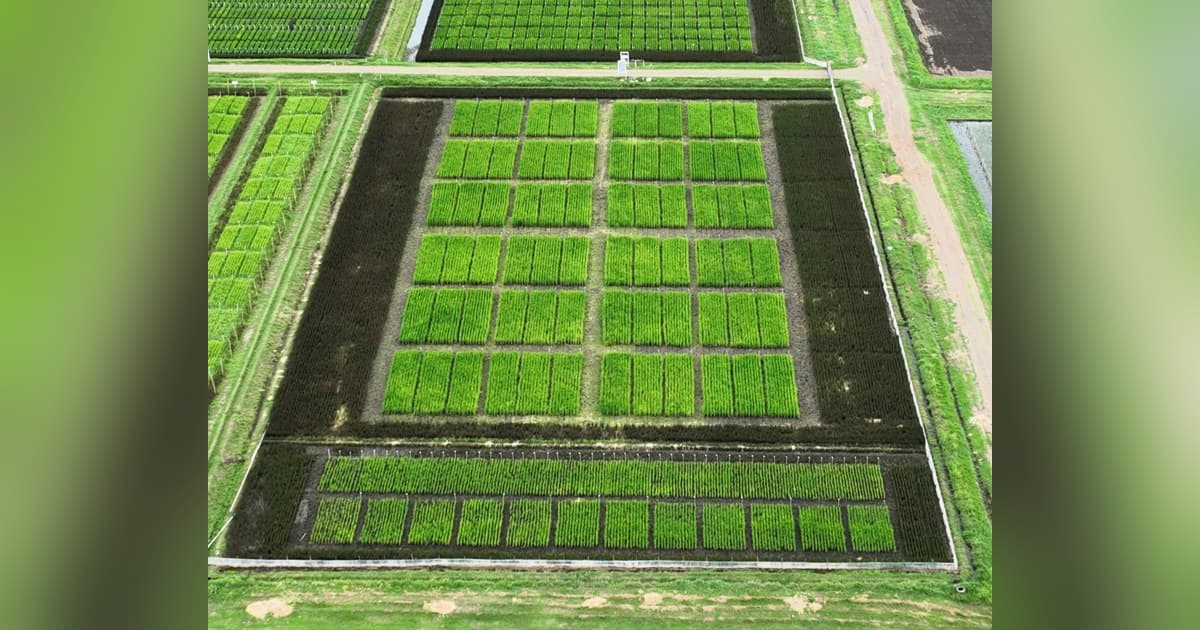
Rice farmers in South Asia face mounting pressure from water scarcity and labor constraints, making direct-seeded rice (DSR) an increasingly attractive alternative to traditional flooded production. DSR uses less water and produces fewer emissions, but it also carries risks to yields. A new partnership aims to address those risks with a technology that could be deployed without changing on-farm practices.
BioLumic and the International Rice Research Institute (IRRI) have launched field trials in the Philippines to test light-activated seed technology designed to help farmers protect rice yields while cutting water use and methane emissions in direct-seeded systems. The program advances the technology toward commercial deployment across major rice-growing regions, with support from the Gates Foundation. Full details of the announcement are available here.
The technology at the center of the trials is BioLumic’s xTraits platform, which uses light to activate or suppress gene expression in seeds without chemical inputs or genetic modification. By harnessing photomorphogenesis as a natural biological switch, xTraits unlocks trait potential already present within the seed, enabling targeted trait activation without altering on-farm growing practices. Founded in 2013 and based in the U.S. and New Zealand, BioLumic says its patented platform delivers heritable gains in yield, resilience, and nutrition with no genetic modification, no rebreeding, and no regulatory burden. More information about the company is available at www.biolumic.com.
IRRI, a member of CGIAR, the world’s largest agricultural research partnership dedicated to a food-secure future, is dedicated to abolishing poverty and hunger among people and populations that depend on rice-based agri-food systems. Through its work and partnerships, the institute aims to improve the health and welfare of rice farmers and consumers, promote environmental sustainability in a world challenged by climate change, and support the empowerment of women and the youth in the rice industry. More about the institute’s mission is available at IRRI.
For the agriculture industry, the trials represent a potential step toward commercial deployment of a seed treatment that could be integrated into existing breeding and seed production pipelines. If successful, the technology could offer farmers a way to adopt lower-water, lower-emission rice production without sacrificing yields, a combination that has been difficult to achieve at scale. The involvement of the Gates Foundation signals philanthropic interest in scaling solutions that address both food security and climate impact.
The outcome of the field trials will be closely watched by seed companies, researchers, and policymakers across major rice-growing regions, where water availability and methane emissions are pressing concerns. The program’s progress toward commercial deployment could influence how quickly DSR systems become a viable option for farmers facing increasing environmental and economic pressures.
