

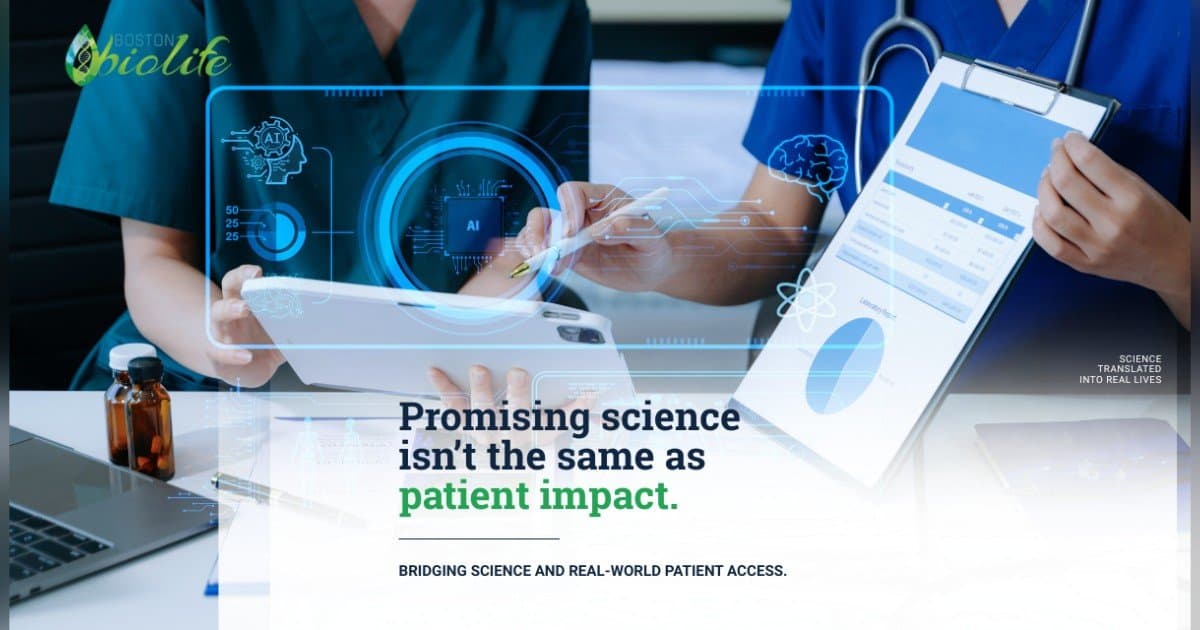
Boston BioLife, a Boston-based organization founded in July 2015 to help physicians and scientists understand emerging developments in regenerative and translational medicine, will co-present the Translational Longevity Summit from October 7-11, 2026, at Harvard's Enterprise Research Campus in Boston. The event, presented with the Healthspan Action Coalition as part of Boston Longevity Week, marks a significant expansion of Boston BioLife's founding mission to bridge the gap between emerging science and clinical medicine.
The summit will convene leaders from science, medicine, technology, patient advocacy, policy, and investment to examine how promising discoveries can be responsibly evaluated, translated, and advanced toward meaningful clinical application. Discussions will explore aging, healthspan, regenerative medicine, personalized care, and the scientific and practical challenges involved in moving new discoveries from research environments into responsible real-world use.
Joseph P. Krieger, founder of Boston BioLife, views the summit as a pivotal milestone. "When I founded Boston BioLife, the goal was to help physicians understand emerging science and determine how it could responsibly contribute to better patient care," Krieger said. "Eleven years later, this summit gives us the opportunity to expand that conversation across the entire translational ecosystem—from researchers and clinicians to patients, policymakers, and investors."
Krieger's path to Boston BioLife began with an education in biochemistry and a career in medical-device technology and physician training. While creating educational programs around radiofrequency ablation and other medical technologies, he recognized that successful clinical adoption required more than introducing a new device or discovery. Healthcare professionals needed to understand the underlying science, appropriate applications, limitations, regulatory considerations, and patient-safety implications. That realization became the foundation of Boston BioLife.
In a 2016 BioInformant interview, Krieger described the organization's purpose as facilitating the understanding of life-science technologies in clinical medicine and helping move innovation from "bench to bedside." He emphasized the importance of accurate research, regulatory awareness, and patient safety—principles that continue to inform Boston BioLife's educational mission today.
The Translational Longevity Summit extends that work into the rapidly evolving field of longevity. The summit will also emphasize cross-sector collaboration. Researchers, physicians, industry leaders, technology developers, patient advocates, policy voices, and investors each play a role in determining how emerging science is studied, funded, regulated, understood, and ultimately made accessible.
Patient participation will be an important part of that conversation. People living with illness and age-related conditions bring essential perspectives on urgency, daily function, treatment burden, and unmet needs. Their involvement can help ensure that research, education, and innovation remain connected to the people medical progress is intended to serve.
"Translation does not happen within a single laboratory, company, or medical practice," Krieger added. "It requires researchers, clinicians, patients, regulators, advocates, and responsible industry partners to ask better questions together. That is the community we are bringing together in Boston."
For a Massachusetts native who built his career near Boston's medical, academic, and scientific institutions, holding the summit at Harvard's Enterprise Research Campus carries particular significance. The location brings Boston BioLife's original educational mission into an environment created to encourage research, innovation, and collaboration.
Event information and registration are available at Translational Longevity Summit. More details about Boston BioLife can be found at Boston BioLife, and information about the Healthspan Action Coalition is available at Healthspan Action Coalition. The summit is part of Boston Longevity Week.
Eleven years after its founding, Boston BioLife's purpose remains consistent: to help the healthcare community understand emerging science and evaluate its potential relevance to patient care. In October, that enduring mission will bring a broader community together in Boston to address one of longevity medicine's most important challenges: translating scientific promise into responsible, measurable progress.
