

Luxury home buyers in the Camelback Mountain corridor are rethinking what privacy means, trading the large lots long associated with Paradise Valley for smaller, guard-gated communities that offer security, low upkeep and a central location. The shift is drawing seasonal and relocating buyers from across the country and could signal a broader change in how high-end desert real estate is valued.
For decades, privacy near the mountain meant an acre or more in Paradise Valley. Today, many buyers are weighing that trade-off differently, according to Claire Ackerman, Team Lead of The Ackerman Team at Compass in Scottsdale. She says buyers in the Camelback corridor are arriving from California, Washington, Texas, Colorado and the Chicago area, and the mix is shifting. "We see a lot more East Coast coming now than just the West Coast," Ackerman says. Some move for work as large employers relocate staff to the Valley; others are retired or working remotely and buying a second home, or moving closer to children and grandchildren already living here. At this price point, most are adding a home rather than replacing one, she says.
Taxes and weather are frequent motivations. Relocating buyers often cite higher property taxes in the states they leave, while January and February afternoons in the Valley often reach the 70s and 80s, though desert nights cool quickly. Seasonal residents typically stay from November through April or May, giving them up to eight months of mild weather before returning home for the summer heat.
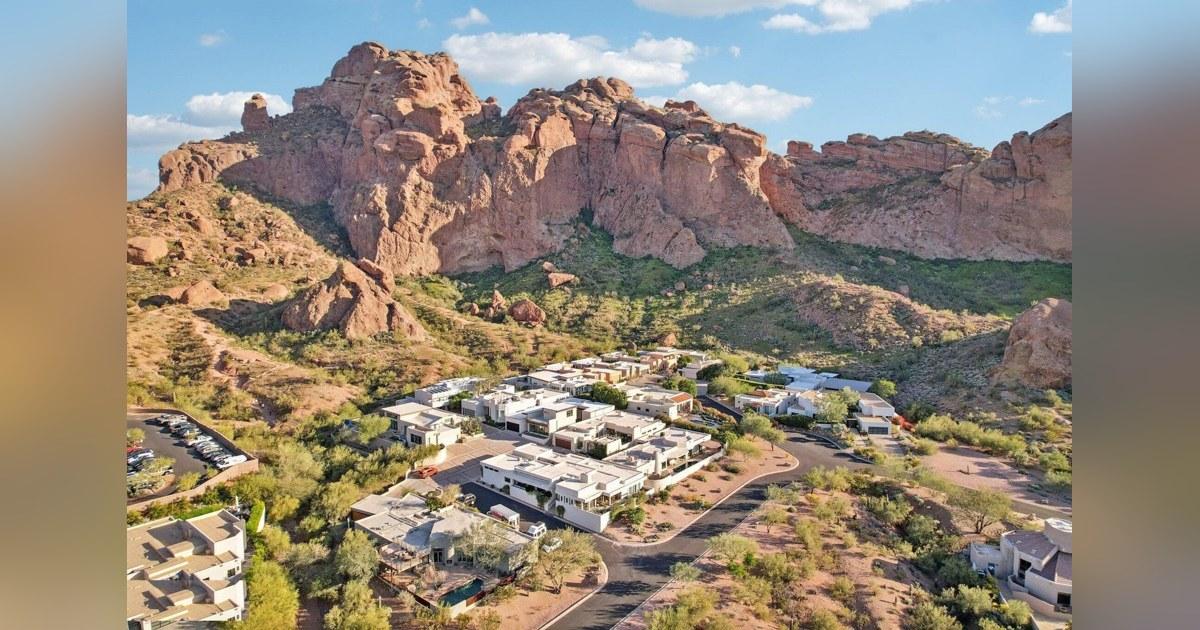
For owners who are away for months, security shapes the search. Gated communities are common in Paradise Valley, but Ackerman counts only a handful with a staffed gatehouse. Arcadia is mostly open neighborhoods, and most of the Valley's guard-gated communities are in North Scottsdale, a significant drive from Camelback. Echo Canyon, an 82-home community on the mountain's north side, is one of the few close in, with 24-hour manned security at the entrance. "You can't just pull up and get in the gate," Ackerman says.
Echo Canyon homes carry a Phoenix address, yet residents pass the sign welcoming them to Paradise Valley on the way in. The position gives buyers Paradise Valley surroundings without its typical acre lots, along with less land to maintain. Lot size brings practical differences too: some larger hillside lots in the area rely on septic systems, while the smaller lots in Echo Canyon connect to city sewer.
The community sits beside the parking area for the Echo Canyon trailhead, which climbs toward the rock formation known as the Praying Monk. Streets rise through several elevations, so even a walk around the neighborhood has some grade. Shared amenities are being renovated, with completion expected in January 2027, including a redone pool, a new cabana with a small clubhouse and rec room, and refreshed tennis courts. Within a couple of miles are restaurants around the Global Ambassador hotel, including Steak 44 and The Henry, and The Village health club. Scottsdale Fashion Square is nearby, and Phoenix Sky Harbor International Airport is about eight miles away. None of it is walkable, Ackerman notes, but all of it is close.
Buyer preferences reflect part-time living. Ackerman says luxury buyers are focused on craftsmanship, natural materials, integrated kitchen appliances, considered lighting, functional floor plans and wellness features such as saunas and cold plunges. Low-maintenance layouts, such as courtyard homes, suit owners who are away for half the year, as does smart-home technology that lets an owner check cameras, adjust lighting and heat the spa from an app before arriving.
The implications extend beyond individual purchases. As more buyers split the year between Arizona and their home states, the appeal of the Camelback corridor rests less on land than on access: a staffed gate, a trailhead at the end of the street and an airport a short drive away. That could pressure supply in the handful of guard-gated communities near the mountain and reshape expectations for luxury developments across the Valley. More information is available at claireackerman.com.
