

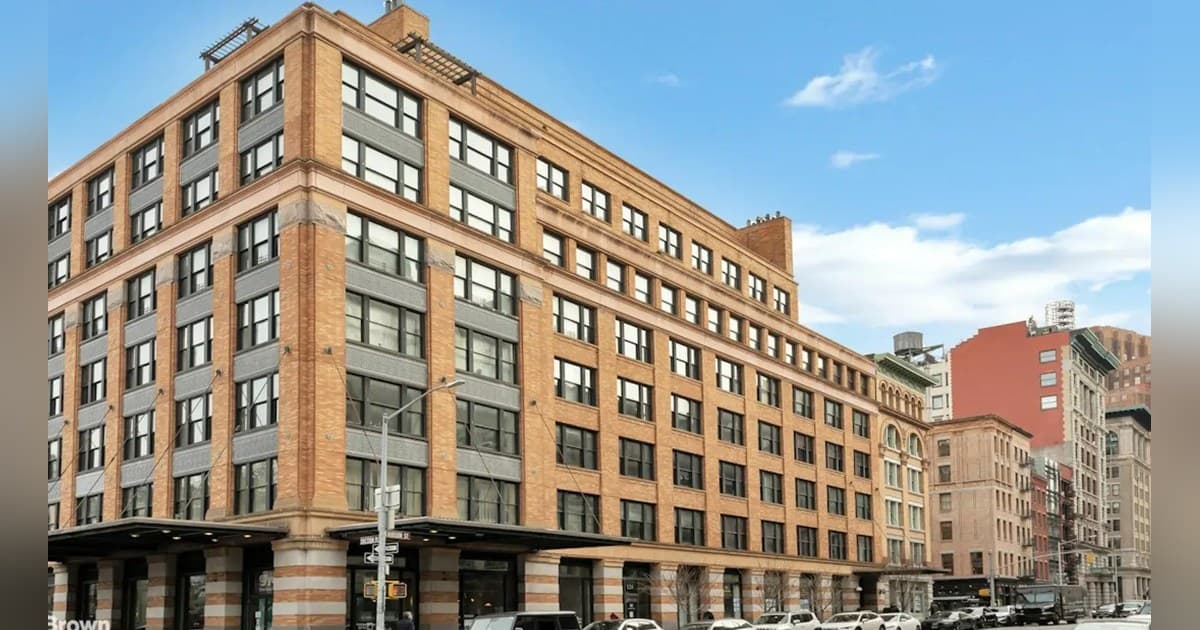
In Manhattan's luxury real estate market, renovated lofts are common, but a home rebuilt by a designer for her own use is rare. That distinction is now on display at 124 Hudson Street #3B, a two-bedroom, 2,100-square-foot condominium in Tribeca listed by Sophie Ravet of Brown Harris Stevens. Interior designer Sharon Rembaum, whose work has appeared in Architectural Digest, ELLE Decor, and House Beautiful, rebuilt the apartment down to the joists as her own residence.
The listing matters beyond its walls. In a market where sellers often finish spaces to photograph well and appeal to the broadest pool of buyers, Rembaum's approach was the opposite. "It was not designed and created for resale," Ravet said. "It was for herself." That raises a question with implications for buyers, sellers, and developers: what does a designer do differently when the client is herself, and does that difference translate into value?
The answer begins with scope. The apartment retained original finishes from the building's 2000 completion, and Rembaum replaced the kitchen, bathrooms, and ceilings, adding a soundproofing system. She designed lighting from scratch in layers, a step Ravet says many architects overlook. Just as telling is what she kept: the scale of the rooms and the 10-foot ceilings drew her to the apartment, so she preserved both and left plumbing in place. Rather than move walls, she enlarged closets and built storage into nearly every surface. "She really utilized every single inch of the space in an intelligent, thoughtful, deliberate way," Ravet said.
Those choices shape daily life. The living room centers on a gas fireplace with a new firebox and hearthstone, surrounded by floating shelves and built-in cabinetry that conceal the television. Limewashed walls and flangeless recessed lights give the room a warm finish. The open kitchen features Calacatta marble countertops and backsplash, an oak island on a bronze toe-kick, a custom bronze hood, and Gaggenau appliances. In the primary bedroom, bespoke millwork and a walk-in closet add storage, while the primary bath includes marble, Waterworks fixtures, radiant floor heating, and heated towel racks. A bifold door of iron and brass closes off a den that can serve as an office or guest room.
The building reinforces the apartment's appeal. 124 Hudson Street holds only 26 residences, nearly all large, and 3B is one of the smallest. Ravet, who has sold three apartments in the building, says buyers at this level prefer neighbors whose homes are comparably sized, supporting values across the building. Instead of amenities, the condominium offers a full-time doorman, a live-in superintendent, and a landscaped interior garden. The residence faces west, and because Hudson Street runs unusually wide, direct sun reaches the rooms from about 1:30 in the afternoon, especially in winter. Morning light reflects off a limestone facade across the street.
The neighborhood completes the picture. Tribeca has changed over two decades but retained its character, with longtime institutions such as Walker's and Bubby's around the corner. Unlike SoHo, it never became a shopping destination. "It's quiet, but it's not desolate," Ravet said. "And it is incredibly charming." Residents entertain at home more often than in neighborhoods with smaller apartments, and Hudson River Park has remade the waterfront over 20 years.
For the market, the lesson is clear. Rembaum built the apartment to live in, not to sell, choosing every finish with the long run in mind. "It will age beautifully," Ravet said, "because it doesn't follow any trends." In a sector where trend-driven renovations can date quickly, that discipline may prove the most valuable feature of all.
