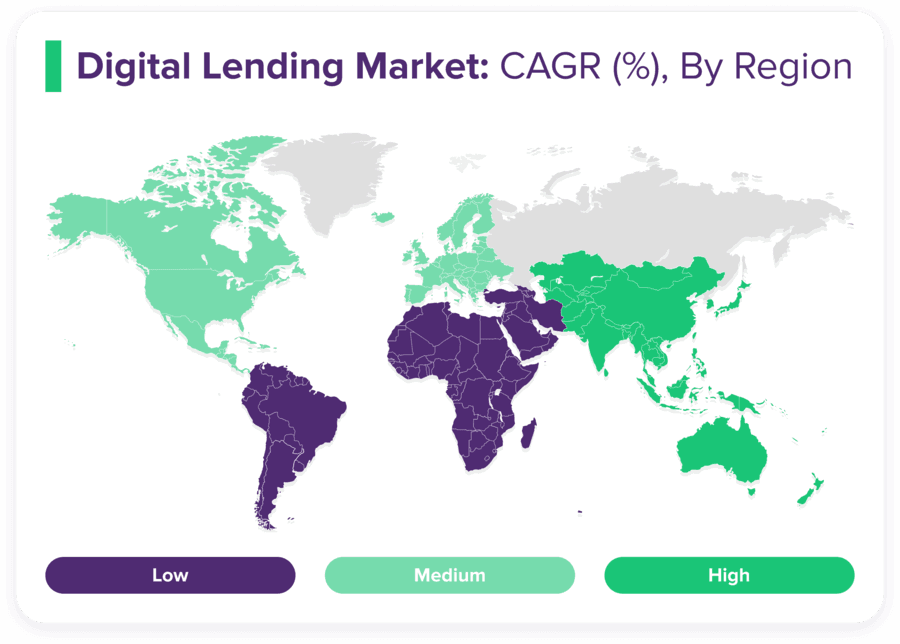
The digital lending market is poised for explosive growth, with a new report from Singapore-based fintech company ROSHI forecasting the sector to reach $795.34 billion by 2029. This projection, representing a compound annual growth rate (CAGR) of 11.90%, underscores the rapid transformation of the financial services industry.
According to the report, artificial intelligence is playing a pivotal role in this expansion. AI-powered lending models are expected to enhance credit risk assessment, potentially improving performance by 10-15% compared to traditional models. This advancement could lead to more accurate lending decisions and potentially lower default rates.
The peer-to-peer lending market, a key component of digital lending, is projected to experience even more dramatic growth. The report estimates this sector will surpass $705.81 billion by 2030, growing at a CAGR of 26.7% from 2022 to 2030. This rapid expansion indicates a significant shift in how individuals and businesses access credit, potentially disrupting traditional banking models.
Decentralized Finance (DeFi) emerges as another major trend in the digital lending landscape. Valued at $13.61 billion in 2022, the DeFi market is expected to expand at a remarkable CAGR of 46.0% from 2023 to 2030. This growth trajectory suggests that blockchain-based financial services could play an increasingly important role in the lending ecosystem.
The report also highlights the growing influence of open banking, noting that by January 2024, 13% of digitally active consumers in key European markets were using open banking services. This trend towards greater data sharing and interoperability between financial institutions could further accelerate innovation in digital lending.
ROSHI Founder and CEO Amir Nada emphasized the significance of these findings, stating, "We're witnessing a seismic shift in financial services." The implications of this shift are far-reaching, potentially affecting traditional banks, fintech startups, regulators, and consumers alike.
For investors, the projected growth in digital lending presents significant opportunities. However, it also signals potential challenges for traditional financial institutions that may need to adapt quickly to remain competitive. Regulators will likely face pressure to develop frameworks that can keep pace with rapidly evolving technologies while ensuring consumer protection.
As the digital lending market continues to expand, it may lead to increased financial inclusion, providing access to credit for individuals and businesses previously underserved by traditional banking systems. However, this growth also raises questions about data privacy, cybersecurity, and the potential for systemic risks in a more decentralized financial ecosystem.
The ROSHI report serves as a wake-up call for all stakeholders in the financial services industry. As digital lending platforms approach the $800 billion mark, it's clear that the future of finance is increasingly digital, data-driven, and decentralized. How institutions and regulators respond to this transformation will shape the financial landscape for years to come.