

The Duquesne Family Office LLC, the investment firm of Stanley F. Druckenmiller, has joined Q.ANT's Series A funding round, bringing the German photonic computing company's total funding to $80 million - the largest financing round for photonic computing in Europe. This substantial investment will accelerate commercialization of Q.ANT's light-based processors, drive next-stage technology development, and support the company's expansion into the U.S. market.
The timing of this investment reflects growing recognition that current AI infrastructure faces fundamental energy constraints. Worldwide spending on AI-related data center infrastructure is projected to exceed $5.2 trillion over the next five years according to a McKinsey forecast cited in The Economist. However, this explosive growth confronts a critical limitation: energy consumption. As data centers consume increasing shares of national power grids, efficiency has become the defining constraint on AI progress.
Q.ANT addresses this challenge through photonic processors that compute natively with light, delivering the precision and performance AI and high-performance computing demand while using only a fraction of the energy required by electronic chips. Dr. Michael Förtsch, founder and CEO of Q.ANT, stated that "AI is pushing the limits of global resources - energy, hardware, and capital. At Q.ANT, we achieve performance through efficiency, not brute power alone, redefining how AI can scale."
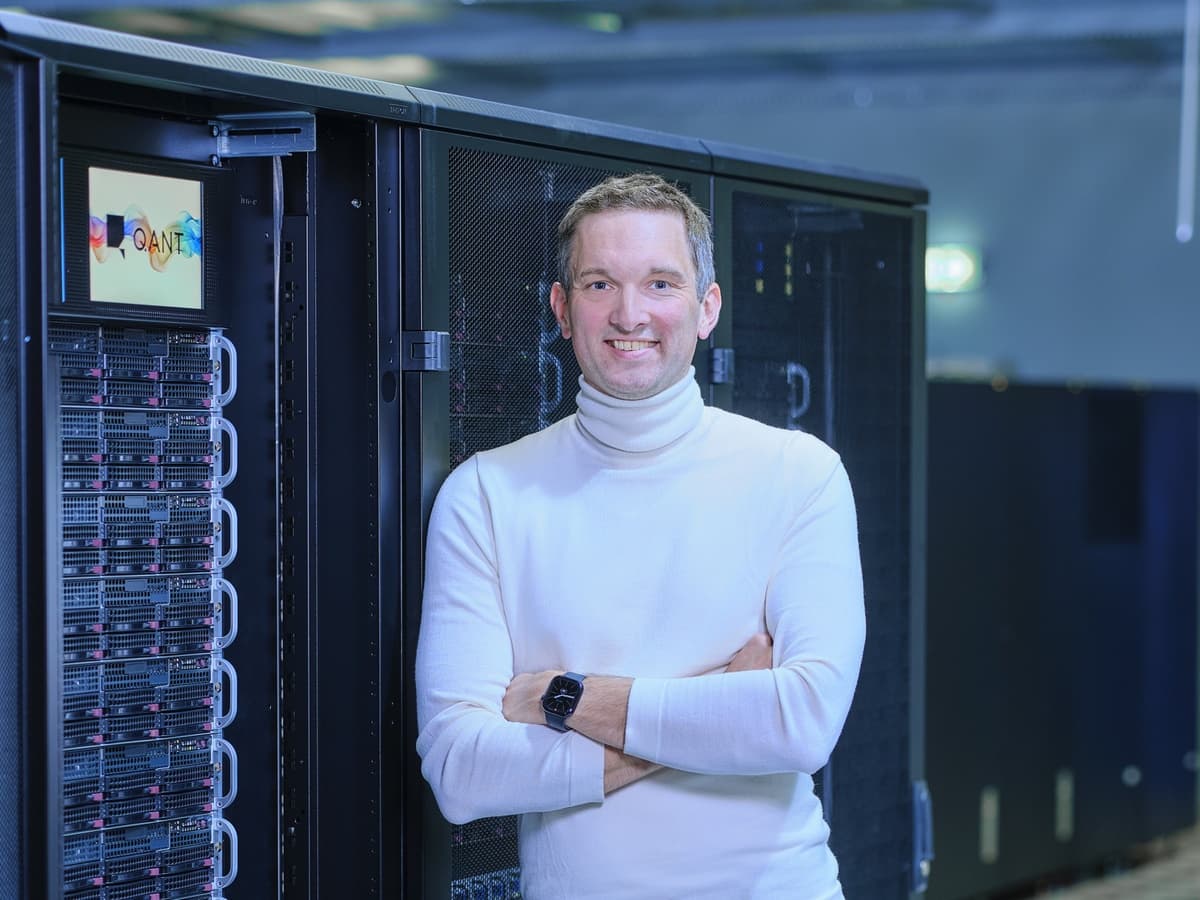
The company has achieved a significant technological milestone by bringing to market the world's first commercial photonic processor for real-world AI and HPC workloads. Built on Thin-Film Lithium Niobate material, the Q.ANT Native Processing Server integrates seamlessly into existing data centers as a plug-in co-processor. Early benchmarks show remarkable improvements: up to 30x greater energy efficiency, 50x performance gains, and potential to increase data center capacity by 100x - all without requiring active cooling systems.
Industry analysis supports the strategic importance of photonic computing. In its Emerging Tech: Emergence Cycle for Generative AI report, Gartner states that "conventional computing systems are severely constrained when it comes to solving the emerging information processing challenges posed by GenAI." The report further notes that "photonic computing has several potential benefits over electronic computing, including increased bandwidth, processing power and storage, all while keeping energy and power consumption under control."
Q.ANT's technology achieves 16-bit floating-point accuracy equivalent to modern digital processors while retaining the continuous advantages of analog computing. The company has become the first to combine this level of precision, performance, and industry integration in one sustainable computing platform. The Native Processing Server is now being evaluated by leading supercomputing data centers and is fully compatible with today's programming languages and AI software frameworks.
By 2030, Q.ANT aims to make photonic processing a foundational pillar of global AI systems, radically improving scalability and energy efficiency. The participation of Duquesne Family Office, along with current lead investors including Cherry Ventures, UVC Partners, and imec.xpand, signals strong confidence in photonic computing's potential to address the energy constraints threatening AI's continued expansion while delivering substantial performance improvements.

