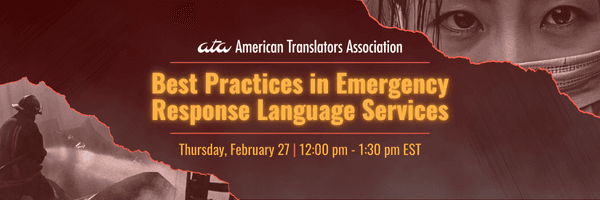
The American Translators Association (ATA) will host a critical roundtable examining language services' vital role in emergency response, bringing together experts from multiple professional sectors to discuss communication strategies during high-stakes situations.
The 90-minute virtual event will feature eight distinguished professionals with extensive experience in crisis communication, including interpreters, law enforcement personnel, medical professionals, and emergency dispatchers. Panelists will explore how effective language access can mean the difference between chaos and resolution during emergencies.
Key discussion topics include strategies for maintaining composure during high-pressure scenarios, ensuring cultural sensitivity in crisis communication, and understanding how linguists collaborate with first responders. The roundtable will emphasize human expertise over technological solutions, focusing on practical techniques for handling complex emergency communications.
Participants represent diverse professional backgrounds, including a FEMA employee specializing in deaf interpretation, a veteran police sergeant trained in active shooter response, and an international interpreter with high-profile diplomatic experience. Their collective insights will provide attendees with actionable strategies for improving emergency language services across law enforcement, medical, educational, and corporate disaster response environments.
The event highlights the increasing importance of linguistic and cultural competence in emergency communication, particularly as global crises become more complex and frequent. By facilitating dialogue among professionals who regularly navigate critical communication challenges, the roundtable aims to develop more effective, compassionate emergency response protocols.