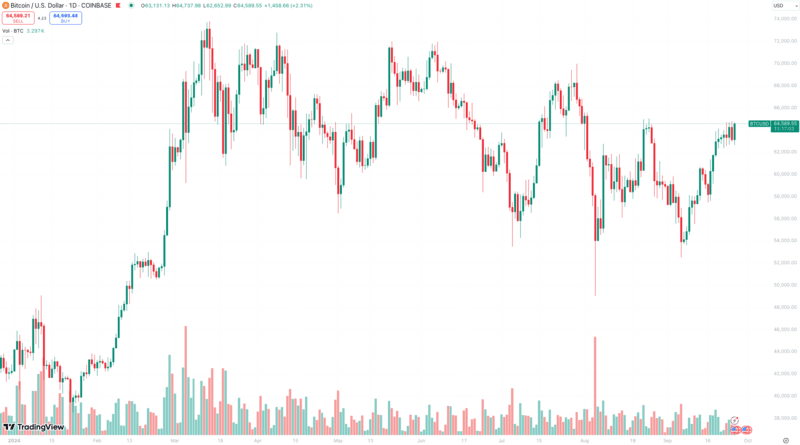
The Federal Reserve's recent decision to cut interest rates by 50 basis points has set the stage for a potentially significant shift in the cryptocurrency market, according to digital asset investment firm Tide Capital. This move, which marks the end of a prolonged period of monetary tightening, is expected to usher in a new era of growth for crypto assets.
Tide Capital's analysis suggests that Bitcoin, after months of consolidation between $50,000 and $70,000, may be on the verge of a breakout. The firm anticipates that any pullbacks in Bitcoin's price will be limited, given the favorable macroeconomic conditions created by the Fed's policy shift. This optimism is further supported by the increasing supply of stablecoins, which has risen by $3 billion since early September, indicating renewed capital inflow into the crypto market.
While Bitcoin remains a focal point, Tide Capital notes that altcoins are beginning to outperform the leading cryptocurrency. The firm points to the growing altcoin dominance and the surge in meme coins as evidence of increased risk appetite among investors. Notably, the meme coin Neiro saw a 30-fold increase after its Binance listing in mid-September, exemplifying the potential for explosive growth in this sector.
The rate cut is also expected to revitalize interest in decentralized finance (DeFi) projects. Tide Capital highlights Aave, a leading lending protocol, as a potential beneficiary of this trend. With its total value locked reaching $12.5 billion and a record high in monthly active users, Aave is positioned to capitalize on investors seeking yield opportunities in a lower interest rate environment.
Additionally, Tide Capital draws attention to Sui, a next-generation public blockchain that has shown impressive growth. With its token surging over 200% from August lows and increasing institutional interest, Sui represents a promising investment opportunity in the evolving blockchain landscape.
As the crypto market enters this new phase, investors and industry participants alike will be closely watching these trends unfold. The Fed's policy shift could potentially trigger a significant reallocation of capital into digital assets, reshaping the investment landscape in the coming months.