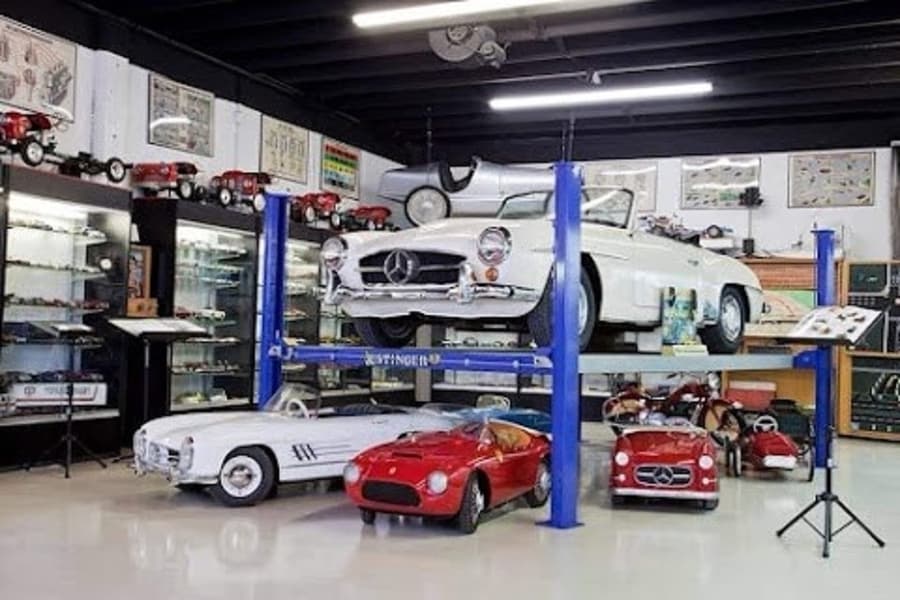
Haltom City, Texas, is set to lose a significant cultural attraction as the DFW Elite Toy Museum, founded by local entrepreneur Ron Sturgeon, prepares to relocate to Fort Worth. The move comes after unsuccessful attempts to find a suitable location for expansion within Haltom City, where the museum has been a fixture for years.
Sturgeon, who has been a part of the Haltom City business community for five decades, sought to expand his museum due to space constraints. His search for a new location within the city encountered significant hurdles, primarily due to zoning and parking requirements that proved incompatible with the museum's needs.
The entrepreneur's efforts to work with city officials to find solutions, including proposing changes to the city's use and parking matrix to accommodate museums, were met with resistance. Despite Sturgeon's willingness to invest in renovating vacant properties, such as the old Haltom City State Bank building and a former Kroger center, the city's inflexible stance on zoning and variances ultimately led to the museum's decision to leave.
This development raises questions about Haltom City's approach to business development and urban revitalization, particularly in its southern and central areas. Sturgeon, through the Haltom United Business Alliance (HUBA), has been advocating for improvements in these areas, arguing that the city's focus on attracting large businesses to the north side has led to neglect of other parts of the city.
The loss of the museum to Fort Worth underscores the potential consequences of rigid zoning policies and highlights the challenges faced by small businesses and cultural institutions in Haltom City. It also points to a possible disconnect between the city's stated desire for revitalization and its willingness to accommodate businesses that could contribute to that goal.
As the DFW Elite Toy Museum prepares for its move to a 150,000-square-foot distribution center in Fort Worth, where it will be renamed the DFW Car & Toy Museum, the incident serves as a case study in the importance of flexible urban planning and the potential economic impact of losing established local attractions. The museum's relocation may prompt Haltom City officials to reconsider their approach to zoning and business development, especially in light of ongoing efforts to revitalize the city's aging corridors.