

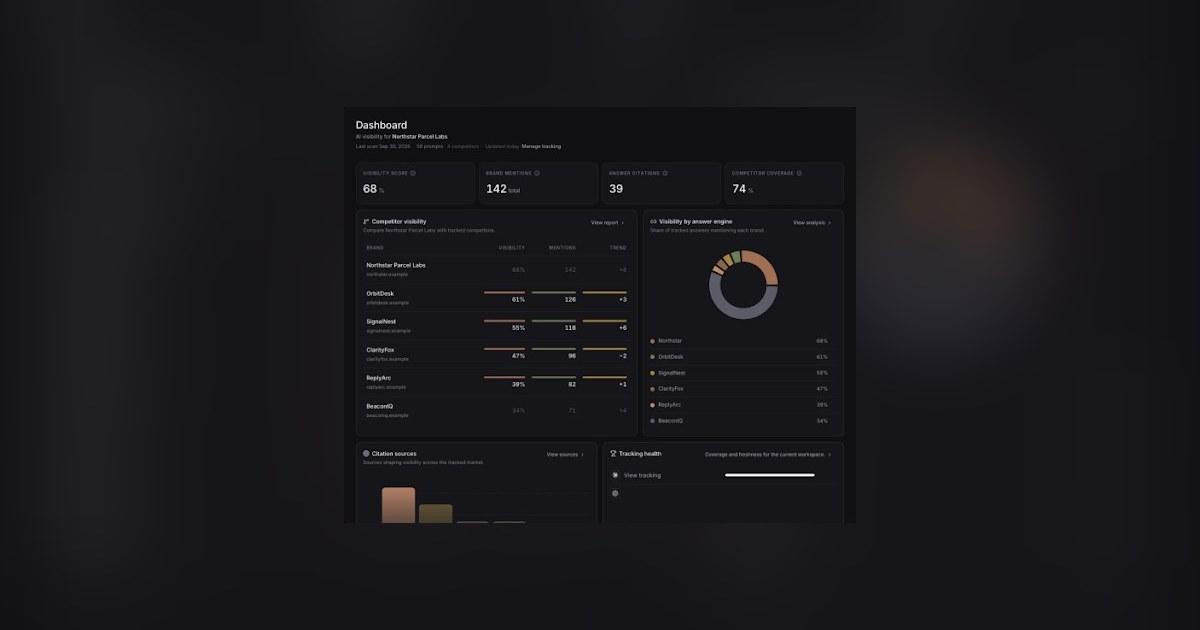
HappyFox has launched HappyFox AEO, an answer engine optimization tool that shows marketing teams how AI assistants describe and recommend their brands. The tool, announced via NEWMEDIAWIRE, allows teams to track questions relevant to their buyers, compare the brands that appear in captured answers, and inspect the sources those answers cite. Customers can sign up and start using AEO today.
The launch addresses a fundamental shift in how consumers research purchases. In a study of U.S. browsing behavior in March 2025, Pew Research Center found that users clicked a traditional result on 8% of Google search visits with an AI summary, compared with 15% of visits without one. In a separate August 2026 survey of 1,004 U.S. consumers, Gartner found that 34% said they were very or extremely willing to use generative AI for holiday gift recommendations. These findings suggest that AI assistants are increasingly shaping purchase decisions, often before a consumer visits a brand's website.
“A buyer can ask Claude or ChatGPT to compare vendors and come away with a shortlist before visiting a single website. Your traffic report won’t tell you whether you made that list. We built HappyFox AEO to show marketing teams when their brand gets recommended, who else shows up and which sources the answer cites,” said Shalin Jain, founder and CEO of HappyFox.
HappyFox AEO offers several tracking capabilities. It suggests questions to track and competitors to watch, allowing teams to organize questions around buyer decisions such as finding a product within a budget or comparing vendors for a specific use case. The tool records mentions and recommendations separately, so a brand can see whether it appeared as a point of comparison, an example, or a recommended option. Each captured answer is dated and can be opened alongside its citations, letting marketers check whether an answer cites a page the company controls, a competitor's page, or a third-party source. Scan history enables teams to compare answers to the same question across collection dates, checking whether an assistant recommends a different brand, still mentions a competitor, or cites a different page.
HappyFox demonstrated the tool's utility with a holiday shopping example. On November 16, the company used AEO to capture one answer each from ChatGPT and Claude to the question, “What are good specialty coffee gift sets under $50 for a U.S. shopper?” ChatGPT led with Onyx Coffee Lab and cited its Discovery Box page, while Claude named Bean Box first and cited a third-party gift guide featuring it. A retailer could use the cited pages in a scan to check which product details are available to shoppers who follow those links.
Agency Scale Plus supports up to 100 client brands in one account, allowing agencies to set up a tracked brand for each client with a list of questions and competitors relevant to that business. Every plan, including the trial, includes a Model Context Protocol connection, which lets teams retrieve authorized analytics, captured answers, and citations through a compatible AI assistant. Individual Starter covers one brand with up to 20 tracked prompts and five competitors, and the paid plan includes 160 prompt checks per month. Beyond ChatGPT and Claude, higher tiers add Perplexity, Google Gemini, and Grok. The 14-day Individual Starter trial includes one baseline scan for up to 20 prompts.
The launch matters because it gives marketers a way to monitor a channel they cannot see through traditional analytics. As AI assistants become a primary interface for product discovery, brands that fail to appear in AI-generated answers risk losing customers before they ever reach a website. HappyFox AEO provides a method to detect those gaps and identify which sources influence AI recommendations. The original release can be viewed on www.newmediawire.com.
