

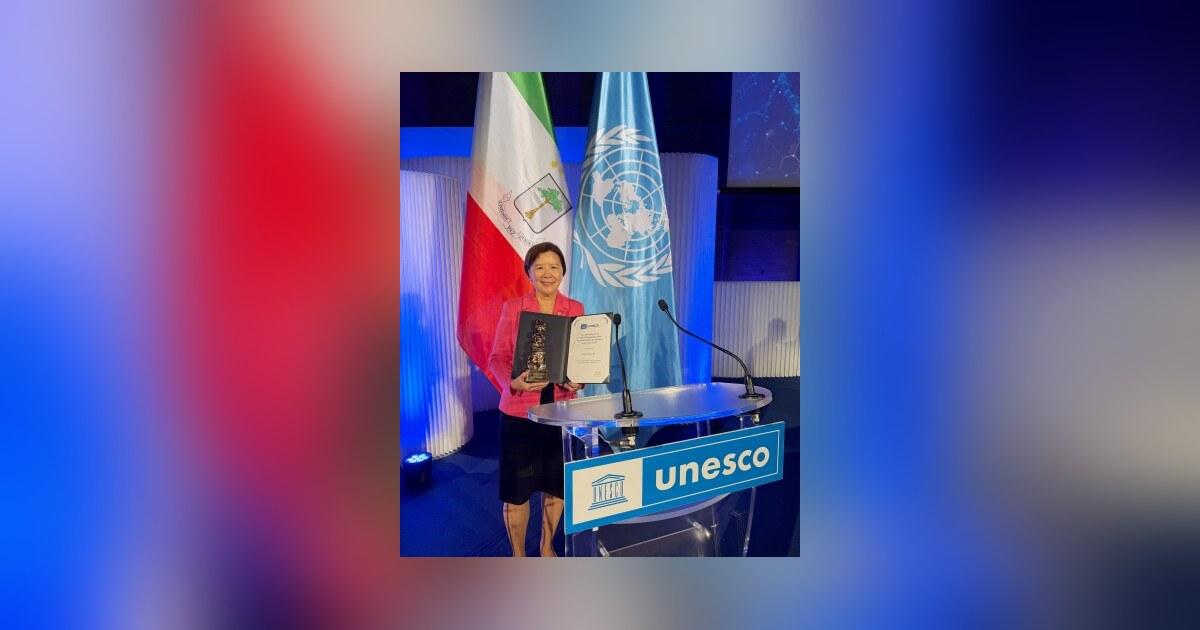
Prof. Nancy Ip, President and The Morningside Professor of Life Science at The Hong Kong University of Science and Technology, has been awarded the 2026 UNESCO-Equatorial Guinea International Prize for Research in the Life Sciences, according to an announcement carried by Media OutReach Newswire. The award ceremony was held on November 6 at UNESCO Headquarters in Paris, France.
UNESCO recognized Ip as an internationally renowned neuroscientist whose research has significantly advanced understanding of brain function and neurodegenerative diseases. The citation highlighted her team's discoveries of novel biomarkers and genetic risk factors for Alzheimer's disease, the development of an innovative blood-based diagnostic technology enabling earlier detection and monitoring, and pioneering advances in gene therapy research that have opened new avenues for prevention and treatment of neurodegenerative disorders.
The recognition matters beyond the laboratory. Alzheimer's disease is among the most pressing health challenges facing aging societies, and tools that detect it earlier can shape clinical assessment, intervention planning and the selection of participants for trials. Ip's team co-developed a highly accurate, minimally invasive and efficient blood-based diagnostic test that can aid early detection and help identify individuals with mild cognitive impairment. The technology has been adopted by multiple healthcare institutions in Hong Kong and expanded into community settings, supporting more effective disease management and risk-reduction strategies.
Ip has devoted more than three decades to neurodegenerative disease research, publishing over 350 scholarly papers and holding 144 patents. Her work has deepened understanding of intercellular communication in the nervous system, synaptic signaling and the molecular mechanisms underlying neurodegenerative diseases, while her team has identified protein targets associated with these disorders.
A central element of her contribution is a correction to a long-standing data gap. Alzheimer's research has historically relied heavily on data from Western populations, with Asian populations relatively underrepresented. Ip led her team in establishing a large-scale Chinese Alzheimer's disease biobank integrating clinical data, neuroimaging and multi-omics datasets, which identified multiple genetic risk factors prevalent among Chinese individuals. Those findings provide insight into disease mechanisms and a foundation for precision diagnostic and therapeutic strategies. Her team is also exploring novel gene therapy approaches for familial Alzheimer's disease through gene-editing technologies, aiming at an innovation pipeline spanning early diagnosis to next-generation therapeutics.
Receiving the award in Paris, Ip thanked her research team, collaborators and colleagues, and credited HKUST for its support throughout her scientific journey. "This recognition belongs not only to me, but also to the many talented and dedicated team members, collaborators and colleagues who have contributed to these achievements," she said. She added that Alzheimer's is "not just a scientific and medical challenge. It is also a deeply human one," affecting patients and their families.
Ip also stressed global collaboration and the nurturing of young researchers, saying science is "a collective endeavor" built on collaboration across disciplines, institutions and borders. She is President of HKUST and concurrently Director of the State Key Laboratory of Nervous System Disorders and Director of the Hong Kong Center for Neurodegenerative Diseases. She is an elected member of the Chinese Academy of Sciences, the US National Academy of Sciences and other leading academies.
The UNESCO-Equatorial Guinea International Prize was established to recognize outstanding scientific achievements that advance human health and improve quality of life, and to promote scientific excellence, international collaboration and research networks worldwide. This year's prize is shared by three laureates, who jointly receive US$300,000 and an Integración Tribal statuette created by Equatorial Guinean artist Leandro Mbomio Nsue.
