

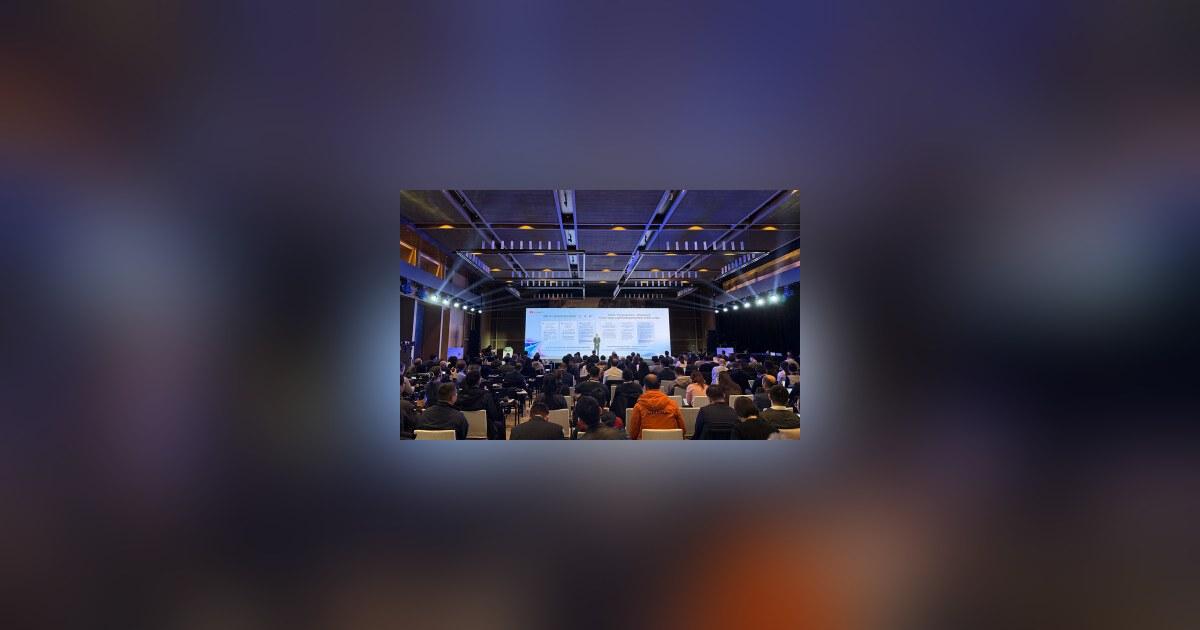
Huawei Technologies disclosed that its cumulative outbound patent licensing agreements have exceeded US$6.9 billion, with approximately US$800 million in licensing revenue generated in 2025 alone. The figures were announced at the company's seventh Innovation and Intellectual Property Forum, held in Beijing and reported by Media OutReach Newswire. The event, themed "Invent to Excel, Open to Empower," brought together global experts in innovation and intellectual property to discuss how openness drives industrial innovation and how strong IP protection safeguards it.
The scale of adoption behind Huawei's patented technologies is significant. By the end of 2025, Huawei's technologies had been used in more than 3.2 billion 5G devices, over 1.6 billion Wi-Fi consumer electronics devices, and more than 4.1 billion multimedia devices. In 2025, the company signed 20 new licensees across industries including network and communications equipment, consumer electronics and computing, IoT, automotive, streaming, and semiconductors. Wireless communications account for 41% of Huawei's active granted patents, followed by terminal hardware at 16% and AI and computing at 13%.
Alan Fan, Vice President and Chief Intellectual Property Officer of Huawei, said, "At Huawei, a patent represents more than a legal right. It represents an innovative achievement and a source of pride for the people behind it." The forum also featured remarks from Francis Gurry, Former Director General of the World Intellectual Property Organization, who emphasized that global IP institutions set balanced rules to reward inventors, while innovative enterprises turn those rules into practice through voluntary licensing and open collaboration.
Sir Robin Jacob, Former Judge of the Court of Appeal of England and Wales, noted that Huawei has become one of the world's leading holders of standard-essential patents (SEPs), and that the SEP licensing system underpins open collaboration, stimulates competition, and encourages innovation. Aleš Zalar, Director of the Patent Mediation and Arbitration Centre of the Unified Patent Court, added that a neutral, fair and predictable SEP licensing environment benefits both patent holders and implementers.
The forum highlighted several breakthrough technologies, including the Tau (τ) Scaling Law, UnifiedBus, near-packaged optics (NPO), and 6G. The inventors behind these innovations shared their 0-to-1 breakthroughs and long-term commitment to research. Peiying Zhu, Huawei Fellow and IEEE Fellow, said, "The quality of a patent comes from the genuine technology breakthroughs behind it."
For businesses and consumers, Huawei's growing patent portfolio and licensing activity signal that the company is positioning itself as a key player in the AI-driven technology landscape. The emphasis on open collaboration and fair licensing terms could lower barriers for smaller firms to build on Huawei's innovations, potentially accelerating the development and commercialization of new technologies. As AI continues to reshape industries, the balance between rewarding inventors and enabling widespread access to foundational technologies will remain a critical issue for the global tech ecosystem.
