

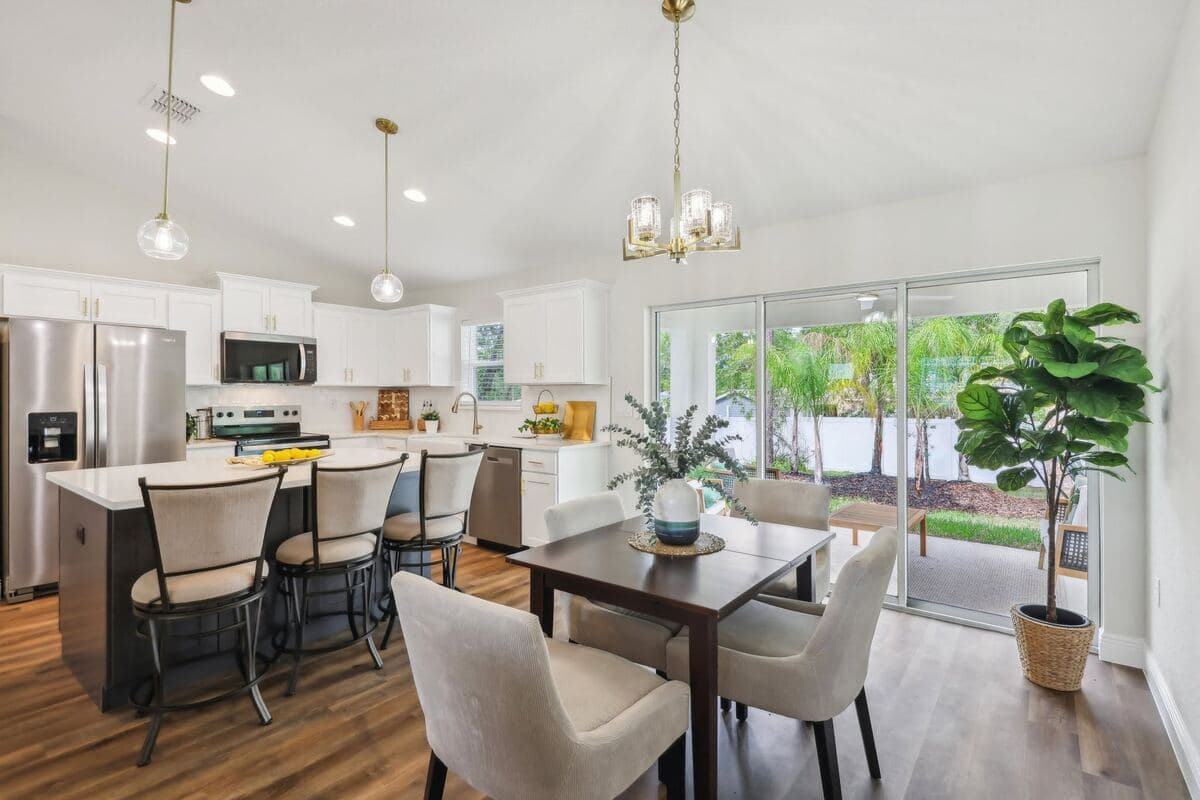
The concept of “invisible wellness” is emerging as a key trend in real estate, and one Florida builder has been quietly implementing it for years. Ryan Hinricher, founder of Sunworth, designs homes on Florida’s Nature Coast where health benefits are integrated into the structure itself—from triple windows in master bedrooms that maximize natural light to wood ceilings that alter acoustics and visual appeal. The idea, as discussed at the Global Wellness Summit’s real estate symposium earlier this year, is that wellness features should be built in, not added on as afterthoughts.
Hinricher’s model home in Citrus County, Florida, exemplifies this philosophy. The lot was chosen to preserve mature oak trees, based on research showing that viewing trees from indoors positively affects the nervous system. The home’s west-facing orientation allows sunset light to filter through the trees into the main living area. During a stay, Hinricher’s daughter naturally gravitated to a window overlooking a neighbor’s oak grove, illustrating how well-designed environments can instinctively guide behavior without signage or labels.
The approach contrasts sharply with that of large national homebuilders. According to Hinricher, a president-level executive from a major builder told him that while her company adds community amenities like spas and yoga studios, it is reluctant to change house structures due to the costs of scaling—one extra window per home in a production of 30,000 to 80,000 units annually becomes a logistical and financial hurdle. Hinricher sees this as a market gap that Sunworth fills by focusing on attainably priced homes where wellness is embedded from the start.
Market response suggests strong demand. A recent listing near Sunworth’s model home generated over 2,000 views on Zillow, more than 200 saves, 70-plus shares, and three offers within two weeks, closing in cash. Buyers’ feedback centered not on square footage or appliances but on the preserved tree canopy, the tongue-and-groove wood ceiling, and the triple windows in the master bedroom. “Some people can describe it, but it’s like a feeling,” Hinricher said. “A subconscious understanding of what we’re doing, where the body feels it and the mind feels it, but people can’t always pinpoint it.”
For the real estate industry, invisible wellness represents a shift from amenity-driven marketing to structural design that enhances well-being. As consumers become more health-conscious, this trend could pressure larger builders to reconsider profit models that prioritize volume over quality. For buyers, the implication is clear: a home’s design can directly affect physical and mental health, and paying attention to structural details may yield long-term benefits that no backyard sauna can replace.
Learn more about Sunworth at sunworth.com.
