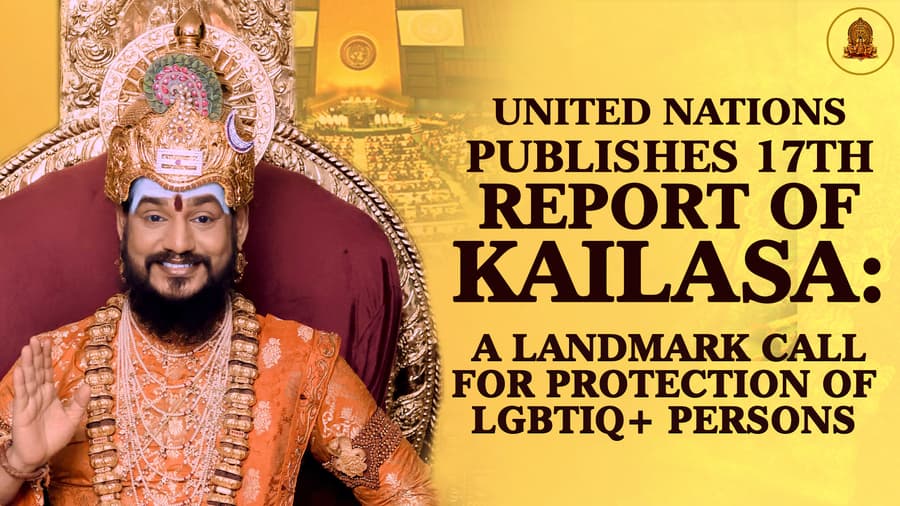
The United Nations has published KAILASA's 17th report, focusing on the protection of LGBTIQ+ persons and calling for global recognition and action against human rights abuses. The report, submitted by KAILASA, a self-proclaimed sovereign state for Hindus, sheds light on the ongoing persecution of LGBTIQ+ individuals worldwide, noting that same-sex relationships remain criminalized in 64 countries with penalties ranging from fines to life imprisonment and even death sentences.
KAILASA's submission emphasizes Hinduism's historical recognition of gender diversity, citing scriptural references that acknowledge eleven genders and support same-sex marriages. The report draws on teachings from The Supreme Pontiff of Hinduism (SPH), Bhagavan Nithyananda Paramashivam, who describes gender as a complex interplay between physical, psychological, physiological, and conscious aspects of human existence.
A significant portion of the report addresses the impact of colonialism on indigenous gender notions, particularly how British colonial laws like Article 377 in India criminalized gay sex, contrasting sharply with pre-colonial Hindu society's acceptance of diverse gender expressions. KAILASA positions itself as a beacon of inclusivity, promoting Hindu policies based on harmony, non-violence, and the belief in the intrinsic divinity of all beings.
The report's publication is significant as it brings attention to the global state of LGBTIQ+ rights and the role of religious and cultural traditions in shaping attitudes towards gender and sexuality. It challenges the notion that conservative religious views are inherently at odds with LGBTIQ+ rights, presenting Hinduism as an example of a faith tradition with a long history of gender inclusivity.
Moreover, the report highlights the ongoing tension between colonial legacies and indigenous cultural practices, suggesting that decolonization efforts should extend to laws and social norms surrounding gender and sexuality. This perspective could influence international discourse on human rights and religious freedom, potentially encouraging other faith communities to reexamine their stance on LGBTIQ+ issues.
While the report's claims and KAILASA's status as a sovereign entity may be subject to debate, the document's inclusion in a UN publication provides a platform for discussing the intersection of religion, culture, and LGBTIQ+ rights on a global stage. This could potentially impact policy discussions and advocacy efforts aimed at protecting LGBTIQ+ individuals worldwide.