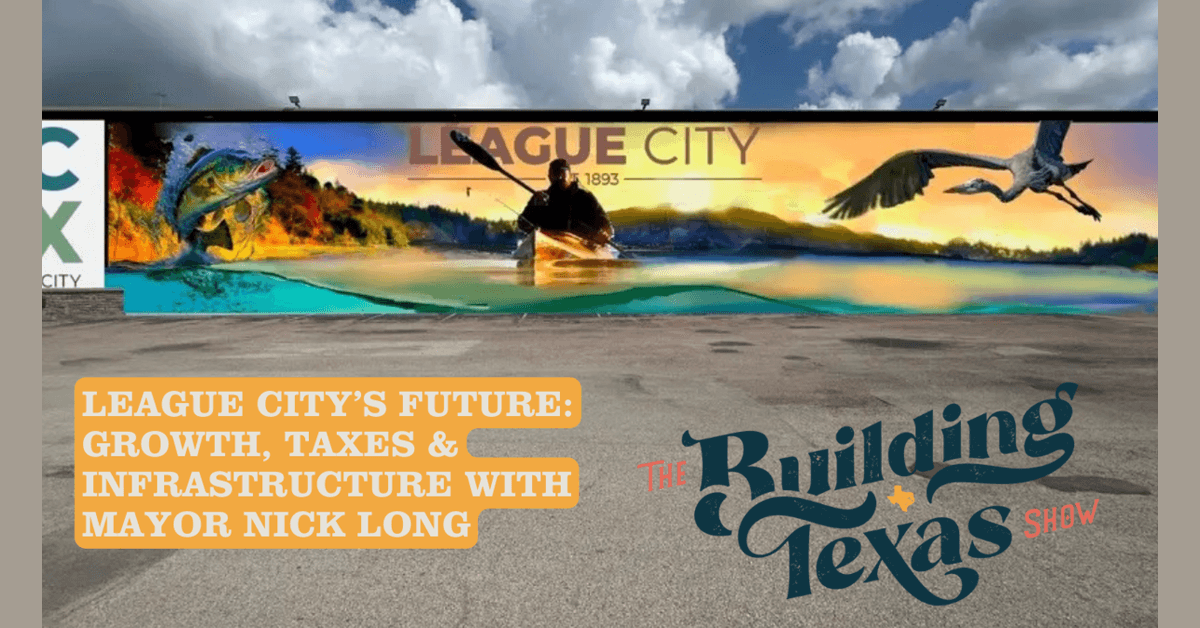
League City, Texas, positioned between Houston, Gulf Coast ports, and the nation's aerospace industry, is transforming from a suburban community into a strategic hub while maintaining what Mayor Nick Long describes as a "flying under the radar" status. With population growth from approximately 30,000 residents to over 125,000 and projections exceeding 200,000 within the next decade, the city's approach to managing this expansion offers insights for municipalities facing similar challenges.
The city's fiscal strategy centers on lowering property tax burdens through the "no new revenue" tax rate while diversifying revenue streams through sales tax growth and online commerce. This approach, detailed in a recent episode of The Building Texas Show, allows infrastructure investment without shifting costs to residents. Mayor Long, a lifelong resident with over 12 years of city council and mayoral service, emphasizes that development must "pay its own way" to maintain fiscal restraint.
Geographic positioning provides League City with unique economic advantages. Proximity to NASA and the Johnson Space Center creates aerospace connections, while bordering Clear Lake and Galveston Bay supports maritime commerce. The forthcoming Grand Parkway completion will directly connect Houston, Galveston, and Freeport ports, opening light industrial development opportunities and economic diversification beyond traditional sectors.
Quality of life initiatives complement economic planning, with League City promoting itself as a place where residents can "live where they vacation." The city boasts one of the country's largest recreational marina systems, benefits from cruise tourism along Interstate 45, and hosts signature community events like Holiday in the Park. These amenities attract both residents and businesses seeking balanced lifestyles.
Transparency and long-term planning emerge as critical components of League City's governance model. The city publishes master plans, infrastructure studies, and executive summaries detailing preparations for future challenges including water systems, drainage, west-side development, and transportation. This open approach helps residents understand how growth is managed responsibly.
The League City model demonstrates how regional cooperation, disciplined growth strategies, and geographic advantages can combine to create sustainable expansion. As municipalities nationwide grapple with rapid population increases, League City's experience offers valuable lessons in balancing economic development, infrastructure investment, and quality of life preservation through transparent governance and fiscal responsibility.