

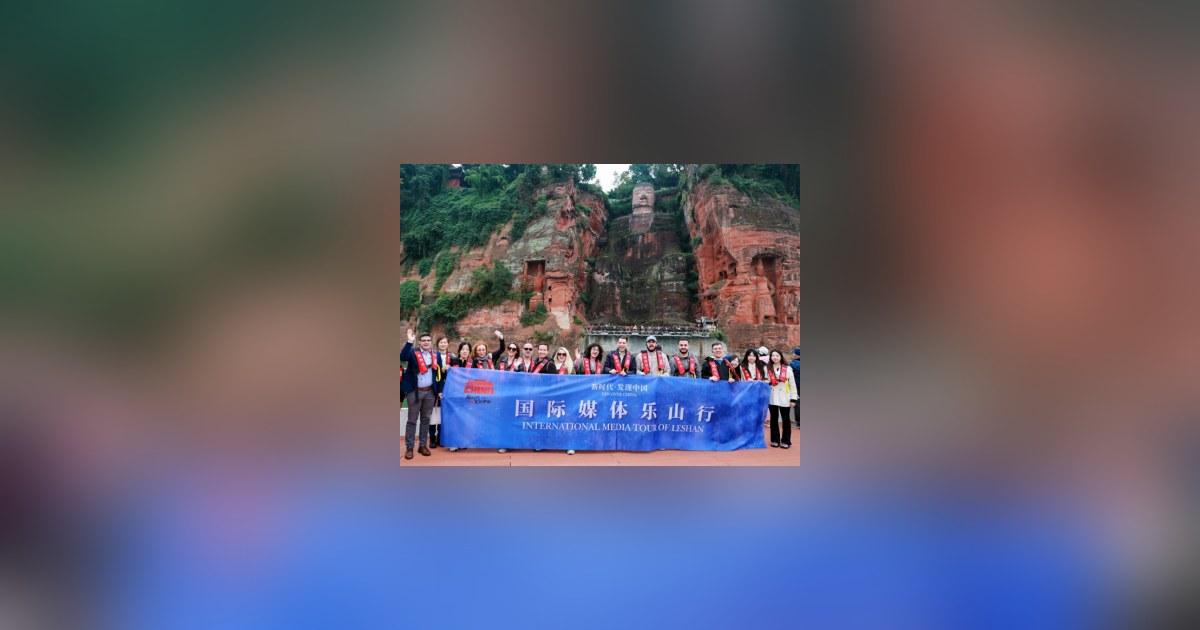
Eleven journalists from international media outlets across nine countries, including Italy, Hungary, Serbia, Bulgaria, and Slovakia, visited Leshan, Sichuan Province, China, from November 1 to 2, 2026, to observe firsthand how the city is protecting the 1,300-year-old Leshan Giant Buddha while integrating it into urban life and tourism. The visit, reported by Media OutReach Newswire, highlighted a conservation approach that pairs cutting-edge technology with public access—a model with implications for heritage sites around the world facing similar environmental threats.
The 71-meter seated Maitreya statue, carved from red sandstone during the Tang Dynasty, is highly vulnerable to water infiltration, biological growth, weathering, and cracking. In 1996, the Mount Emei Scenic Area, including the Leshan Giant Buddha Scenic Area, was inscribed on the UNESCO World Heritage List. Rather than relying solely on conventional repair, Leshan has adopted a science-driven strategy. Since 2024, researchers at the Heritage Monitoring Center of the Leshan Giant Buddha Grottoes Research Institute have used drone-based close-range photogrammetry to build a high-precision 3D model of the statue and applied artificial intelligence to identify and map surface deterioration. Live data streams into the center, enabling real-time condition tracking. Hungarian reporter Zsiros Mihaly remarked, “Digital conservation opens a new window on grotto research, and I look forward to the science that follows.”
This technological shift matters beyond China’s borders. Many World Heritage sites carved from porous stone face accelerating decay due to climate change and visitor pressure. Leshan’s combination of non-invasive monitoring and predictive analytics offers a scalable, cost-effective alternative to reactive repairs, potentially helping site managers worldwide prioritize interventions and extend the lifespan of irreplaceable monuments.
Equally significant is Leshan’s integration of heritage protection with urban development and daily life. A 2-yuan ferry shuttles residents between the scenic area and the city’s dining hubs, while a riverside promenade provides public space. The “Night Tour of the Three Rivers” project uses modern lighting and projection to illuminate the cliffs and tell the story of the Buddha’s creation, and cultural products like the “Giant Buddha Impressions” series bring history into everyday life. Bulgarian journalist Zornista Metodieva Bliznashka said, “I never expected the Giant Buddha to be preserved so well. When I get home, I will definitely tell everyone about this amazing wonder.”
The strategy appears to be paying off economically. From January to October 2026, the Leshan Giant Buddha Scenic Area received about 376,000 inbound tourist visits, a year-on-year increase of 39.95%, ranking among the top in Sichuan Province for inbound tourist volume. For the travel industry, this signals that heritage sites investing in both preservation and visitor experience can capture growing demand for cultural tourism. For local economies, it demonstrates how conservation can coexist with commercial vitality rather than hinder it. As the Leshan Giant Buddha stands for more than 1,300 years, its tech-enabled stewardship may become a reference point for how the world balances preservation, public benefit, and economic growth.
