

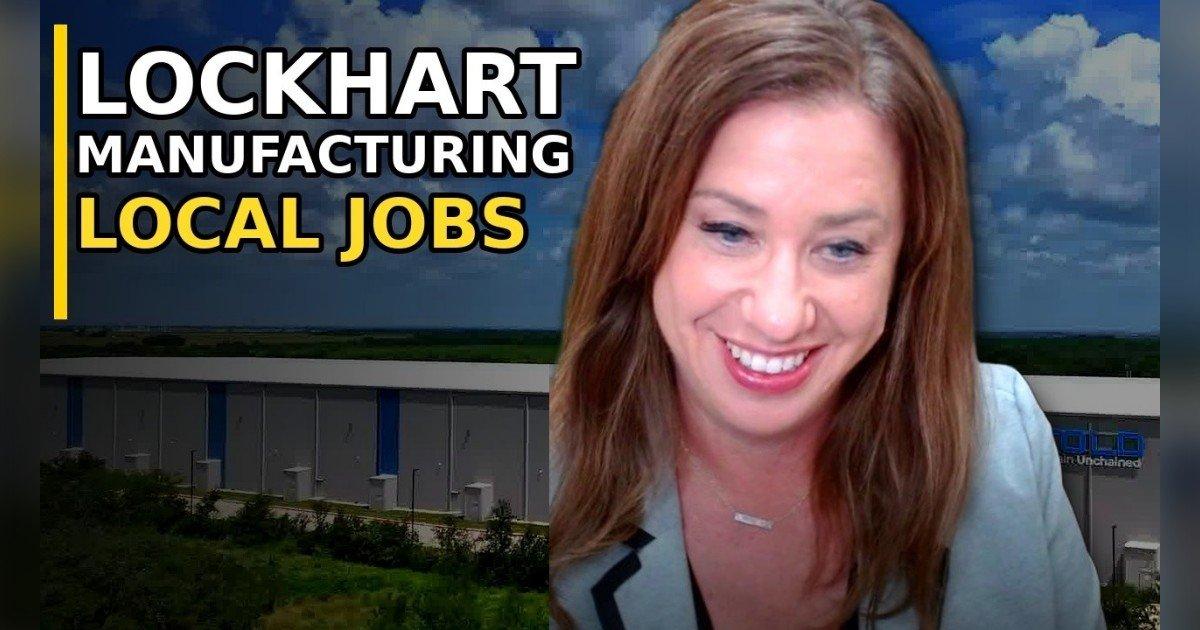
Lockhart, Texas, is quietly building a reputation as a manufacturing hub, with food production and local business expansions at the center of its economic momentum. In a recent episode of Is This Texas Town Quietly Winning the Manufacturing Race?, host Justin McKenzie spoke with Holly Malish, Director of Economic Development for the Lockhart Economic Development Corporation, about the projects and strategies fueling the town's growth.
Malish, who took the role in 2024, highlighted the progress of previously announced projects such as Ziegenfelder and RealCold, both of which are now in what she calls "the fleshing out of that project, the growing of the jobs." She also pointed to Hill Country Foodworks, which expanded into a newly built facility and then secured a second incentive to purchase an onion slicing machine. Mill Scale, a Lockhart metalworking business, is another local expansion Malish counts among her recent wins.
"Most of my most recent wins are really coming from local. They're expanding," Malish said. Helping existing companies grow is also a powerful selling point when recruiting new businesses, she added, because those local businesses are her customers too.
Beyond food manufacturing, Lockhart's cultural credentials are getting a boost. The city is a Film Friendly Texas certified community, noted by the Texas Film Commission as a filming location for HBO's The Leftovers, and has been named a Music Friendly Texas certified community. Malish said the certification tells productions, "we're willing to work with you, we're willing to assist you and make your film shoot go easy." Filming now runs through the city's new tourism department, and local restaurants are picking up catering work from productions.
Regional cooperation is another key factor. Malish described how the old siloed mindset has given way to a shared view across the area, because a project that lands nearby still shapes Lockhart's workforce, schools, and career and technical education (CTE) programs. "A win for the region is really a win for me and the city," she said. Communities refer prospects to one another based on their strengths and have teamed up on job fairs. "We don't have empty buildings, right? ... We have land though," Malish explained, so when a prospect needs land, "Jennifer from Buda" can say, "we'll call Holly."
Workforce development rounds out the conversation. McKenzie applauded the teachers and CTE programs that show students manufacturing careers in their own backyard. Malish described a Tesla manufacturing development program Lockhart works on through the Boys & Girls Club, which pairs a social skills class with help removing barriers such as transportation, clothing, and resume building, then moves participants through paid training at Austin Community College and into Tesla's interview process.
For readers, Lockhart's quiet industrial surge matters because it demonstrates how small communities can leverage local expansions, regional partnerships, and workforce programs to attract investment and create jobs. As companies seek to reshore manufacturing and secure supply chains, towns like Lockhart offer a model for sustainable growth that could influence economic development strategies across Texas and beyond.
