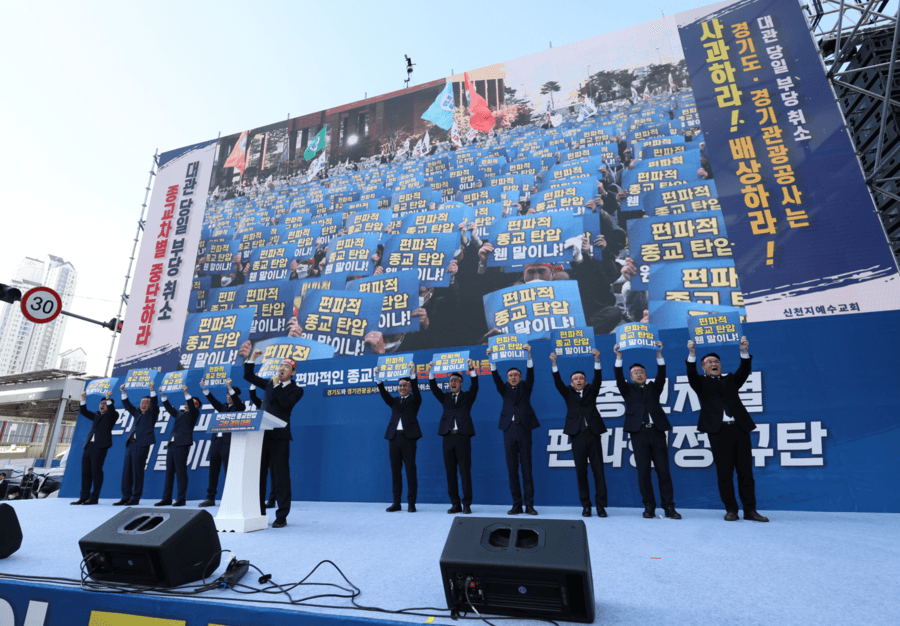
In a significant display of public dissent, approximately 25,000 people gathered near the Gyeonggi Provincial Government building to protest the cancellation of a major religious event. The demonstration, which occurred without physical clashes, was in response to the Gyeonggi Tourism Organization's decision to cancel a booking at Paju Imjingak Peace Park for an event organized by Shincheonji, a religious group.
The canceled event, planned for the previous month, was expected to draw 6,400 international religious leaders and overseas members of Shincheonji. The organization had invested considerable resources, with 11,000 staff members working on preparations for a year. The sudden cancellation, citing concerns about North Korean tensions, left organizers and participants in dismay.
Shincheonji officials claim the cancellation was discriminatory, as other events at the Peace Park were allowed to proceed. Lee Gi-won, General Secretary of Shincheonji, criticized authorities for ignoring laws and principles by providing such short notice for the cancellation.
The protest's scale underscores the tension between religious organizations and local authorities in South Korea. It also highlights the complex balance officials must strike between ensuring public safety and respecting the rights of assembly and religious freedom, particularly in areas near the North Korean border.
In response to the protest, police deployed 400 officers and implemented traffic control measures. The peaceful nature of the demonstration, despite its size, indicates a level of restraint from both protesters and law enforcement.
The Gyeonggi Tourism Organization defended its decision, citing the park's proximity to the North Korean border and recent heightened tensions between the two Koreas. They also mentioned concerns about elements of the event that could potentially provoke North Korea, such as aerial balloons, drones, and fireworks.
This incident raises important questions about government transparency and communication in decision-making processes, especially concerning large-scale public events. It also underscores the ongoing impact of inter-Korean relations on civic life in border regions.
As Shincheonji plans to demand a formal apology and compensation for damages, the outcome of this dispute could set precedents for how similar situations are handled in the future, potentially influencing policies on event approvals in sensitive areas and the balance between security concerns and religious freedoms.