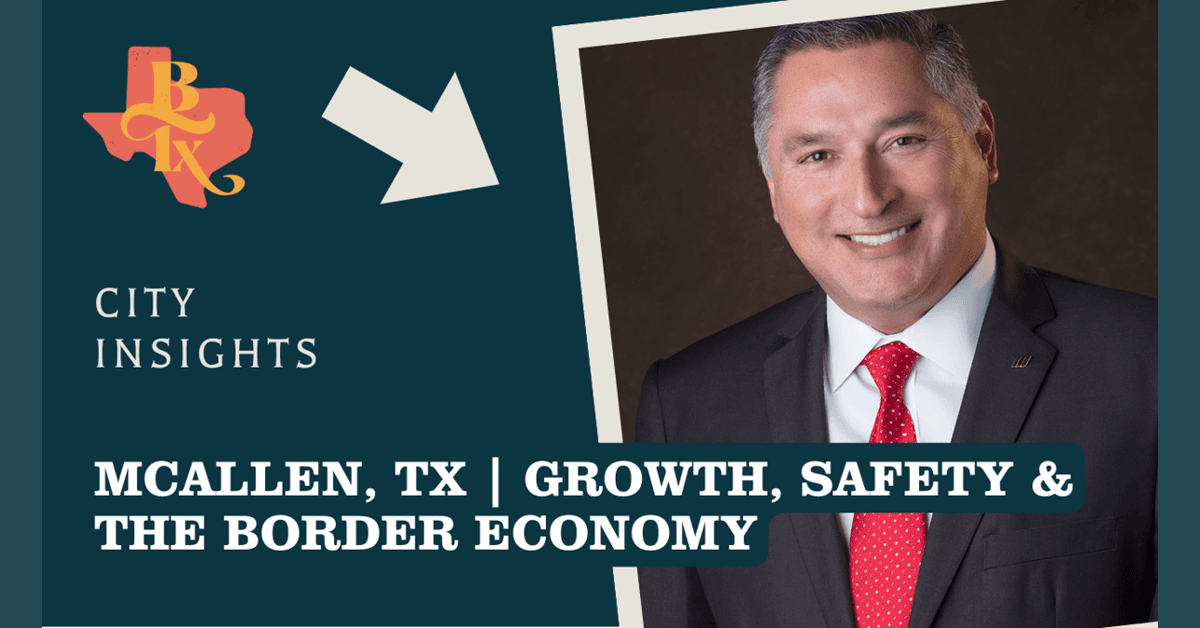
In a recent interview on The Building Texas Show, McAllen Mayor Javier Villalobos detailed how the South Texas border city has become one of Texas' most economically stable regions through strategic collaboration and leveraging its unique geographical position. Villalobos, now serving his second term as mayor, emphasized that McAllen functions as the economic engine of the Rio Grande Valley, supporting a regional workforce that transcends city boundaries.
The mayor challenged national narratives about border cities by presenting data showing McAllen ranks among the safest cities in the United States while maintaining one of Texas' lowest costs of living. He attributed this success to a fundamental shift in regional mindset, where cities across the Rio Grande Valley—including McAllen, Edinburg, Pharr, Mission, Brownsville, and Harlingen—have moved from competition to coordination. This collaborative approach, combined with strong partnerships with Hidalgo, Cameron, and Starr counties, has positioned South Texas to capitalize on major investments in sectors like advanced manufacturing, logistics, and international trade.
Education and workforce development emerged as central components of McAllen's strategy. Villalobos pointed to institutions like UTRGV, Texas A&M–RGV, and South Texas College as critical pipelines for skilled talent in welding, advanced manufacturing, healthcare, and technical trades. With one of Texas' youngest populations, McAllen is deliberately investing in human capital to support long-term economic growth.
Financial discipline forms another pillar of McAllen's approach, with the city maintaining more than 130 days of working capital in reserves while implementing consecutive property tax rate reductions. Major development projects include transforming a 70-acre reservoir into a mixed-use destination, expanding the McAllen Convention Center, and opening a full cargo facility at the international bridge. These initiatives aim to boost sales tax revenue, tourism, and global connectivity.
Villalobos expressed particular optimism about McAllen's position between two of the world's most powerful economies, describing the border as "fluid and working." The city has become a top destination for small business growth, conventions, and cross-border commerce, with strategic incentives targeting value-add manufacturing. Community quality of life initiatives, including large-scale events like the South Pole of Texas and McAllen Holiday Parade, complement the economic development strategy by attracting visitors and enhancing resident satisfaction.
As the conversation turned toward 2026, Villalobos emphasized that McAllen's strength stems from collaboration at local, regional, and international levels. The city's approach demonstrates how border communities can leverage their unique advantages while maintaining fiscal responsibility and investing in future generations. This model has implications for other border regions seeking to transform geographical positioning into economic opportunity while maintaining community safety and affordability.