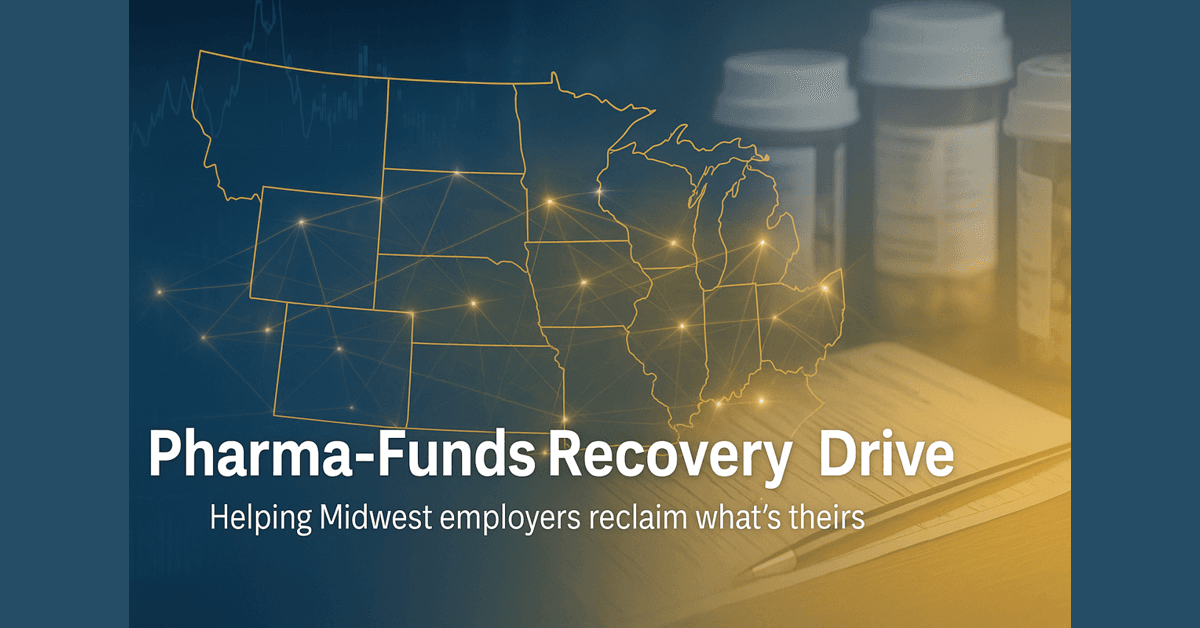
Superior Insurance Advisors announced the launch of a Midwest-wide Employer Pharma-Funds Recovery Drive, a large-scale initiative helping employers, municipalities, and benefit trusts claim their share of the Department of Justice's $600 billion Pharma Overcharge Recovery Fund. The effort, spearheaded by Paul H. Flowers Jr., a nationally recognized fiduciary-certified healthcare advisor, aims to bring transparency and justice to a system long plagued by overpricing, pharmacy-benefit collusion, and misaligned incentives.
This initiative represents a critical opportunity for Midwest businesses and public entities to recover funds they overpaid for prescription drugs over the past decade. The Department of Justice and several states have filed and consolidated lawsuits, including Insulin Pricing Litigation, alleging that major pharmaceutical manufacturers and PBMs—such as Prime Therapeutics (Blue Cross), Optum (United Healthcare), CVS Caremark (Aetna), and Express Scripts (Cigna)—systematically inflated prices.
Flowers emphasized the urgency of the situation, stating that employers who fail to act now will leave millions of dollars on the table. The recovery fund allows self-insured employers, unions, and municipal plans to submit claims for reimbursement of excess payments going back more than a decade. Recovery efforts are being supported by national legal teams like Hagens Berman Sobol Shapiro LLP, Keller Rohrback LLP, and Pearl Logic LLC.
The timing is critical for Midwest employers, with the cutoff for generic medication claims set for November 15, 2025, and the insulin-related claims deadline of January 15, 2026. These deadlines create immediate pressure for organizations to review their pharmaceutical spending and file appropriate claims. The campaign also positions Gary, Indiana, as a regional hub for healthcare accountability and multi-state cooperation across the Midwest.
In partnership with Life Health & Legal Education Partners, Superior Insurance Advisors is hosting a series of open-access workshops to educate CFOs, HR leaders, and municipal administrators on claim eligibility, data collection, and filing strategies. Flowers explained that this initiative is about restoring fiduciary stewardship to healthcare, noting that they're not just recovering dollars but rewriting the rules of fairness in American benefits.
The significance of this recovery drive extends beyond immediate financial restitution. It addresses systemic issues in pharmaceutical pricing that have burdened employers and employees alike for years. The initiative also briefly aligns with Opioid Free America, helping cities and counties responsibly utilize national opioid settlement grants to reduce dependence and improve community health outcomes.
For Midwest businesses and public entities, this represents one of the largest potential recoveries in healthcare history. The successful participation in this program could significantly impact organizational budgets, employee benefit structures, and regional healthcare economics. With billions potentially available for recovery, the initiative offers a rare opportunity for employers to address long-standing pharmaceutical cost concerns while contributing to broader healthcare system reform.