

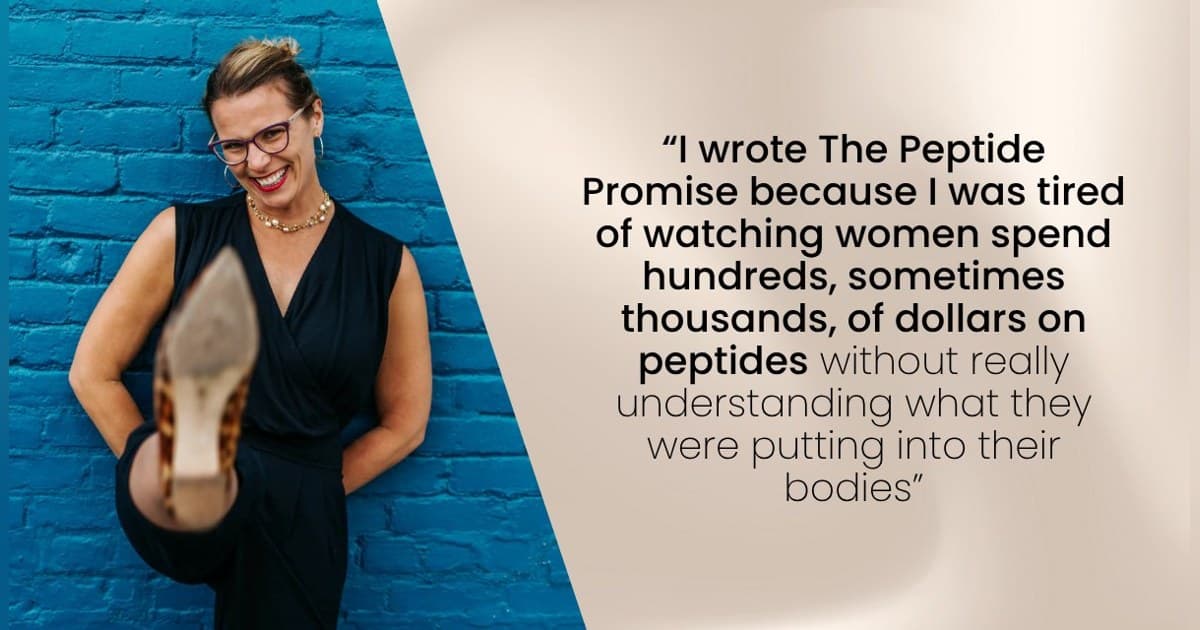
With peptides increasingly marketed to women for weight loss, energy, and anti-aging, a new book seeks to cut through the noise. Jennifer Woodward has released The Peptide Promise: How Smart Molecules Are Changing Everything We Know About Weight, Energy, and Aging, a guide intended to help women understand the science, questions, and uncertainties surrounding peptides before deciding whether they belong in their health journey. The book arrives as consumer interest in peptide-based interventions grows, often outpacing clear, accessible information about what the research does and does not support.
Woodward's central argument is that peptides should not be treated as a shortcut or a cure-all. Instead, she distinguishes research-backed applications from experimental approaches, giving readers a framework to evaluate claims and make informed decisions. The book is designed to clarify uncertainties rather than amplify hype, a notable stance in a wellness market that frequently favors bold promises over nuanced evidence. For readers navigating midlife health, that distinction could be the difference between a thoughtful conversation with a clinician and a costly, unproven experiment.
Underpinning the book is Woodward's "Power Four": protein, minerals, circadian rhythm, and movement. These four pillars form the foundational approach she recommends whether or not readers ultimately choose to use peptides. The framework reflects a broader principle in nutrition science: basic, consistent habits often deliver more reliable results than novel compounds. By centering these fundamentals, Woodward positions peptides as an optional layer rather than a replacement for foundational health practices, an approach that may resonate with women who have grown skeptical of quick fixes.
The timing of the release is significant. As peptide products proliferate online and through wellness channels, regulators and consumers alike are grappling with inconsistent quality and limited long-term data. A book that explicitly separates evidence from experimentation could help readers ask better questions of manufacturers and providers. It also signals that the conversation around women's midlife health is maturing, moving from marketing-driven trends toward informed decision-making. For the industry, that shift may raise the bar for transparency; for readers, it offers a tool to assess risk before committing to a regimen.
The Peptide Promise is available for pre-order and on Kindle now and releases in paperback on November 10, 2026. Woodward's work focuses on helping women understand midlife health, with an emphasis on nutrition, foundational habits, and informed decisions about peptides. Readers seeking more information can visit www.JenniferWoodwardNutrition.com. The full announcement, including downloadable images and bios, is available via click here.
