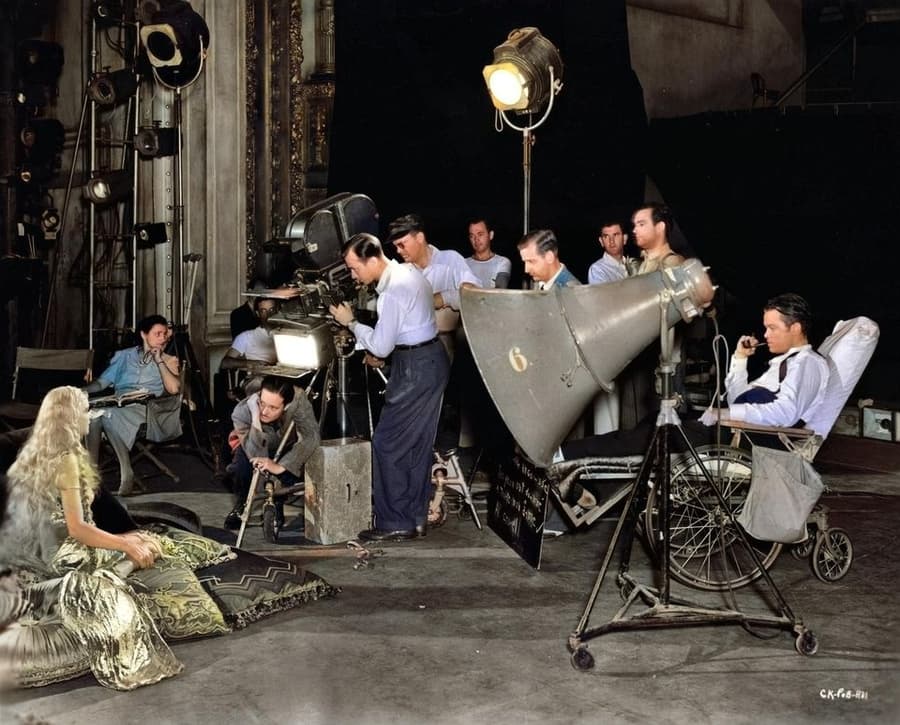
As the 86th anniversary of Orson Welles' infamous 'War of the Worlds' radio broadcast approaches, a new book challenges the recent revisionist view that the event's impact was limited. William Hazelgrove's 'Dead Air: The Night Orson Welles Terrified America' contends that the 1938 Halloween Eve broadcast did indeed spark widespread panic across the United States, not just on the East Coast as some recent interpretations suggest.
Hazelgrove's work, published by Rowman and Littlefield, paints a picture of an America thrown into mass hysteria by the 23-year-old Welles' adaptation of H.G. Wells' novel. The author describes scenes of people fleeing their homes, arming themselves, and seeking shelter in response to the fictional Martian invasion portrayed in the broadcast.
The book's release is timely, coming at a moment when the power of media to influence public perception is under intense scrutiny. Hazelgrove's account of the 'War of the Worlds' broadcast serves as a historical case study in the potential for mass media to create real-world panic and confusion, even when the content is clearly labeled as fiction.
This reexamination of the event's impact raises important questions about media literacy, the responsibility of broadcasters, and the public's susceptibility to misinformation. In an era of fake news and digital manipulation, the lessons from Welles' broadcast remain relevant, highlighting the need for critical consumption of media and the potential consequences of blurring the lines between fact and fiction.
Hazelgrove's book also sheds light on Orson Welles' pivotal role in shaping modern media. By analyzing how Welles used six seconds of 'dead air' to heighten the drama and realism of the broadcast, the author illustrates the innovative techniques that continue to influence media production today.
As debates continue about the extent and nature of the panic caused by the 'War of the Worlds' broadcast, Hazelgrove's work provides a counterpoint to recent minimizations of its effect. This fresh perspective invites readers and historians to reconsider the event's place in media history and its implications for understanding mass communication's power to shape public perception and behavior.