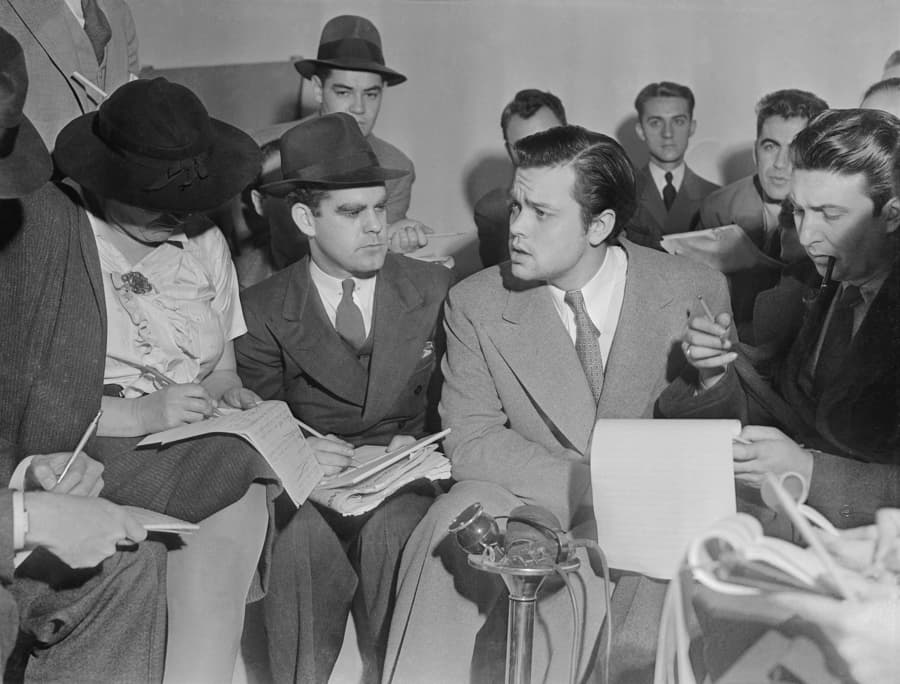
In a timely coincidence, William Elliott Hazelgrove's recently published book 'Dead Air: The Night Orson Welles Terrified America' has gained unexpected relevance as New Jersey experiences a wave of UFO sightings. The book, which details the infamous 1938 radio broadcast of H.G. Wells' 'War of the Worlds' that sparked nationwide panic, draws striking parallels to current events.
Released on November 19 by Rowman and Littlefield, 'Dead Air' recounts how Orson Welles' dramatization of a Martian invasion in Grover's Mill, New Jersey, led to widespread terror, resulting in accidents, deaths, and mass hysteria. The book's depiction of public reaction to perceived alien threats resonates with the current social media frenzy surrounding recent UFO sightings in New Jersey.
Hazelgrove, a bestselling author, notes the similarities between the 1938 incident and today's situation, stating, 'People think that kind of terror could not happen today, but look what is happening now with the wild speculation. I think it could happen again if people believe aliens had actually landed.' This observation underscores the enduring power of mass communication to shape public perception and reaction to extraordinary claims.
The book's sudden relevance highlights the persistent fascination with extraterrestrial life and the potential for misinformation to spread rapidly. As in 1938, the current UFO sightings in New Jersey have sparked intense debate and speculation, demonstrating that public susceptibility to sensational news remains a significant factor in how information is processed and shared.
'Dead Air' has received critical acclaim from major publications, including The Associated Press, Wall Street Journal, and Publishers Weekly. Its success, now in its third printing, reflects a continued public interest in historical events that mirror contemporary concerns. The parallels between the 1938 broadcast and current events serve as a reminder of the need for critical thinking and media literacy in an age of rapid information dissemination.
As discussions about the New Jersey UFO sightings continue, Hazelgrove's book offers a historical perspective on how mass media can influence public perception and behavior. It prompts readers to consider the similarities and differences between past and present reactions to potential extraterrestrial encounters, providing valuable insights into the evolution of media influence and public response to extraordinary claims.