Peptides, consisting of short chains of amino acids that function as signaling or structural molecules, are emerging as crucial tools in therapeutic development and biochemical research. Their examination provides insights into how sequence, structure, and chemical characteristics influence biochemical pathways, with practical applications spanning therapeutic design, metabolic research, tissue repair, and antioxidant studies. The formation of peptides occurs through condensation reactions that create peptide bonds between amino acids, resulting in covalent backbones with free N-terminus and C-terminus ends that convey essential information for molecular recognition and interaction surfaces.
The primary distinction between peptides and proteins lies in size, with peptides typically containing fewer than 50 residues and often functioning as signaling molecules, while proteins are longer and fold into stable three-dimensional structures for structural, catalytic, or transport roles. This continuum between long peptides and small proteins creates functional similarities, as seen with insulin categorized as a peptide hormone and collagen recognized as a structural protein composed of repeating polypeptide chains. The mechanisms of peptide action are diverse, including binding to specific receptors to initiate intracellular signaling cascades, modulating enzymes through competitive or allosteric interactions, or disrupting membranes in antimicrobial sequences.
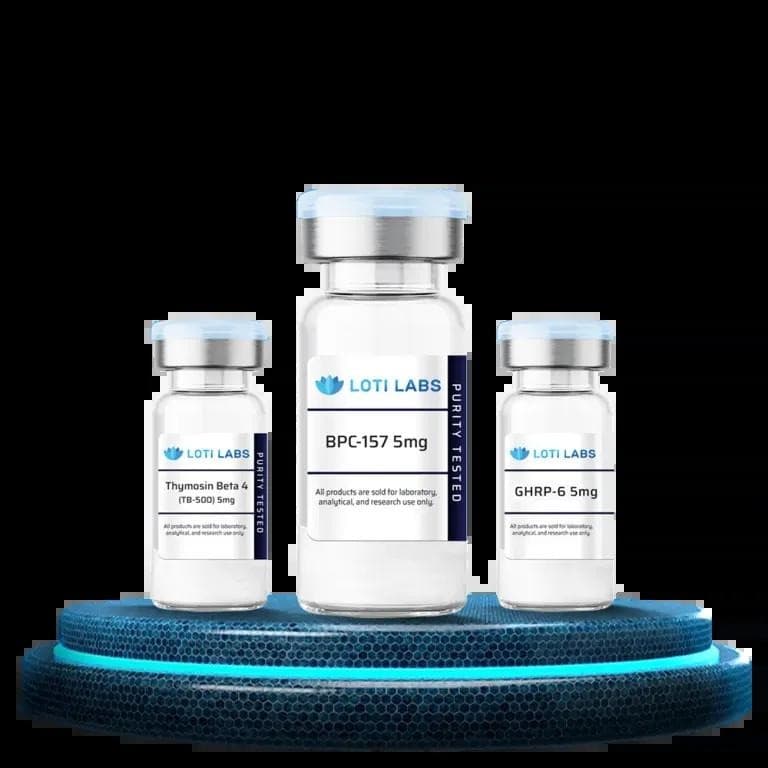
Peptide classification by length and biological function aids experimental design, with dipeptides serving as metabolic intermediates, oligopeptides acting as hormones, and polypeptides adopting protein-like domains for structural or enzymatic roles. Notable research-focused peptide classes include collagen peptides affecting extracellular matrix synthesis, BPC-157 under investigation for angiogenic signaling and structural repair, GLP-1 receptor analogs influencing metabolic pathways, antimicrobial peptides targeting microbial membranes, and thymosin-like peptides regulating immune-cell responses. Each class demonstrates varying mechanisms and evidence levels, with some supported by preclinical models and others examined in controlled laboratory settings.
Understanding peptide mechanisms in structural and metabolic studies reveals pathways where collagen-derived peptides stimulate fibroblast activity, peptides involved in structural repair influence growth-factor signaling and angiogenesis, and metabolic-targeting peptides engage transmembrane receptor pathways to modulate glucose and lipid signaling networks. The versatility of these mechanisms makes peptides valuable for biochemical modulation, though challenges remain in chemical stability and cellular delivery. Short sequences face proteolytic degradation susceptibility, while longer polypeptides require proper folding or chemical modifications to sustain activity, necessitating formulation strategies like chemical stabilization, cyclization, or lipid-based encapsulation.
The strength of supporting evidence varies across peptide classes, with collagen peptides and GLP-1 analogs thoroughly characterized in controlled studies, while BPC-157 and thymosin-like peptides remain primarily in preclinical research. This evidence mapping is essential for selecting peptides for research and interpreting molecular effects. As peptide science advances, the intricate relationships between formation, receptor interactions, stability, and formulation strategies become increasingly important for experimental investigations, requiring rigorous validation of sequence, purity, and structural characteristics to ensure reproducible and scientifically credible results in therapeutic development.