

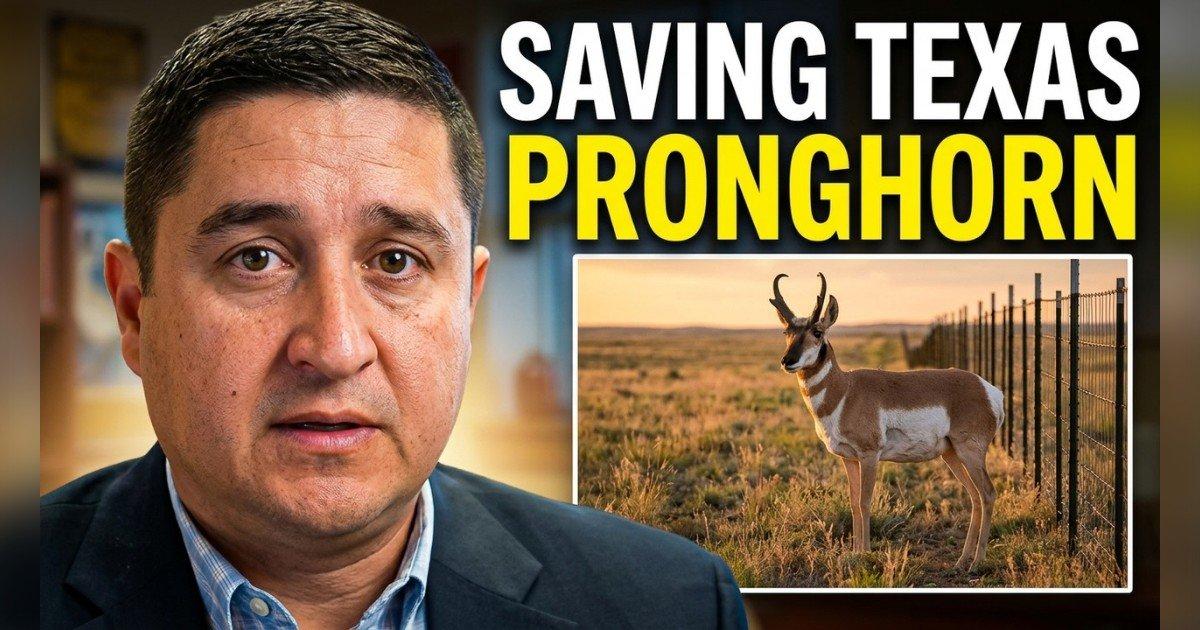
The recovery of West Texas pronghorn and the return of New World screwworm are the focus of the newest episode of the Building Texas Show, hosted by Justin McKenzie and published September 14, 2026. The episode features Lalo Gonzalez, chair of the Department of Natural Sciences at Sul Ross State University and a leader at the Borderlands Research Institute (BRI), who details the near-collapse and hard-won rebound of the pronghorn population and the reemergence of a flesh-eating parasite that had been eradicated from the United States decades ago.
Gonzalez explains that pronghorn were uniquely vulnerable to fencing and brush encroachment because they behave nothing like whitetail deer. "They don't jump fences. They physically can't. They just seem to not like doing it. So any fence is a barrier, pretty much. It's a wall that they don't cross," he tells McKenzie. He credits landowners like Nile Maxwell for opening gates, pulling historic fencing, and lowering bottom wires to knee height—about 18 inches—so pronghorn can slip underneath without disrupting livestock operations. Gonzalez calls private stewards "the best conservationists" in a state that is 95% privately owned.
The episode also digs into New World screwworm, a flesh-eating fly larva that the U.S. pushed south to Panama in the 1960s using sterile-fly technology. Gonzalez notes recent positive cases in Texas livestock and confirmed wildlife cases in northern Mexico that cross the border freely, even as cattle imports have been paused. He connects the dots to other emerging threats: pneumonia now wiping out pockets of desert bighorn sheep—Texas had been the last holdout state—drought comparable to Death Valley in some years, and the steady loss of working landscapes from El Paso to Del Rio.
The conversation also covers the 2010-2011 Texas Parks and Wildlife translocation program that moved roughly 1,000 pronghorn from the Panhandle to the Marfa and Marathon grasslands, and BRI's research on scaled quail, black bears, mule deer, sandhill cranes, soil health and hydrology. BRI's graduate program, Gonzalez adds, boasts a 95% job-placement rate at graduation, with millions of acres of West Texas serving as the classroom.
For readers, the episode underscores the fragility of the Trans-Pecos ecosystem and the outsized role of private landowners in conservation. The return of screwworm threatens livestock and wildlife alike, with potential economic consequences for ranchers and the broader agricultural economy. The pronghorn's rebound, while encouraging, remains dependent on continued habitat management and fence modifications. As drought and disease pressures mount, the stakes for one of Texas's most remote and rapidly changing landscapes have rarely been higher. The full discussion is available on The Building Texas Show.
