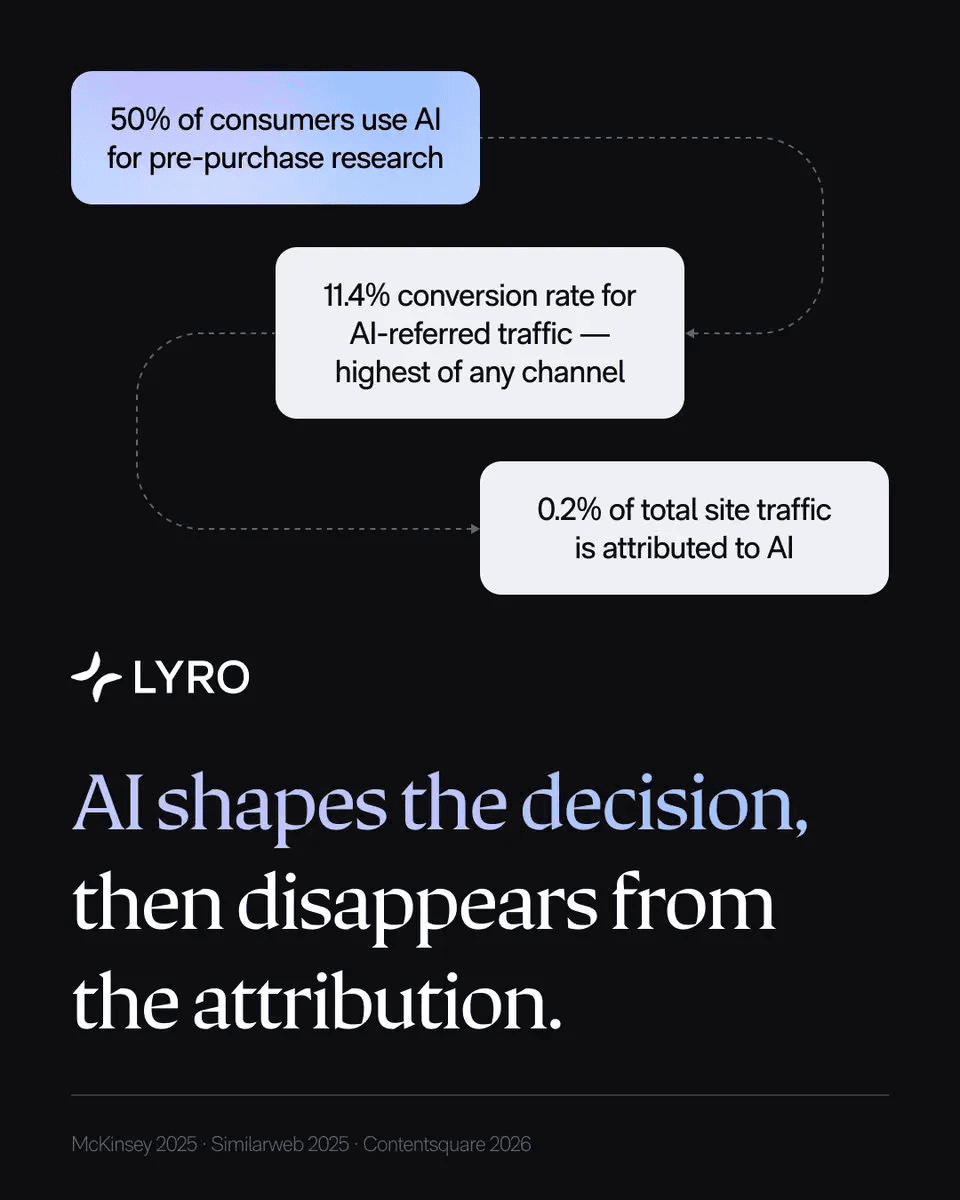
New research from Tidio highlights a critical measurement gap in how artificial intelligence influences consumer behavior, with AI shaping half of purchase decisions while receiving credit for less than 1% of web traffic. According to McKinsey research cited in the report, half of consumers now rely on AI as their primary or preferred source for product research. However, Contentsquare's analysis of actual retail web traffic shows AI-referred sessions account for only 0.2% of total visits. Both figures are accurate according to Tidio's analysis, creating what the company calls a 'dark AI' gap where AI's true impact on commerce remains largely invisible to current attribution models.
The implications of this measurement gap are substantial for businesses trying to understand their customer journeys. Similarweb data shows that ChatGPT-referred U.S. retail sessions convert at 11.4%, the highest conversion rate of any measured channel. This suggests that the small percentage of AI referrals that do get tagged represent high-intent traffic from a much larger pool of AI-influenced shopping journeys. As AI becomes more integrated into consumer research processes, brands that fail to account for this hidden influence risk misunderstanding their marketing effectiveness and customer acquisition costs.
Financial projections underscore the growing importance of addressing this measurement challenge. McKinsey projects $750 billion in U.S. revenue will flow through AI-powered search by 2028, with brands that fail to prepare risking 20–50% of their traditional search traffic. Morgan Stanley estimates AI agents will influence $190–$385 billion in U.S. e-commerce spending by 2030. These figures indicate that the 'dark AI' gap represents not just a measurement problem but a significant strategic blind spot for businesses navigating the transition to AI-driven commerce.
The research suggests that current web analytics tools are not adequately capturing AI's role in the consumer journey, particularly as AI assistants like ChatGPT provide recommendations that users then pursue through direct navigation or traditional search engines. This creates attribution challenges similar to those seen with early mobile and social media channels, but potentially on a much larger scale given AI's rapid adoption. Businesses may need to develop new tracking methodologies and reconsider how they measure marketing return on investment in an AI-influenced landscape.
For more information about Tidio's research and platform, visit https://www.tidio.com. Details about their AI agent technology can be found at https://www.getlyro.ai.