

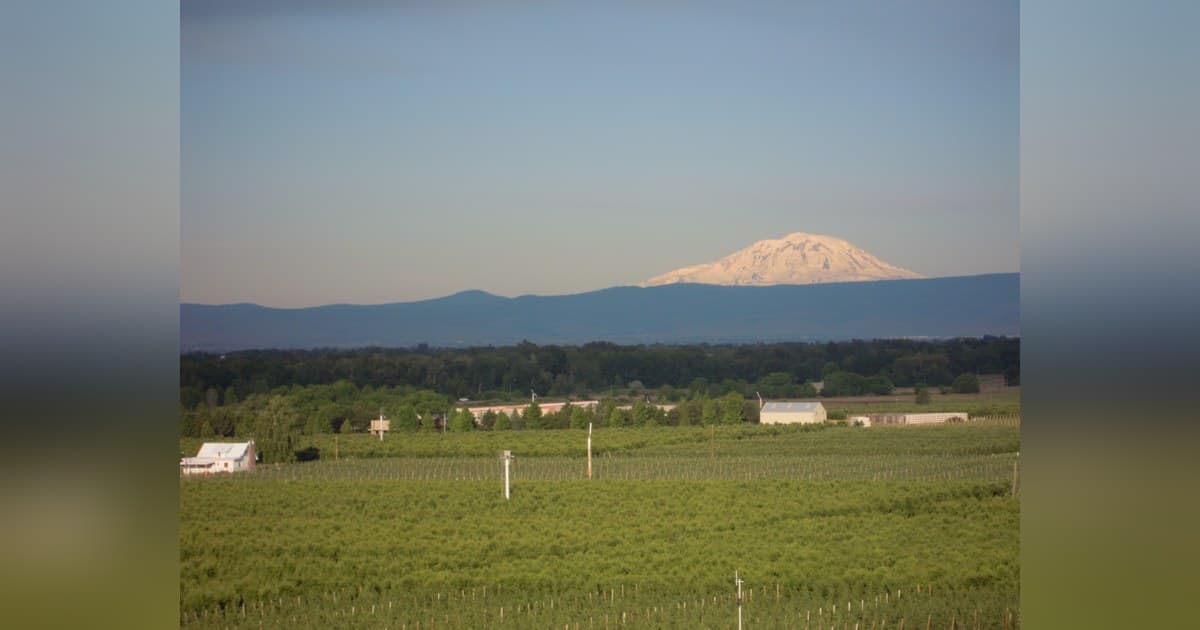
Reservoir will open a new on-farm technical community for rugged physical AI in Washington's Yakima Valley in spring 2027, the company announced. The site, Reservoir Farms – Washington, sits in a region the company says is home to more than $3 billion in high-value crop agriculture.
The location matters because Washington leads the nation in production of apples, pears, sweet cherries and blueberries. Those are labor-intensive harvests that are difficult to mechanize without damaging fruit, and they face constant disease and pest pressure — conditions that make them a demanding proving ground for automation.
Reservoir Farms – Washington will follow the same partnership model as the organization's other locations, placing startups on working farms alongside researchers and growers so technology can be built, tested and refined under commercial conditions. Initial work will focus on tree fruit and blueberries, with additional testing in wine grapes and hops and plans to extend into row crop systems over time. Full details, including downloadable images and bios, are available in the announcement, which readers can access by click here.
The expansion carries weight beyond a single state. Reservoir describes itself as a new rural institution combining an agricultural innovation platform with a venture capital fund to advance rugged physical AI in critical industries. Its farms are billed as the world's first on-farm technical communities, starting in the Salinas Valley and expanding across California, Arizona and Washington. Reservoir VC backs startups solving real problems in agriculture that compound to other outdoor industries and across the rugged physical AI stack.
For growers, the model offers earlier access to tools designed around their actual fields and harvest conditions rather than laboratory approximations. For startups, it provides R&D space, hands-on grower input and early-stage capital — a combination Reservoir says helps turn promising ideas into tools for the growers who feed the world. The company's broader platform can be explored at https://reservoir.co.
The stakes are high for the Pacific Northwest. Washington's tree fruit and blueberry sectors depend on seasonal labor and face persistent pressure from pests and disease, making reliable automation a potential answer to both cost and risk. If the Yakima Valley experiment succeeds, it could reshape how some of the country's most valuable specialty crops are harvested and managed — and set a template for other regions facing similar labor and production challenges.
