

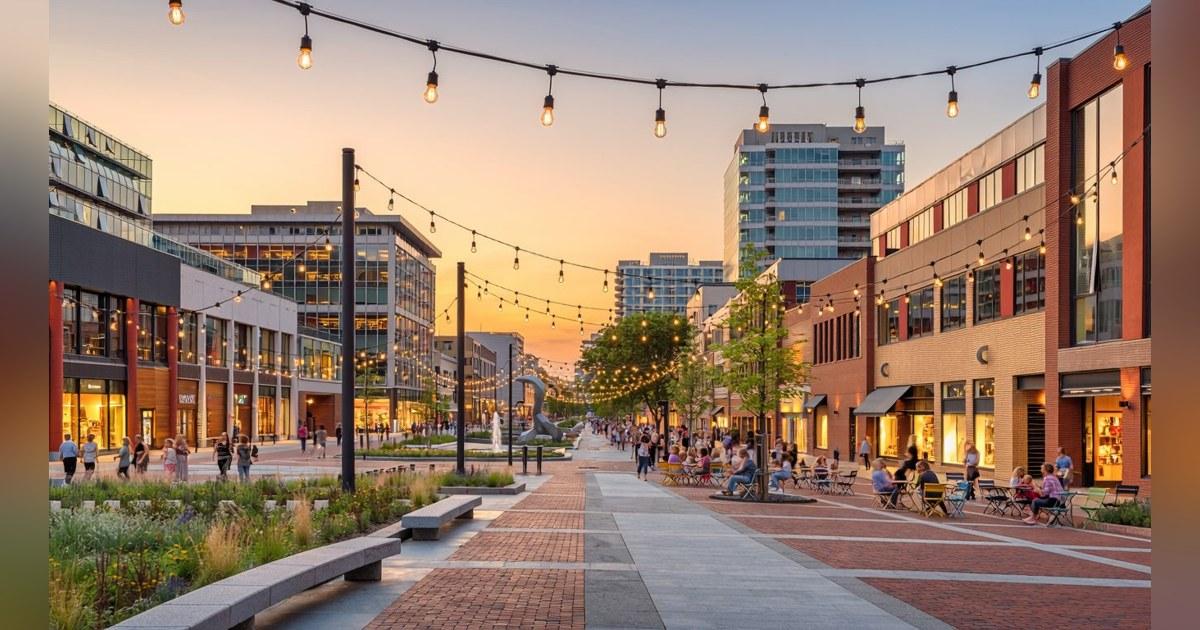
Mixed-use developments may stack apartments, offices or life science space above their shops, but most people experience a neighborhood from the sidewalk. “The ground floor is where people actually experience a neighborhood. They don’t experience the floors above it,” said Ann Ehrhart, a Boston retail strategist and founder of EVERSTREET.
That distinction matters for developers, investors and municipalities betting on mixed-use projects to generate foot traffic and long-term asset value. Ehrhart argues that identity—how a place makes people feel—depends on whether visitors want to stay or simply buy what they came for and leave. Many business plans count on lingering, but that kind of identity must be built on purpose.
Ehrhart describes good placemaking as layered, starting from the outside in. Retail belongs where people can see and reach it easily, not wherever it fits best next to the lobby and mailroom. Blocking and massing, the split between anchors and smaller storefronts, and variety in signage all shape the experience. EVERSTREET works through these decisions in the Assess and Plan phases of its Activate Your Street framework.
The space between buildings matters just as much. Ehrhart calls it connective tissue: seating, varied planting and paving, public art and lighting. “Never underestimate the power of a few good strands of string lights to really set the tone,” she said. The goal is for none of it to feel forced. “When it’s done well, it’s invisible,” she said. “If it’s too heavy-handed, it feels manufactured.”
EVERSTREET classifies locations into three corridor types with different rules. Destination corridors already draw residents, tourists and office workers, so leasing means understanding why they come and filling vacancies to match. Convenience corridors serve people who come for what they need and move on. Untested corridors have no proven demand, so programming is everything—every storefront, operator and outdoor space must work together to change habits. Visibility and access are foundational in all three. “Get as close to your consumer as you can,” Ehrhart said.
Tenant mix also shapes outcomes. Prime national tenants often consider only Destination corridors and carry co-tenancy requirements, so Untested corridors may depend on local operators. Ehrhart plans for that early with subdividable suites and underwriting that matches. She said an authentic, curated mix of local talent draws customers, customers drive sales and sales drive demand. “Once demand is there, it’s no longer an Untested Corridor,” she said.
Identity can drift after opening day, particularly in Untested and Convenience corridors. Ehrhart cautions against assuming an underperforming tenant should simply be replaced, since that means vacancy and fresh transaction costs without understanding what went wrong. She advises checking in with tenants regularly, comparing sales against projections and leaving room to experiment. “Real estate is a slow, physical business,” she said.
