

If you have been avoiding Seaside Heights or Belmar because of what you saw on a reality TV show, you may be working with a very outdated picture. The Jersey Shore aired its last original season years ago, and both towns have changed in ways that would surprise most people who wrote them off.
Carly Ringer, a real estate agent with Keller Williams Realty Spring Lake specializing in the Central Jersey Shore market, says she regularly has to walk buyers through the gap between perception and reality when these towns come up in conversation. “There are two towns in particular, Belmar and Seaside Heights, where I deal with perceived notions all the time,” she says. “People either want to rush there because they want to be part of the action, or they say keep me away from that town. Both reactions are based on something that has changed considerably.”
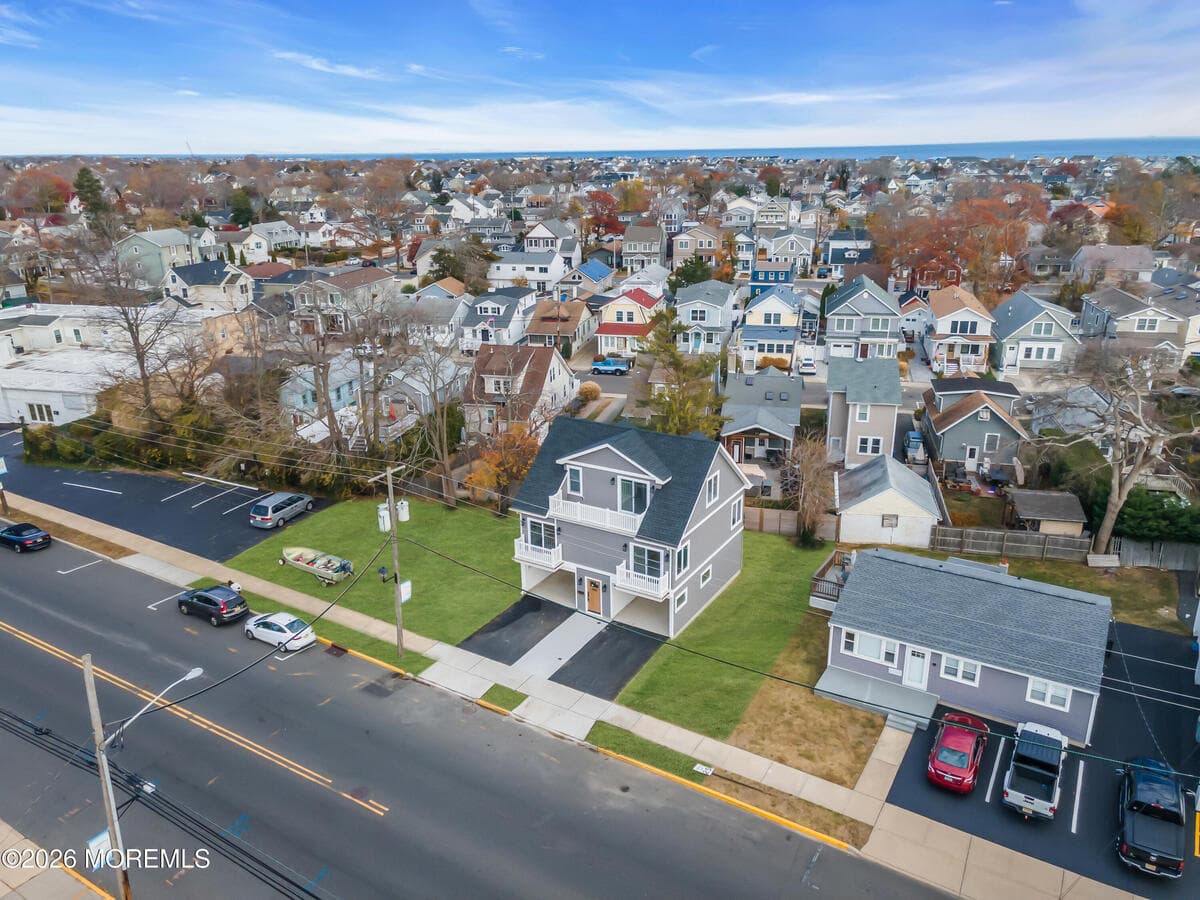
Seaside Heights was the backdrop for most of what viewers saw on the show: the nightclubs, the boardwalk, the party atmosphere along the water. Some of that energy still exists, but the housing market there has moved in a direction no one would have predicted watching the show. Homes that used to sell in the $500,000 range are now being replaced by new construction, pushing $1 million and above. Farm-to-table restaurants have opened. The town is drawing a different buyer than it did a decade ago, and the rental market has followed. Weekly rental rates that used to sit around $2,500 are now closer to $6,000 in some cases. The people renting and buying in Seaside Heights today are expecting an elevated experience, and the town’s new construction is delivering it.
Belmar had a similar reputation: a younger crowd, a packed bar scene, small houses used as summer crash pads. That version of Belmar still exists in people’s memories more than it does in the current market. Many of those small two and three-bedroom houses are gone. After Hurricane Sandy, some were knocked down and never rebuilt in the same form. Others sat until builders came in, demolished what was there, and put up homes in the $1 million to $3 million range. That shift has changed who is buying and renting in Belmar and what the town feels like on a day-to-day basis. Ringer says she still has clients who are staying away from Belmar without realizing how much it has changed. “I don’t think people understand that it has shifted quite a bit,” she says. “It’s not what it was. Many long-timers miss the small bungalows and charm as change has occurred.”
For buyers shopping for a home on the Central Jersey Shore, filtering out certain towns based on reputation alone may limit options. A town’s personality from ten years ago is not necessarily its personality today. The practical impact is real: buyers who ruled out Belmar or Seaside Heights based on outdated assumptions have, in some cases, missed homes and price points that would have worked well for them. New construction in both towns is bringing in buyers who would not have considered the area before, and that is pushing values in a direction that makes early attention worthwhile. The Central Jersey Shore is a collection of micro-markets, and getting a read on which town actually fits your life is one of the first conversations worth having with a local agent before scheduling showings.
For buyers actively looking at homes in this market, you can view current listings across the Central Jersey Shore to get a sense of what is available in different towns and price ranges.
