

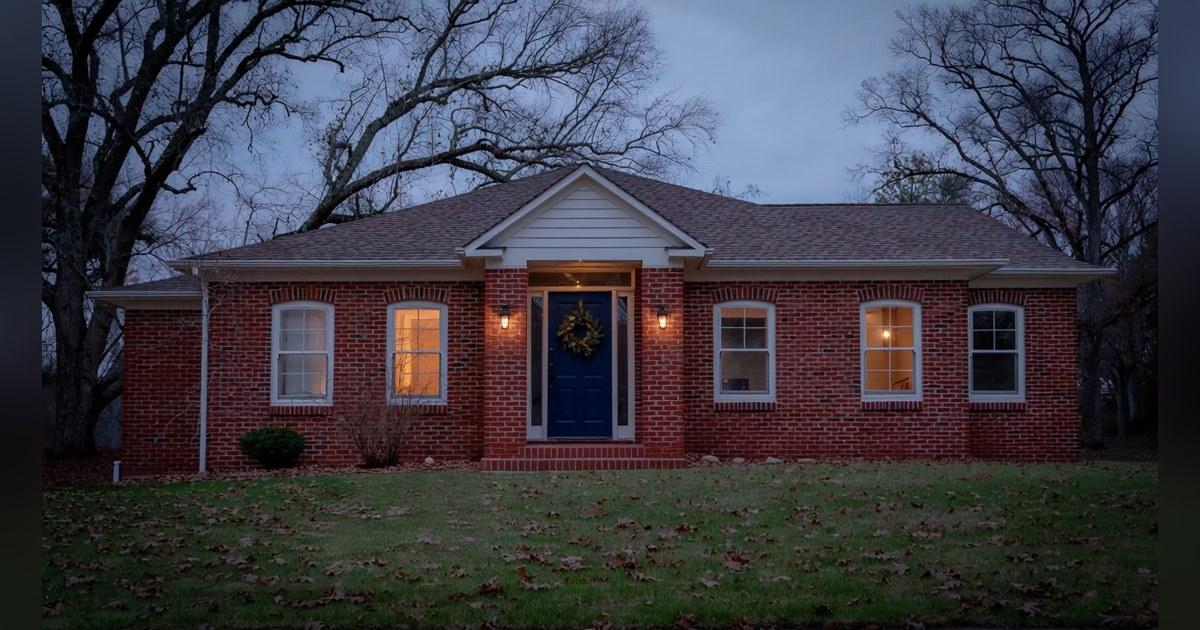
Sellers in Central Arkansas often wonder whether to keep their homes on the market through the holidays or pull them until spring. Jerry Larkowski, Managing Broker at ESQ. Realty Group, LLC and a licensed attorney, says the decision depends on what the seller needs most. “I don’t think there’s a hard and fast, white or black answer to that,” he says. If the priority is a quiet holiday, pulling the listing can make sense. As he puts it, “There’s nothing worse than having a turkey in the oven and having a notification come through” that a buyer wants to see the house in 10 minutes. But if the goal is to sell, he cautions against assuming nobody is looking.
The buyers who show up in December are rarely browsing. Most are on a deadline. Larkowski describes a renter on a month-to-month lease who gets a notice in mid-November that the landlord sold the property and must be out by year’s end. “Then you’re in high gear because you’ve got six weeks to find a house,” he says. Many of those renters are first-time buyers, and a first-time buyer can need six weeks or more to get into a house. Others are starting a new job in December or January, have already sold a home elsewhere, or have a lease running out. In 2021, Larkowski worked with a woman relocating to Little Rock during a family medical emergency. Her lease ended December 31, and she wanted to be in a house by mid-December. They closed on December 2. “There are always people looking for houses,” he says. “You just don’t have the kind of interstate traffic that you would have during rush hour in the spring, in the summer.” There are fewer buyers, he says, “but they’re still there.”
The pace does slow. In January 2026, the typical Little Rock home spent about 75 days on the market, according to Redfin. But a slow market is not an empty one, and Larkowski is skeptical of the common advice to pull a listing after 90 or 120 days. “There may be somebody that comes along,” he says. “You never know.”
Larkowski weighs three things when pricing a home: location, condition and price. Location can’t be changed and sets a good chunk of the price range before anything else comes into play. Condition is where many sellers overspend. Larkowski rarely recommends upgrades before a sale “unless there’s something really simple and easy and widely liked.” A seller who redoes a kitchen in a style buyers can’t stand has spent money to lose a buyer. That is especially true in December, when buyers care most about timing. If a house needs some cosmetic work but the buyer needs to move, Larkowski says, “they’re going to buy it and go, ‘Well, we’ll just get to that in a couple of months.’” Repairs are different. A deck with problems or a dishwasher that needs replacing should be handled.
Price is the one factor a seller fully controls, and in a slow month it carries more weight. Larkowski frames it as a trade-off every seller has to make. “Is it more important for me to wait until January, February, March to sell this and get what I want?” he asks. “Or should I shave $5,000 off and just take it and go and be done with it?” The answer depends on “the person, the house, and don’t forget the economy.” He recently listed a home that sat for almost 60 days and drew offers as low as 60% of the list price. The sellers stayed patient, and the home sold at the original list price, with the sellers covering some of the buyer’s closing costs. Larkowski says concessions like that are something sellers will have to get used to, because buyers are not as flush with cash as they used to be.
Sellers counting on a quick close should plan around the calendar. “You don’t have 31 days in December,” Larkowski says. Once weekends and Christmas Day come off, December 2026 has about 22 business days. Banks close for holidays, and many employees take time off late in the month to use vacation days before they expire. In normal conditions, Larkowski says local banks can usually close a conventional loan in three to four weeks. A cash sale can close in about two. A first-time buyer using loan programs or incentives may need six weeks or longer. Funding problems, repairs an appraiser requires before the loan is made, and anyone on the deal being out of the office can stretch those timelines. In his experience, at least half of closings are delayed, even if only by a couple of days. For a seller who accepts an offer in December, that often means a closing date in January.
Buyers on a holiday deadline can browse Larkowski’s current listings. Fewer buyers walk through the door in December. The ones who do came to buy.
