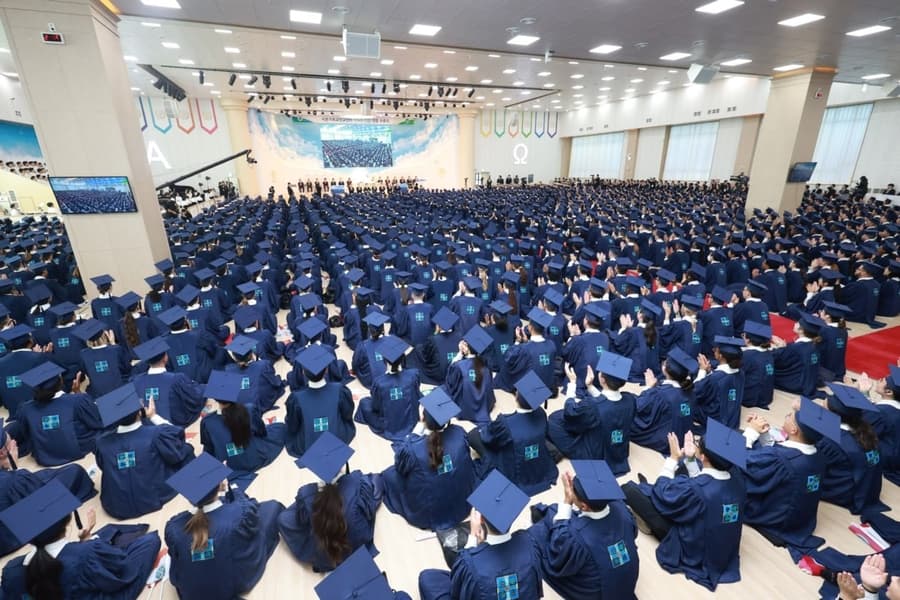
In a remarkable display of growth, the Shincheonji Church of Jesus conducted its 115th graduation ceremony on October 30th, awarding degrees to 111,628 students from its Zion Christian Mission Center. This event, held at the Shincheonji Cheongju Church, has been hailed as the world's largest graduation ceremony, underscoring the church's expanding influence in religious education.
The ceremony faced last-minute logistical challenges when its original venue was canceled, forcing organizers to swiftly relocate. Despite this setback, the event proceeded successfully, attracting approximately 10,000 overseas graduates and 1,000 foreign religious figures. This international attendance highlights the church's growing global appeal and its ability to attract students from diverse backgrounds.
Notably, this year's graduating class included 3,377 pastors, with an additional 6,203 pastors currently enrolled in the mission center's comprehensive Bible study program. This significant participation from established religious leaders suggests a growing interest in Shincheonji's teachings among various denominations.
Chairman Man-Hee Lee of Shincheonji Church emphasized the unique position of the church in interpreting the Book of Revelation, claiming that their teachings are based on direct experiences and revelations. This assertion of exclusive insight into biblical prophecies could potentially influence theological discussions and interpretations within the broader Christian community.
The church's rapid growth, consistently producing over 100,000 graduates annually since 2019, is unprecedented in recent religious history. This expansion raises questions about the factors driving such growth and the potential impact on established religious institutions. As Shincheonji continues to attract followers and even entire denominations seeking collaboration, it may reshape the landscape of Christian education and potentially influence religious dynamics on a global scale.
The success of Shincheonji's educational model and its ability to attract such large numbers of students, including established pastors, could prompt other religious organizations to reevaluate their own educational approaches. This development may lead to increased competition or collaboration in religious education, potentially driving innovation in theological teaching methods across various faiths.