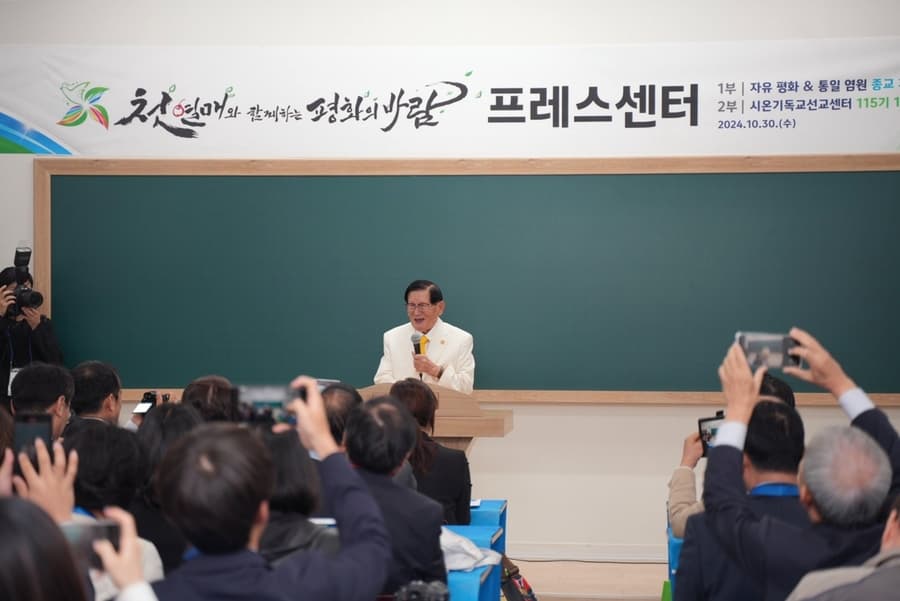
The Shincheonji Church of Jesus was forced to relocate its 'Religious Leaders Forum and Graduation Ceremony' following a last-minute cancellation by the Gyeonggi Tourism Organization. The event, originally scheduled to take place at Imjingak Peace Nuri in Paju, South Korea, was moved to Shincheonji Cheongju Church on November 30, 2024.
Chairman Man-hee Lee of Shincheonji Church expressed his concerns about religious oppression, stating, "There should never be any religious oppression in our country. I earnestly ask the government and officials to ensure that something like this never happens." The sudden cancellation, which occurred on the day of the rental, came after significant preparations had been made, including the arrival of overseas participants and an estimated expenditure of over 20 billion won.
The church suspects that protests from Protestant groups and political pressures may have influenced the decision to cancel the venue rental. Chairman Lee emphasized the constitutional separation of politics and religion, questioning the legality of such actions. "No matter how powerful you are, can you ignore the law?" he asked, referencing the democratic principles enshrined in the country's constitution.
This incident has sparked a debate about religious freedom and discrimination in South Korea. An official from Shincheonji Church described the cancellation as "deplorable" and suggested that if administrative agencies and public institutions made this decision based on religious bias, it could be considered unconstitutional.
The church is now considering legal action due to the significant financial and logistical damages incurred. This situation highlights the ongoing tensions between religious groups in South Korea and raises questions about the role of government institutions in mediating such conflicts.
As South Korea continues to navigate its path as a modern democracy, incidents like this underscore the importance of upholding constitutional rights and fostering an environment of religious tolerance. The outcome of this controversy may have broader implications for religious freedom and the relationship between faith communities and government entities in the country.