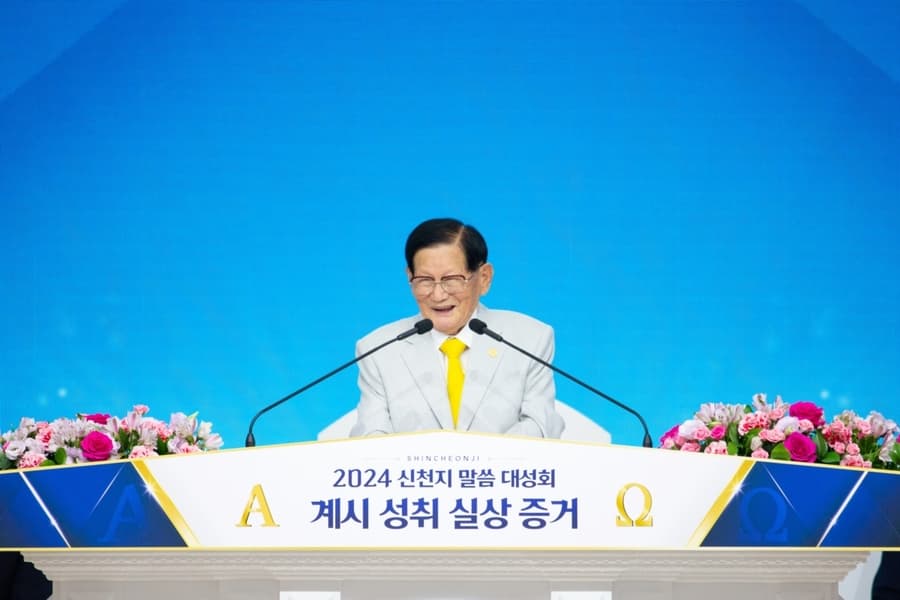
In a significant religious gathering, Shincheonji Church of Jesus hosted a large-scale seminar on the 'Testimony of the Fulfillment of Revelation' in Masan, South Korea, on September 25, 2024. The event, which drew over 16,000 attendees including 100 pastors and 50 journalists, marks the first seminar of this magnitude in Masan since 1995.
Chairman Lee Man-hee delivered a sermon on the Book of Revelation, explaining its prophecies and their alleged fulfillment. The seminar was organized in response to requests from pastors and believers in the Gyeongnam region who had attended previous Shincheonji seminars in Ulsan and Busan earlier this year.
The event underscores Shincheonji's growing influence in biblical interpretation and its expanding reach. The church reported that as of August 2024, 727 domestic churches in South Korea had signed Memorandums of Understanding (MOUs) for Bible exchanges with Shincheonji. Internationally, 13,053 churches across 84 countries have entered similar agreements, with 1,671 churches in 43 countries reportedly joining Shincheonji and changing their signboards.
This trend suggests a significant shift in religious dynamics, potentially impacting traditional church structures and biblical interpretation methods. Pastor Lee, a 40-year ministry veteran who attended the seminar, acknowledged gaining new insights into the Book of Revelation through Shincheonji's teachings, highlighting the appeal of the church's biblical exegesis to established religious leaders.
Shincheonji's growth is further evidenced by its reported graduation figures: 103,764 in 2019, 106,186 in 2022, and 108,084 in 2023, totaling 318,034 new members over three years. This rapid expansion indicates a substantial movement within global Christianity, potentially reshaping religious landscapes and theological discussions.
The church's focus on the Book of Revelation and its claim to provide clear interpretations of biblical prophecies appears to be a key factor in its appeal. As Shincheonji continues to gain followers and influence, it may prompt broader discussions about scriptural interpretation and the nature of religious authority in contemporary Christianity.