

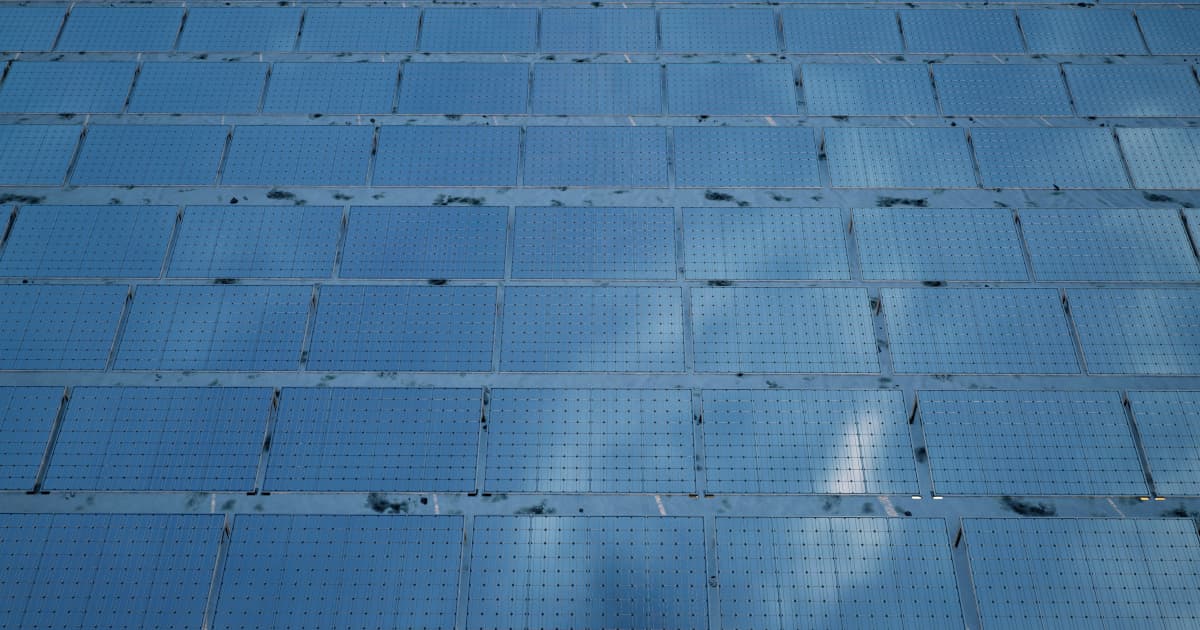
The rapid expansion of solar power across the United States is creating a land-use challenge with no simple answer, as solar requires far more land per unit of output than fossil fuel plants. This tension is showing up at scale as renewable buildout accelerates across the country. A coal plant can power a city from tens of acres; a solar farm generating equivalent output may need hundreds. How those questions are answered will shape who gains from the transition and who carries the environmental and social costs.
According to a recent report from GreenEnergyStocks, the land-use dilemma is prompting a search for alternative clean energy sources that require less space. One firm that could play a role is American Fusion Inc. (OTC: AMFN), which is working on fusion energy—a form of power that could generate large amounts of electricity without the extensive land footprint of solar farms. Fusion energy, if commercially viable, could help ease the pressure on land resources while still meeting clean energy goals.
The land-use issue is becoming more pressing as states and utilities push to meet renewable portfolio standards and carbon reduction targets. Large-scale solar installations often compete with agricultural land, natural habitats, and community spaces. This competition can lead to conflicts over land use, potentially slowing the transition to renewable energy. The need to balance renewable energy expansion with other land uses is a key challenge for policymakers and developers.
Alternative approaches, such as rooftop solar and dual-use solar (agrivoltaics), where solar panels are combined with agriculture, are being explored to mitigate land-use conflicts. However, these solutions may not be sufficient to meet the scale of demand. This is where technologies like fusion could provide a breakthrough, offering a dense, low-land-use source of clean power.
American Fusion Inc. is among the companies pursuing fusion energy, which mimics the process that powers the sun. While still in development, fusion has the potential to provide virtually unlimited clean energy with minimal land use compared to solar or wind. The company's progress is being closely watched by investors and energy experts as a potential game-changer in the renewable energy landscape.
For more information on the land-use implications of solar expansion and emerging clean energy technologies, visit GreenEnergyStocks. The platform provides insights into companies working to shape the future of the green economy.
