Two of the largest costs in a South Florida home purchase are moving in opposite directions. Mortgage rates have climbed back above 7 percent, while homeowners insurance, after years of steep increases, is finally getting cheaper for many owners. For buyers in Palm Beach County, the net effect lands between relief and sticker shock, and the details of an individual home matter more than the headlines.
Loodmy Jacques, a real estate agent who leads The Jacques Team at Keller Williams Reserve in West Palm Beach, says the initial reaction to rates above 7 percent is predictable, coming a year after buyers were seeing rates in the low 6s. More buyers are adjusting than pausing. Those who wait tend to be move-up buyers comfortable where they are. Those who proceed are usually driven by life events such as a new job, a growing family, or an expiring lease, and they adjust by shifting price range, increasing a down payment, or widening their search area. Higher rates also thin the competition. Jacques says buyers active now have more inventory and more room to negotiate than in several years.
On insurance, the direction has changed even if the cost has not caught up. Following Florida’s 2022 and 2023 reforms, carriers have returned to the market and are filing for decreases rather than increases. “The direction changed, the level didn’t,” Jacques says. A homeowner moving from an $8,000 premium to $7,100 notices the difference without feeling rescued. The larger change, in his view, is fewer collapsed deals. For roughly three years, insurance quotes obtained during the inspection period frequently came in so far above estimates that contracts fell apart. That happens less often now. Small savings also compound: by Jacques’ estimate, a quote $60 a month lower than expected translates to roughly $9,000 more in loan a buyer can qualify for at current rates.
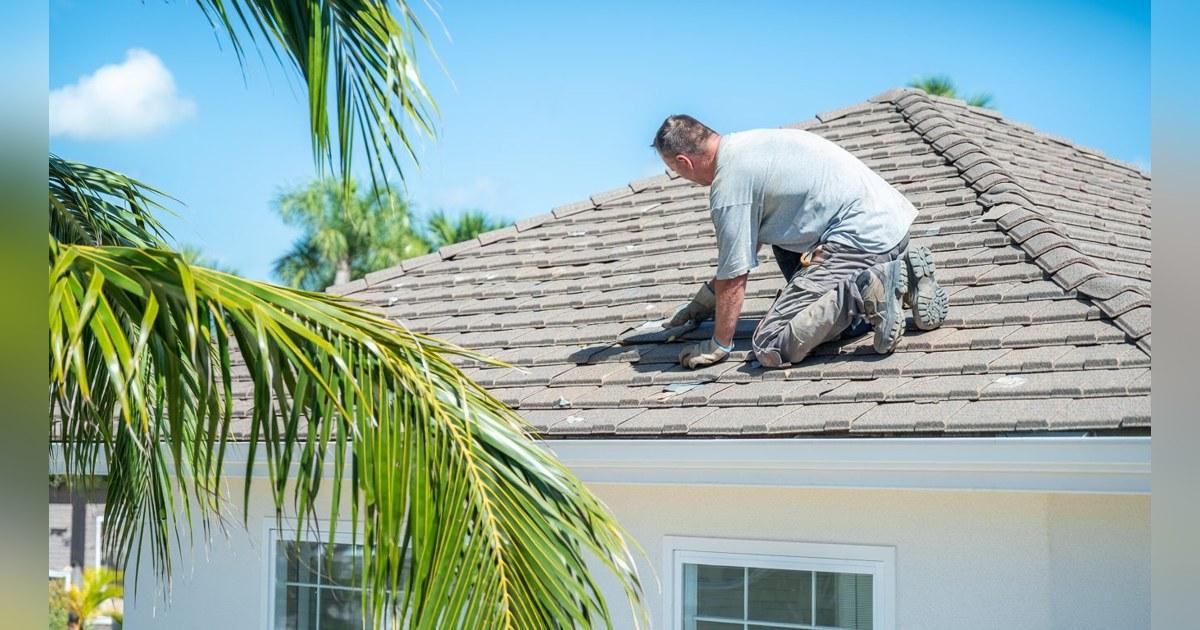
Roof age remains the biggest single factor in a quote. Jacques cites a 1979 Palm Beach County home that sat on the market for 258 days despite a new 2024 roof that its listing never mentioned. After the roof, wind protection and major systems such as electrical panels and water heaters carry the most weight. Some older panels can make a home nearly uninsurable until they are replaced, which is why listings that include a four-point inspection, wind mitigation report, and insurance quote upfront tend to draw stronger offers.
Lower insurance does not fully offset higher rates. Jacques offers an example of a $600,000 home with 10 percent down: principal and interest of about $3,300 a month at 6.2 percent becomes about $3,665 at 7.2 percent, an increase of roughly $360. A 10 percent cut on a typical $5,500 policy saves about $45 a month. Buyers with newer roofs and impact windows see the largest insurance savings. Running the payment on both rate and insurance assumptions shows how narrow or wide that gap is for a given home.
With more homes on the market, Jacques says the most effective ask is often a seller credit to buy down the rate rather than a lower price. He is taking that approach on his own new construction purchase in Lake Worth, using credits to bring the rate into the high 5s because he plans to stay at least 10 years. Builders in Palm Beach and St. Lucie counties are offering below-market financing and closing cost help, and Jacques advises getting insurance quotes during the inspection period rather than the week before closing, a step that has become standard in the buying process. “If rates come down later, you can refinance,” he says. “You can’t go back and buy the house you passed on.”