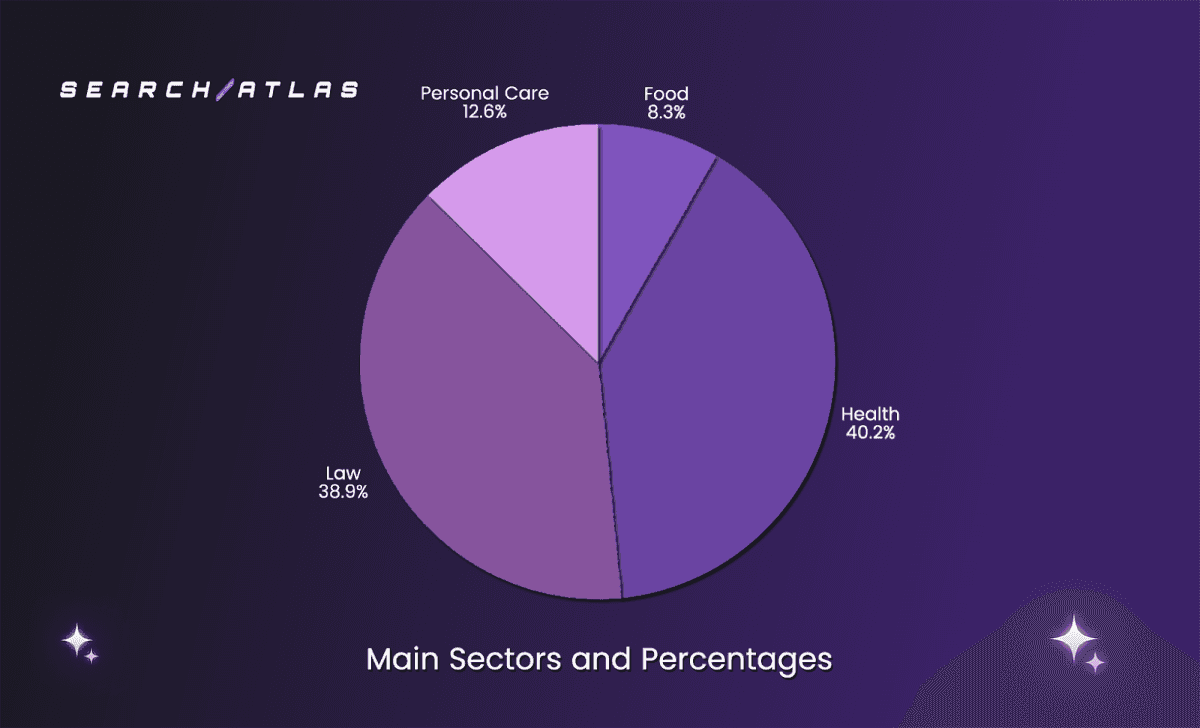
A new study by Search Atlas provides definitive insights into the factors driving Google Business Profile rankings, revealing that proximity remains the dominant factor while review quality and relevance vary significantly by industry sector. The research, which analyzed 3,269 businesses across multiple sectors, offers quantifiable data that challenges conventional wisdom about local search optimization.
The global analysis shows proximity accounts for approximately 48% of ranking influence, making location the single biggest driver of local search visibility. Industry type follows at 21%, while review keywords contribute 11% and the number of reviews accounts for 8%. Business name matching with search terms provides a 7% advantage, while profile and website optimization contribute only 2-3% collectively. Other factors including ratings, category relevance, and website authority play minimal roles at less than 1% each.
Sector-specific findings reveal important variations in ranking dynamics. The food sector shows strong review-driven differentiation beyond proximity, with review count and rating growing in importance for top 1-5 rankings. Health businesses require a balance of location, category accuracy, and keyword-rich reviews to secure top positions. The law sector demonstrates proximity dominance with nearly 68% influence in positions 1-21, though reviews gain weight in elite rankings. Most strikingly, the beauty sector relies primarily on reviews and branding, with review count and business name-keyword match accounting for 65% of predictive power in top positions.
The study employed machine learning techniques, specifically XGBoost regression, to analyze local ranking features across keyword-based SERP grid visibility, business profile metadata, and website content with reviews. The model explained 75% of the variance in GBP rankings, providing unprecedented clarity on how Google orders businesses in the local map pack. The methodology incorporated review text relevance, backlink anchor alignment, and URL content matching, suggesting Google applies natural language processing to extract meaning from customer feedback and digital content.
For local businesses, the implications are clear: proximity must be treated as a baseline factor rather than a competitive differentiator, while strategic review generation with service-specific keywords and natural keyword integration into business names can significantly impact rankings. Sector-specific optimization approaches are essential, as beauty businesses benefit most from reviews and brand alignment, law firms depend on proximity and review content, and health providers must balance proximity, reviews, and category alignment. The research provides measurable percentages that help businesses allocate resources effectively rather than relying on anecdotal evidence or outdated optimization strategies.