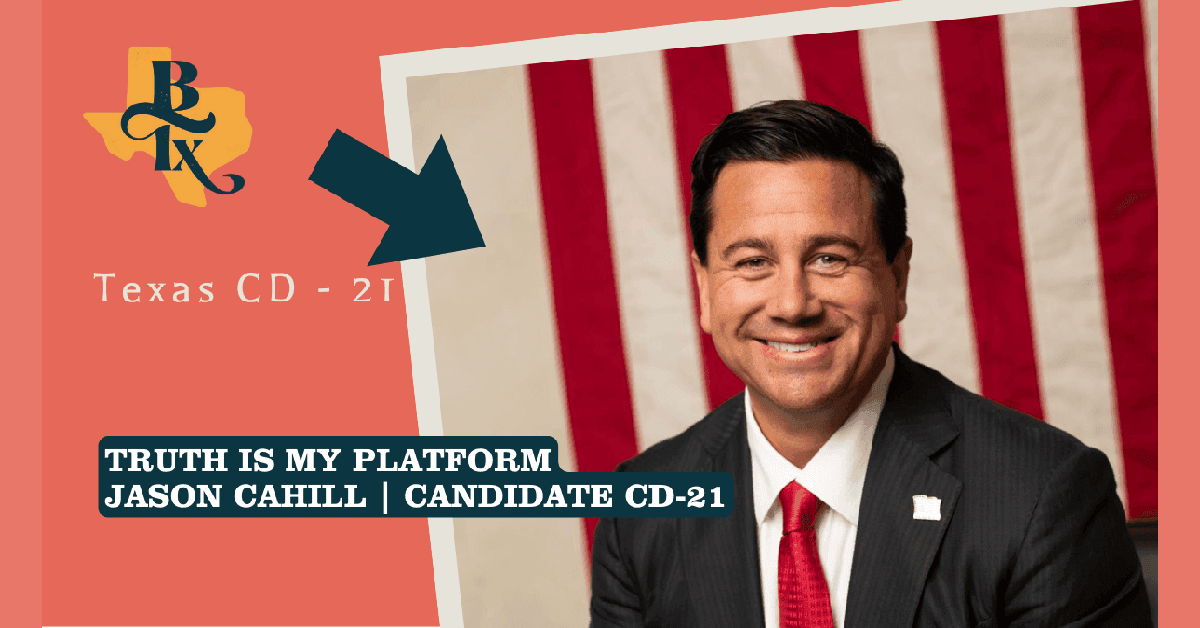
Jason Cahill, a candidate for U.S. Congress in Texas's 21st Congressional District, recently participated in an interview where he articulated his positions on fiscal responsibility, government accountability, and the importance of voter engagement. Cahill, who describes himself as a political outsider, veteran, and business executive, entered the race after the current representative announced they would not seek re-election.
During the conversation, Cahill emphasized that Congressional District 21 is "the people's seat" and stated his motivation for running stems from concerns about government spending, national debt, education, and long-term consequences for future generations. "This seat doesn't belong to a politician — it belongs to the people," Cahill said. "Anyone seeking to represent this district should remember that they serve at the will of the voters."
The interview explored Cahill's perspective on fiscal conservatism, including calls for government audits, balanced budgets, and lawmakers who understand budget management and accountability at scale. He also discussed how faith, family, and Hill Country values shape his approach to leadership.
A significant portion of the conversation addressed voter participation, particularly in Texas primary and runoff elections that historically see lower turnout than general elections. Cahill acknowledged his own past disengagement from primaries and called on Texans to take more active roles earlier in election cycles. The interview host, Justin McKenzie, noted that "primary elections are where many races are effectively decided" and explained that the interview series exists to help voters understand candidates and why participation matters before November elections.
The full episode featuring Jason Cahill is available on YouTube via Vote Like A Texan at https://youtu.be/X4Yab1a-EKU?si=LuAApgDWj3b1akBb. The interview is part of Vote Like A Texan's broader mission to encourage civic engagement by making candidate conversations accessible through various platforms. Cahill outlined his campaign philosophy as "Truth is my platform," arguing that meaningful reform requires honest conversations even when solutions are difficult.
This discussion matters because it highlights how political newcomers are framing their campaigns around core issues of fiscal responsibility and democratic participation at a time when voter engagement remains a critical concern. The emphasis on primary election participation addresses a systemic issue in American politics where low turnout in early voting stages can significantly influence election outcomes. Cahill's focus on government accountability and budget management speaks to ongoing national debates about federal spending and debt, while his characterization of elected positions as belonging to constituents rather than politicians reflects broader discussions about representation and political power dynamics.
The interview's availability through platforms like YouTube at https://www.youtube.com/@VoteLikeATexan represents how digital media is changing political communication, making candidate information more accessible to voters. As midterm elections approach, conversations like these provide voters with insights into candidate priorities and governing philosophies that could shape legislative approaches to economic policy, government oversight, and electoral participation reforms.