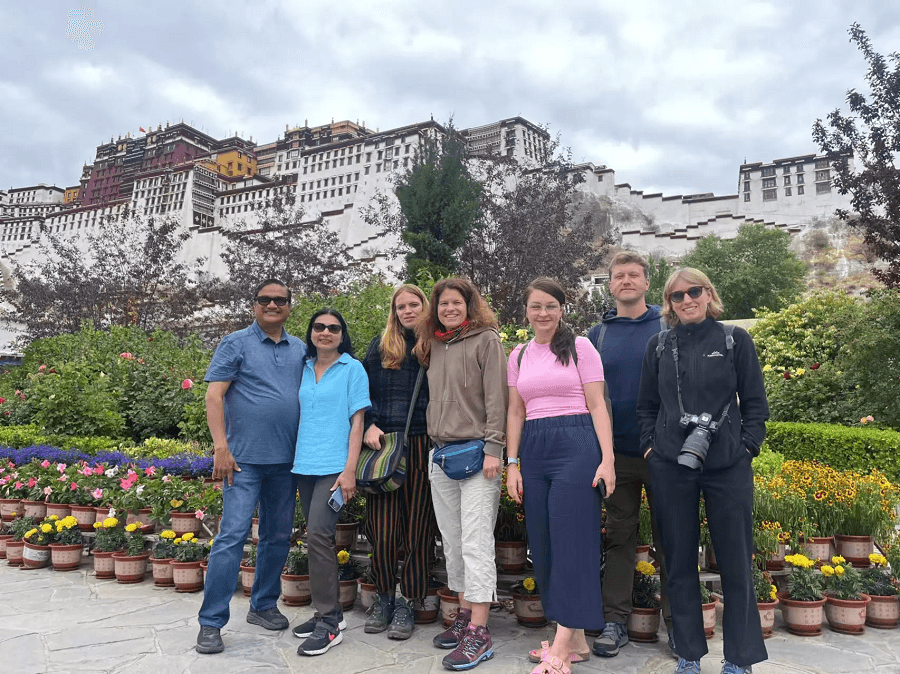
Great Tibet Tour has announced a substantial increase in the inbound Tibet travel industry during the first half of 2024. Statistics indicate that between January and June, Tibet saw a notable rise in tourists from countries such as the United States, Germany, Singapore, Malaysia, and Vietnam. The Tibet Autonomous Region's Department of Culture and Tourism reported that the region received 16,610 inbound tourists in the first quarter alone, marking a year-on-year increase of 525.6%.
This growth can be attributed to several factors, including supportive policies, enhanced transportation, and Tibet's abundant tourism resources. At the start of 2024, the Chinese government introduced additional visa-free policies and entry facilitation measures, leading to a stable increase in foreign tourists. Approximately 14.635 million foreigners entered China during this period, reflecting a 152.7% year-on-year increase. Notably, 52% of these entries were visa-free, representing a 190.1% increase.
The rise in inbound tourism is largely due to new visa-free measures for major European and Southeast Asian countries, such as France, Germany, Spain, Switzerland, Thailand, and Malaysia. These policies have considerably reduced the time and steps required for foreign visitors to travel to Tibet.
Improved transportation also played a crucial role. The resumption and addition of international flights by Himalaya Airlines, including international flights between Lhasa and Kathmandu, have significantly increased passenger volume. Domestic flights between Tibet and other Chinese cities have also seen a rise. Predictions from the Civil Aviation Administration of China suggest that the international passenger market will recover rapidly, with weekly flights expected to reach around 6,000 by the end of 2024, recovering to about 80% of pre-pandemic levels.
The ongoing development of highways and railways further boosted accessibility. The recent opening of the Lhasa-Shigatse Expressway on June 30, 2024, has significantly reduced travel time for tourists. Tibet remains an attractive destination due to its unique tourism resources, including popular attractions like the Potala Palace, Namtso Lake, Everest Base Camp, and Kailash Mansarovar Yatra.
Foreign tourists interested in visiting Tibet are advised to sign up with a local Tibetan travel agency to obtain the necessary Tibet Travel Permit. Different itineraries require various permits, which can take up to a month to process, emphasizing the need for advance booking.