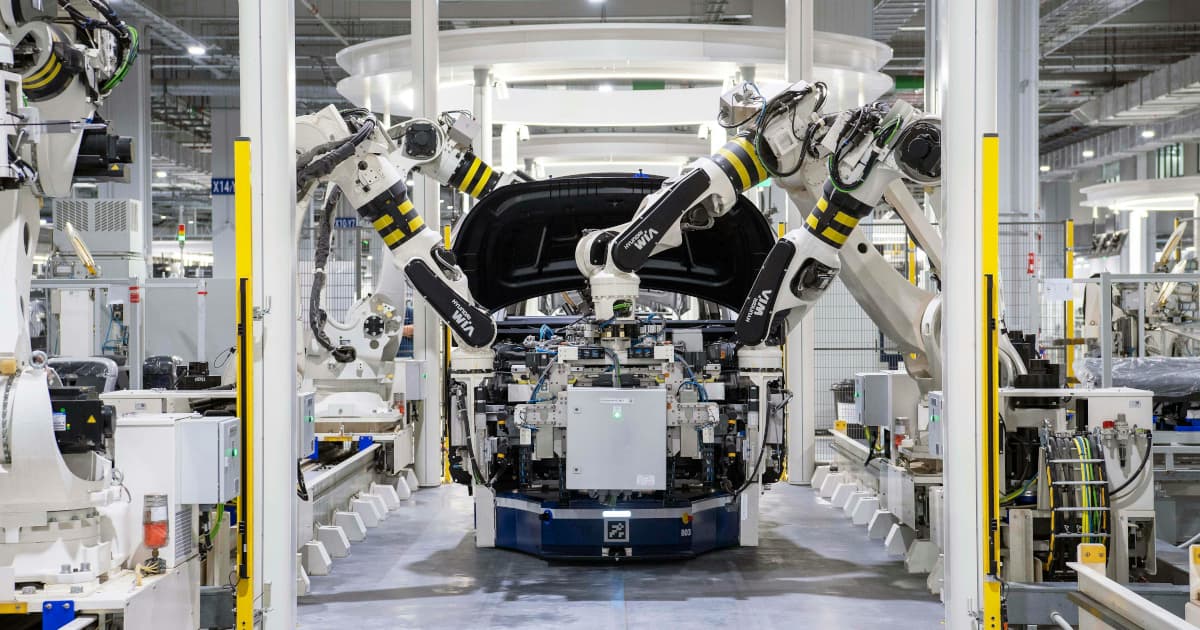
Xiaomi has conducted a pilot trial using humanoid robots in the assembly of electric vehicles at its Beijing plant, achieving a task completion rate above 90% during three hours of active production work. This development represents a notable advancement in the integration of bipedal automation into industrial settings, moving beyond theoretical applications to practical implementation. The trial positions Xiaomi as an early adopter in a field where such technology has long been anticipated but rarely demonstrated in live manufacturing environments.
The importance of this trial lies in its potential to reshape manufacturing efficiency and cost structures. A successful shift toward humanoid robots in assembly lines could reduce reliance on human labor for repetitive or physically demanding tasks, possibly leading to faster production cycles and lower operational costs over time. For the electric vehicle industry, which faces intense competition and pressure to scale production, such innovations could provide a competitive edge in both domestic and international markets. Other EV manufacturers, such as Massimo Group (NASDAQ: MAMO), may follow suit, accelerating industry-wide adoption of similar technologies.
Beyond the immediate impact on Xiaomi's operations, this development has broader implications for the global manufacturing sector. If humanoid robots prove reliable and cost-effective, they could be deployed in various industries beyond automotive, from electronics to logistics, potentially transforming labor markets and productivity standards. However, the pilot's 90% completion rate, while impressive, indicates room for improvement, suggesting that further refinement is needed before widespread deployment. The trial also highlights China's growing role in technological innovation, particularly in green energy and advanced manufacturing sectors.
For consumers and investors, this news underscores the rapid pace of automation in key industries. It may signal future trends in product availability, pricing, and corporate competitiveness, as companies that leverage such technologies could gain market share. The trial was reported by GreenCarStocks, a platform focused on electric vehicles and green energy, which provides detailed coverage of developments in this sector. As automation continues to evolve, monitoring these advancements will be crucial for understanding shifts in global supply chains and economic dynamics.