

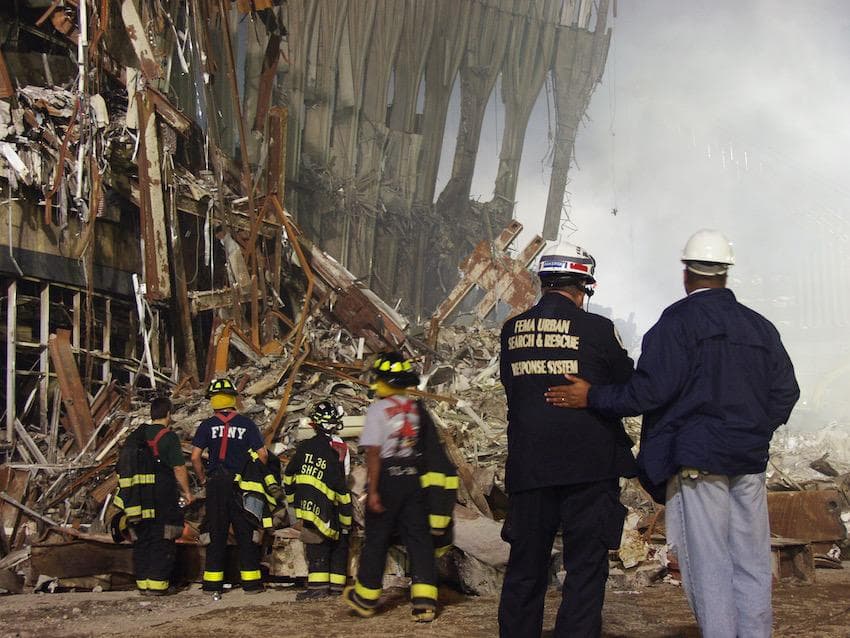
As the nation marks the 25th anniversary of the September 11 attacks, a former White House official recalls the extraordinary outpouring of civic virtue that followed the darkest day in modern American history and calls on citizens to reclaim that spirit.
In a personal reflection, John M. Bridgeland, who served as Director of the White House Domestic Policy Council, describes the shock of that morning—meeting with EPA Administrator Christie Todd Whitman when the first plane struck the World Trade Center, followed by the second hit on the South Tower, the attack on the Pentagon, and the crash in Shanksville. The domestic agenda, he writes, was instantly eclipsed by the need to protect the nation.
Yet what stood out, Bridgeland argues, was not just resolve but an unprecedented wave of generosity. President George W. Bush later reflected that after the attacks, “it was as if our entire country looked into a mirror and saw our better selves.” Bridgeland witnessed this firsthand: restaurant owners from Seattle drove 3,000 miles to feed Ground Zero workers, blood banks overflowed, and volunteers moved toward danger instead of away from it.
President Bush sought to institutionalize that awakening, expanding national service programs—Peace Corps, VISTA, Conservation Corps, Senior Corps, AmeriCorps, and disaster response corps—to their highest levels. He also demonstrated moral courage by visiting the Islamic Center of Washington six days after the attacks, declaring that “the face of terror is not the true faith of Islam. Islam is peace.”
But Bridgeland laments that such unity now seems unimaginable. Today, public life rewards contempt, and common ground is often seen as surrender. He warns that democracy depends on habits of character—humility, courage, reconciliation, and service—that are being eroded.
The anniversary, he insists, should be more than remembrance; it should be an examination of conscience. “The terrorists sought to make fear our future. Instead, for a season, courage became contagious. Compassion outran hatred. Service overwhelmed despair. Strangers became neighbors.”
For Bridgeland, the mirror President Bush described still waits. The most fitting memorial to those lost, he suggests, would be to become once again the country reflected in that mirror—a nation defined not by fear but by its better angels.
