

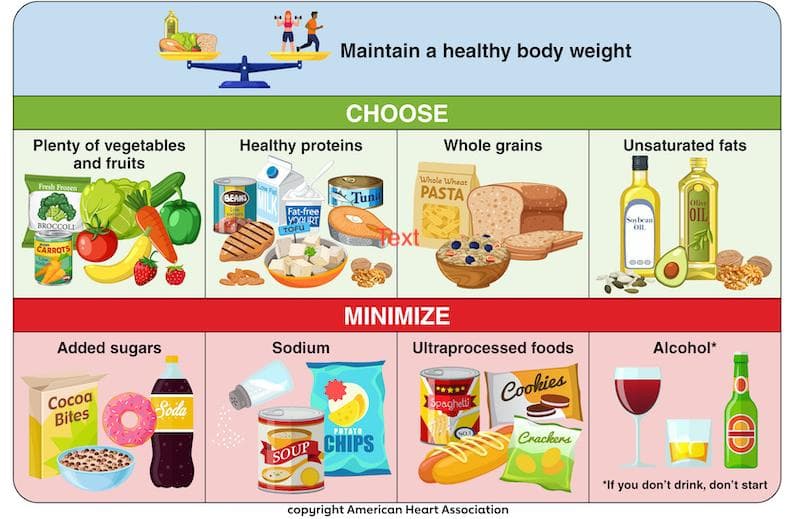
The American Heart Association has released updated dietary guidance aimed at improving heart health through a comprehensive approach to eating. The new guidelines, published on the AHA website, emphasize an overall healthy eating pattern rather than focusing on individual nutrients, making heart-healthy choices more practical and sustainable for people of all ages.
According to the association, poor diet quality remains one of the leading contributors to cardiovascular disease and related health risks. More than half of adults and about 60% of children in the United States have unhealthy diets, which can lead to high blood pressure, obesity, and other chronic conditions. The updated guidance outlines nine specific steps to help individuals make meaningful improvements.
The first step is maintaining a healthy balance between food and activity by paying attention to portion sizes and staying active. The guidance also encourages eating more vegetables and fruits, emphasizing a variety of colors and types. Fresh options are excellent, but canned and frozen fruits and vegetables can also be nutritious, affordable, and convenient choices.
Choosing whole grains more often is another key recommendation. Examples include whole-wheat bread, brown rice, oatmeal, and whole-grain pasta, which provide more nutritional value than refined grains. The AHA also advises prioritizing healthy protein sources such as beans, lentils, peas, nuts, seeds, and fish and seafood. For those who eat red meat, the guidance suggests selecting lean cuts, avoiding processed varieties, and keeping portions moderate.
Replacing saturated fats with unsaturated fats is highlighted as important for cardiovascular health. Healthy unsaturated fats can be found in nuts, seeds, avocados, and nontropical plant oils. The guidance also recommends choosing minimally processed foods whenever possible, as they typically contain fewer added ingredients and may help reduce reliance on ultraprocessed products.
Limiting added sugars is another critical step, as they are commonly found in beverages, snacks, desserts, and packaged foods. Reducing consumption of sugar-sweetened beverages and foods with added sugars can support heart health. The AHA also advises reducing sodium intake by reading nutrition labels, choosing lower-sodium options, cooking more meals at home, and using herbs, spices, and lemon for flavor instead of salt.
Finally, the guidance encourages mindfulness about alcohol consumption. For those who do not drink, the AHA advises not to start. For those who choose to drink, moderation is important, as excessive intake may increase the risk of high blood pressure and other health concerns.
The updated guidance emphasizes that healthy eating patterns benefit people at every stage of life. The AHA recommends establishing healthy dietary habits early, as they can influence long-term cardiovascular health. Children should begin following a heart-healthy eating pattern at age one. Families play a critical role, as children are more likely to develop healthy habits when adults consistently make healthy food choices.
One of the most important messages from the updated guidance is that healthy eating should be realistic and sustainable. Rather than focusing on strict rules or individual nutrients, the AHA encourages people to focus on their overall eating pattern and make gradual improvements over time. Every healthier choice adds up, and incorporating more fruits, vegetables, whole grains, plant-based proteins, and minimally processed foods into daily routines can lead to better heart health.
For additional heart-healthy eating resources and practical guidance, visit www.heart.org/healthydiet.
