

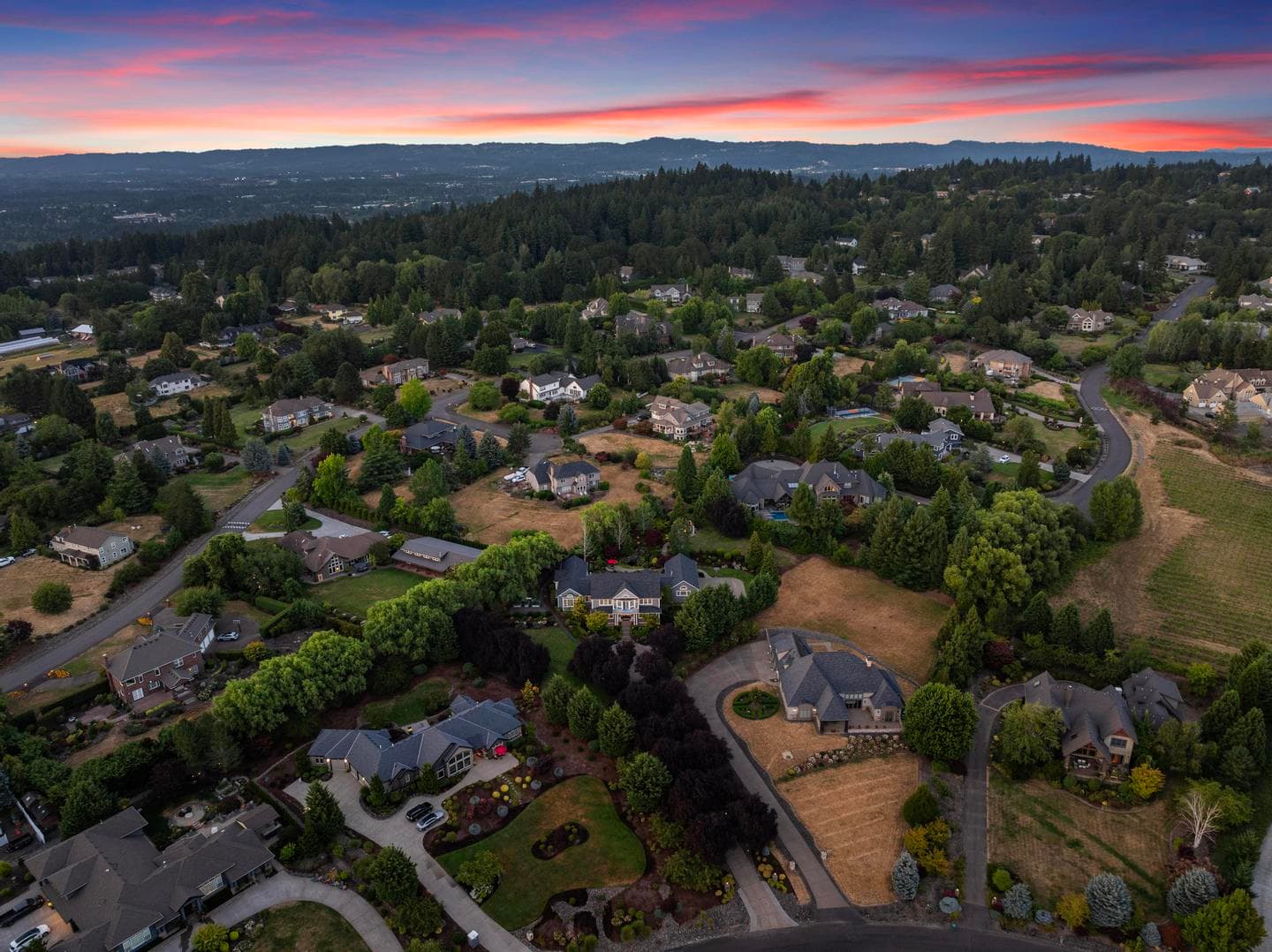
In a market where caution prevails, a Beaverton real estate expert is advising prospective buyers to reconsider their wait-and-see approach. Carey Hughes, Principal Broker at Carey Hughes Homes, argues that those holding off on purchasing a home in Beaverton until interest rates drop may be making a strategic error that could prove costly when conditions inevitably shift.
Hughes points to the contrasting dynamics between Beaverton and hotter markets like the Bay Area to illustrate her point. While scarcity and bidding wars define the Bay Area, Beaverton currently presents a more balanced, buyer-friendly environment—a shift that Hughes says creates a unique window of opportunity. The dominant hesitation among buyers, she notes, is the near-7% interest rates, a fear that is keeping them from exploring a market that has tilted in their favor for the first time in years.
“Cautious buyers are afraid of the interest rate, and so that is holding them back from even looking,” Hughes says. “And this is a time where they actually have more opportunities.” She describes the current Beaverton market as balanced on paper but functionally favorable to buyers in practice. Inventory has expanded, sellers are listing with genuine urgency, and the multiple-offer frenzy of two to three years ago has subsided. Seller concessions, including closing cost credits that can buy down interest rates, are now available—something that was rare during the recent seller’s market.
The very factor driving buyer hesitation—elevated rates—is also what is suppressing competition and providing negotiating leverage, Hughes explains. She emphasizes a crucial distinction between two variables buyers often conflate: the interest rate, which can be refinanced later, and the purchase price, which is permanent. “Rates are not forever, and your original purchase price is,” Hughes says. “The key point is to get in at a good price. That is the best way to set off your long-term investment.”
Buyers who enter during a period of low price appreciation establish a lower baseline from which they benefit when the market accelerates. Those who wait for rates to fall may find that the same rate improvement draws competing buyers back, pushing prices up and erasing the monthly payment savings they were waiting for. Hughes watches a specific rate threshold: “As soon as the interest rates adjust without the risk of war and inflation, buyers are going to come back when they’re closer to six or six and a quarter,” she says. “That’s a threshold we see. And then the prices start appreciating.” For buyers who act now, that appreciation would represent equity gained from a lower entry point; for those who wait, it represents the price increase they were trying to avoid.
Hughes does not predict a market collapse or a closing window measured in weeks. She stresses that the bottom is not falling out, and the market remains stable. However, the lack of aggressive price appreciation is precisely when buyers can build equity advantage. “The bottom is not falling out in real estate in any way,” Hughes says. “We have a very stable market, but there’s an opportunity where price appreciation is not aggressively happening. And this is when you get ahead as a buyer.” Monthly affordability remains a real constraint, but Hughes argues that treating rate levels as a binary go/no-go signal is a strategic error, ignoring the price and negotiation environment that elevated rates have created—a calculus very different from that in a hot market like the Bay, where waiting rarely rewards patience.
For buyers dealing with affordability pressure, Hughes says negotiation can yield tangible results. “Negotiation can bring adjustments in price. It can bring closing cost credits to help buyers buy down the interest rate so they can get better affordability,” she says. “If the home’s been on the market for a while, you can get some help from the seller.” She advises buyers to connect with an agent who knows the local neighborhoods, schools, and commuter routes, and get pre-approved before touring homes—especially for those moving from out of state. Pre-approval sets a realistic budget and positions buyers to act when the right property appears. In a market where buyers have time to make considered decisions, preparation matters more than speed.
Hughes also suggests touring six to eight homes across different neighborhoods and price levels in a single afternoon to build a frame of reference for how price relates to location, condition, and style. If rates do fall toward the six percent range, buyer competition will return and today’s negotiating leverage will disappear. Those who moved during this window will have locked in lower purchase prices—the one number in the transaction that cannot be changed later.
