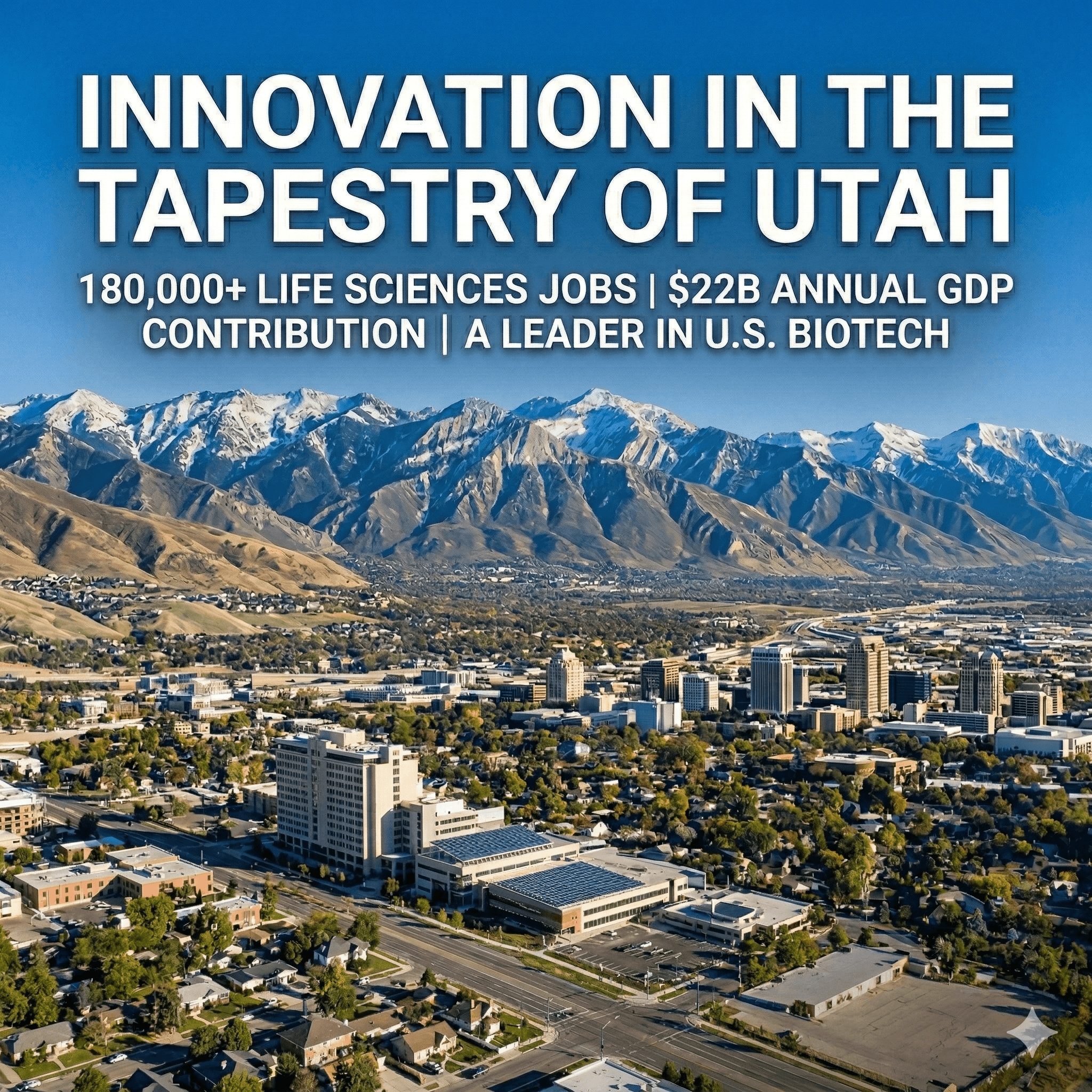
BioUtah participated in the Biotech Across America State Symposium in Washington, D.C. on March 25, focusing on how robust state and local biotechnology ecosystems strengthen national security and economic resilience. The event represents part of the National Security Commission on Emerging Biotechnology's ongoing Biotech Across America Roadshow initiative.
The symposium addressed the strategic importance of regional biotechnology development as a component of national preparedness. Utah's biotechnology sector demonstrates this significance through substantial economic contributions, including 180,000 life sciences jobs and $22 billion in GDP generation. The state has received recognition as a startup hub within the industry.
The National Security Commission on Emerging Biotechnology, which organized the roadshow, published a comprehensive report in April 2025 containing recommendations for Congressional and federal government action. The Commission's mandate involves advancing biotechnology and biomanufacturing for U.S. national security objectives while preparing the country for what it terms the bioindustrial revolution. More information about the Commission and its report is available at biotech.senate.gov.
This discussion matters because biotechnology represents a critical frontier for both economic competitiveness and national security. As biological sciences increasingly intersect with manufacturing, computing, and defense capabilities, regional innovation clusters like Utah's become essential to maintaining U.S. technological leadership. The symposium emphasized that national biotechnology strength depends on coordinated efforts across multiple state ecosystems rather than centralized development alone.
The implications extend beyond economic metrics to include supply chain resilience, medical preparedness, and technological sovereignty. The Federation of American Scientists, established in 1945 to address scientific challenges in national security, continues similar work today, with more information available at fas.org. Meanwhile, organizations like the Engineering Biology Research Consortium work to advance engineering biology applications for national and global needs.
For Utah specifically, participation in these national conversations reinforces the state's position within the broader biotechnology landscape. BioUtah, as the trade association representing Utah's life sciences industry, provides information about the state's biotechnology sector at bioutah.org. The industry's diverse strengths span medical devices, biotechnology, biopharmaceuticals, diagnostics, research, and testing services.
The symposium's focus on state-level ecosystems reflects growing recognition that biotechnology innovation occurs through distributed networks of companies, academic institutions, and workforce development programs. As biological technologies become increasingly central to economic and security considerations, such convenings help align regional strengths with national strategic objectives.