

North Carolina has just emerged from a hot, dry September that climate researchers say was among the state's warmest on record. According to NC State University, the preliminary statewide average rainfall for the month was 2.63 inches, roughly half of normal, ranking it the fifth-warmest September since 1895. Raleigh, the nearest major reporting city to Sanford, recorded only 2.17 inches, or 42% of its typical total.
For homeowners in Sanford and the rest of Lee County, the dry spell has implications below ground as well as in the yard. The NC State Extension Gardener Handbook notes that clayey soils may have shrink-and-swell characteristics that affect construction uses. When clay soil dries out, it pulls away from buried water service lines, sewer laterals and pipes under a slab, and the ground supporting those pipes can shift.
The consequences are rarely dramatic at first. A joint on an older sewer line may separate slightly, a supply line under a slab may begin to weep, or tree roots searching for moisture may find a small crack in a drain line. The first signs inside a house include a water bill that creeps up without a change in use, a drain that gurgles or backs up, a damp or warm patch on a floor, or the sound of running water when every fixture is turned off.
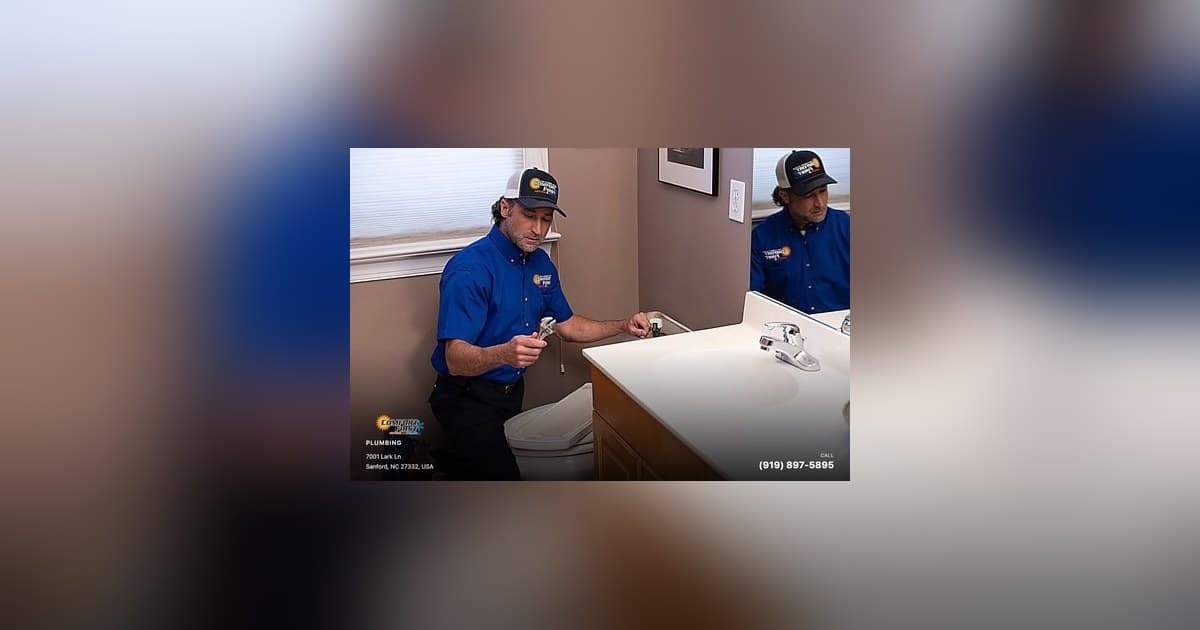
Comfort First Heating and Cooling, a Sanford-based plumbing, heating and cooling contractor, says the weeks following a long dry stretch are when hidden leaks are cheapest to find. The company's plumbing work covers pipe repair and replacement, drain cleaning, slab leak repair, water heater repair and installation, tankless systems, sump pumps, gas lines and fixture repair.
"Most people think about pipes when it freezes, but a long dry month moves the ground too," said Adam Hagen, General Manager of Comfort First Heating and Cooling. "Clay soil shrinks, the pipes settle with it, and a joint that held for years starts to leak where nobody can see it. Checking the meter with the water off takes five minutes and tells you whether there is a problem worth looking at before the cold weather arrives."
Hagen recommends several steps for homeowners. Turn off every faucet and appliance, then check the water meter: if it still moves, water is going somewhere. Compare this month's water bill with the same month last year. Listen for gurgling drains or a toilet that refills on its own. Walk the floors barefoot and note any warm or damp spots on a slab. Watch the yard for a patch of green grass or soft ground above the sewer line during a dry week. Finally, find the main shutoff valve and make sure it turns freely before winter.
The company serves Sanford and the surrounding Triangle area. Local plumbing service details are available on the Sanford service page, and the team can be reached at (919) 295-3421. More information is available at www.yourcomfortfirst.com.
The warning comes as North Carolina's drought conditions persist, with the dry September giving what state climate officials describe as a second wind to drought across the region. For homeowners, the message is clear: the time to check for hidden leaks is now, before the ground shifts further and before cold weather adds new stress to already vulnerable pipes.
