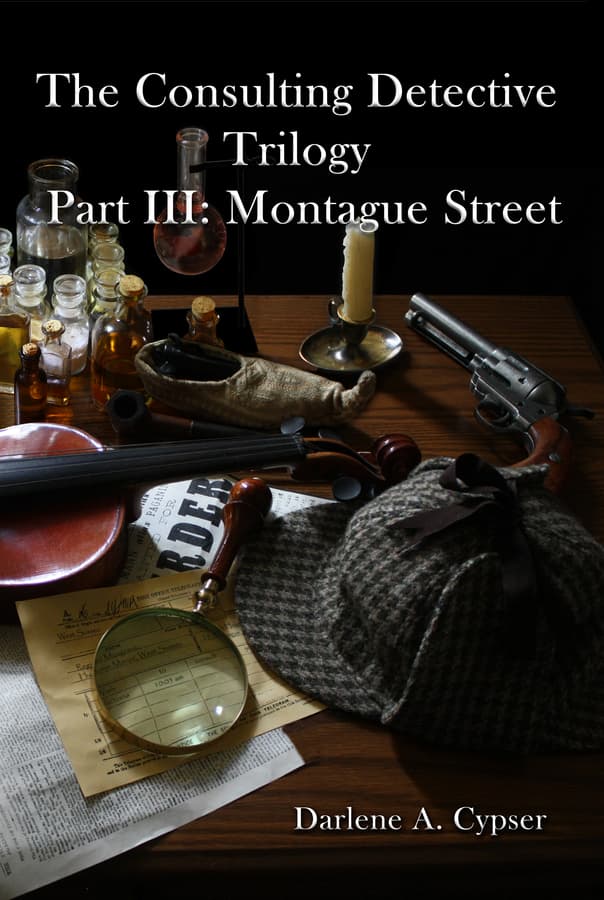
The Consulting Detective Trilogy Part III: Montague Street, the final installment in Darlene Cypser's biographical series chronicling the young Sherlock Holmes, has been released by Foolscap & Quill. Available in paperback and ebook formats, this book completes a four-volume series that traces Holmes' development from his teenage years to the detective readers meet in Sir Arthur Conan Doyle's original stories.
The series, which began with The Crack in the Lens in 2010, has garnered critical acclaim for its portrayal of Holmes' early life and experiences. The trilogy follows Holmes through his university years, a stint as an actor, and finally to the establishment of his detective practice on Montague Street. This latest release covers Holmes' return to London and his struggles to establish himself as a detective, including investigations that take him across Europe and into North Africa.
Cypser's work has been praised for its historical accuracy and compelling storytelling. The Mystery Tribune ranked The Consulting Detective Trilogy Part I: University as number 7 in their "106 Best Sherlock Holmes Books For Avid Fans: 2022 Edition." The series has been noted for its psychological insight and effective dialogue, offering fans a deeper understanding of the iconic detective's origins.
The release of this final volume represents a significant contribution to the Sherlock Holmes canon, providing readers with a comprehensive backstory that bridges the gap between Holmes' youth and his established career as portrayed in Conan Doyle's works. For Holmes enthusiasts and historical fiction readers alike, Cypser's series offers a fresh perspective on one of literature's most enduring characters, exploring the formative experiences that shaped the great detective.
As the Sherlock Holmes mythos continues to captivate audiences across various media, this literary series stands out for its focus on the detective's lesser-known early years. The completion of the trilogy may spark renewed interest in Holmes' origins and inspire further explorations of the character's development in both academic and creative contexts.