Recent consumer analysis reveals a significant shift in residential water treatment preferences, with homeowners moving away from standalone water softeners toward comprehensive systems that address both hardness and chemical contaminants. According to monitoring data from the Centers for Disease Control released in January 2025, 72% of community water systems across the U.S. now fluoridate their water supply, providing this additive to nearly 198 million Americans daily. This prevalent municipal practice, combined with PFAS detection across 47 states and continued chloramine use in urban treatment facilities, has fundamentally changed homeowner approaches to water quality.
Independent retailers report that combination softener-filter systems now account for 41% of whole-house treatment sales in 2024, a substantial increase from just 19% in 2021. Industry experts attribute this surge to "partial solution regret"—the costly realization that addressing hard water scaling while neglecting chemical additives leads to inadequate protection. Geographic trends reflect chemical detection areas, with mapping by the Environmental Working Group identifying PFAS contamination affecting over 200 million individuals, particularly in the Southwest, Great Lakes, and Mid-Atlantic regions where EPA advisories have been issued.
In states like Arizona, Nevada, and Texas—where both hardness levels are high and municipal fluoridation efforts are robust—there has been a reported 67% year-over-year increase in combination water treatment installations during 2024. "We're observing buyers who recognize that municipal compliance does not equate to optimal water quality," stated Jeremy Phillips, Sales Manager at SoftPro Water Systems. "A homeowner may find city water testing indicating 8 grains of hardness with 0.9 ppm fluoride and detectable chloramines—all within EPA acceptable limits, yet all posing long-term risks."
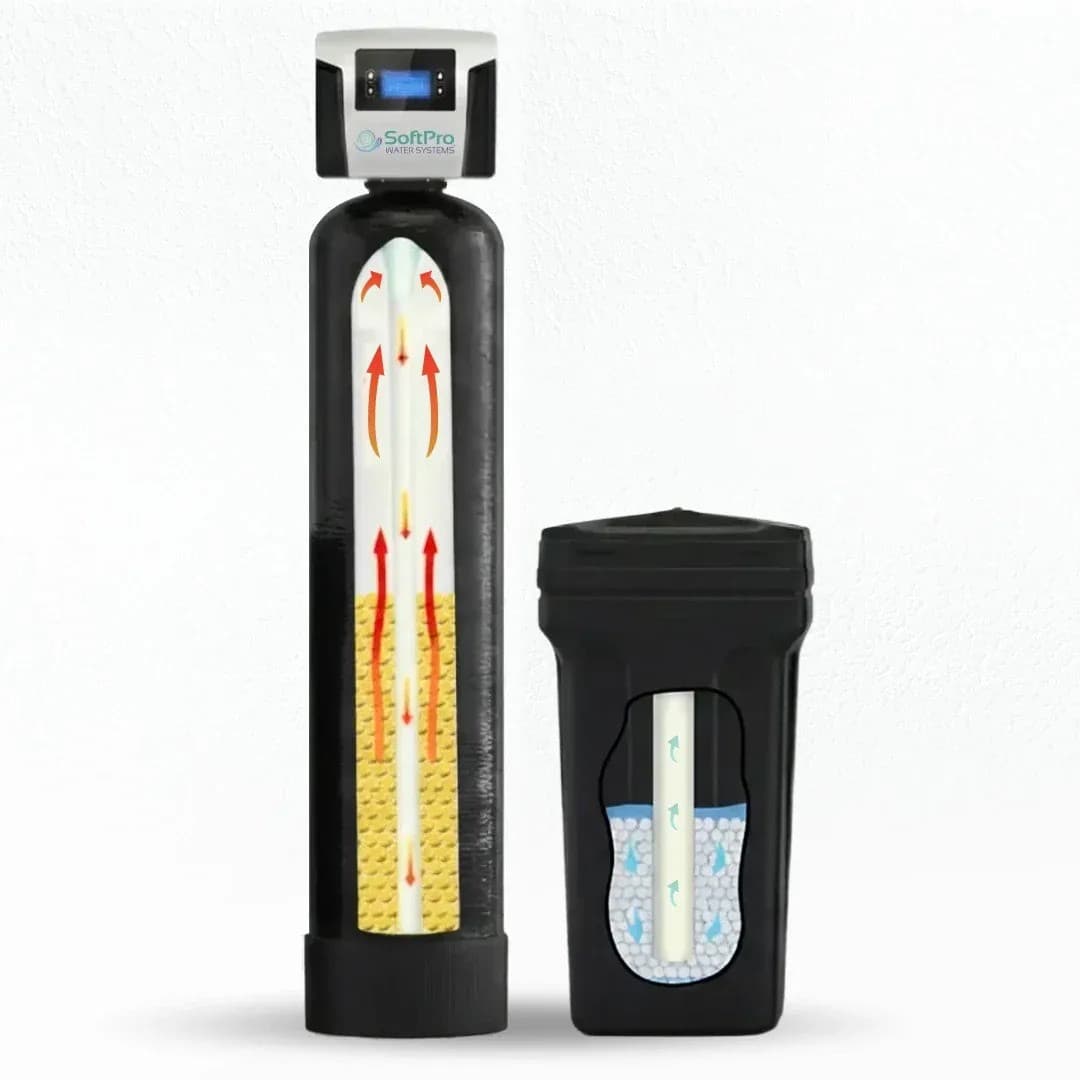
Engineering responses to this demand include sequential treatment architectures like SoftPro's combination of its Elite HE Water Softener with the Fluoride & Chlorine+ SUPER Filter. The softener removes calcium and magnesium through high-efficiency ion exchange, while the filtration stage utilizes dual-media technology that merges catalytic carbon with bone char. Laboratory tests demonstrate 99% fluoride reduction, 98% chlorine removal, and 95% PFAS capture throughout the filter's lifespan of 600,000 to one million gallons.
Economic analysis from market research firm BlueTech Intelligence reveals that homeowners who opt for sequential water treatment systems—first addressing hardness and later incorporating chemical filtration—spend an average of $1,840 more than those who install combination systems from the start. This additional cost arises from duplicate installation labor, separate warranty management, and managing multiple vendor relationships. The monthly operating expenses for combination systems average between $8 and $12 for salt and routine maintenance in a four-person household.
The regulatory landscape reinforces dual-treatment logic, with the EPA's shifting position on PFAS regulation—including proposed maximum contaminant levels for PFOA and PFOS at four parts per trillion—along with ongoing scientific discussions regarding optimal fluoride exposure levels. Surveys conducted by the Water Quality Association in late 2024 revealed that 58% of participants now consider "removal of government-added chemicals" just as crucial as hardness treatment when assessing whole-house systems.
This change in perception is particularly evident among households with children under twelve, where long-term exposure concerns take precedence over short-term convenience. Industry analysts describe this demographic as "future-proof purchasers" due to their inclination to invest in comprehensive solutions rather than piecemeal fixes. NSF International's certification standards for combined treatment systems now include testing protocols that validate performance across multiple contaminant classes simultaneously, providing third-party assurance that integrated designs maintain efficiency without interference between treatment stages.
Water treatment consultants anticipate that point-of-entry combination systems will become the predominant category for residential installations by 2027, driven by ongoing PFAS discoveries, persistent fluoridation practices, and homeowners' recognition that municipal compliance standards prioritize minimum safety levels rather than optimal quality. "Our customers are not looking for a complex project in their basements," highlighted Heather Phillips, Operations Manager at SoftPro Water Systems. "They desire professional-grade treatment that functions reliably without requiring constant oversight."
As municipal water treatment facilities grapple with regulatory compliance, aging infrastructure, and emerging contaminant challenges, residential point-of-entry systems increasingly serve as the optimization layer that transforms "safe enough" water into "exactly right" water—a distinction that is crucial for homeowners unwilling to accept uncertainty regarding their family's daily exposure.