

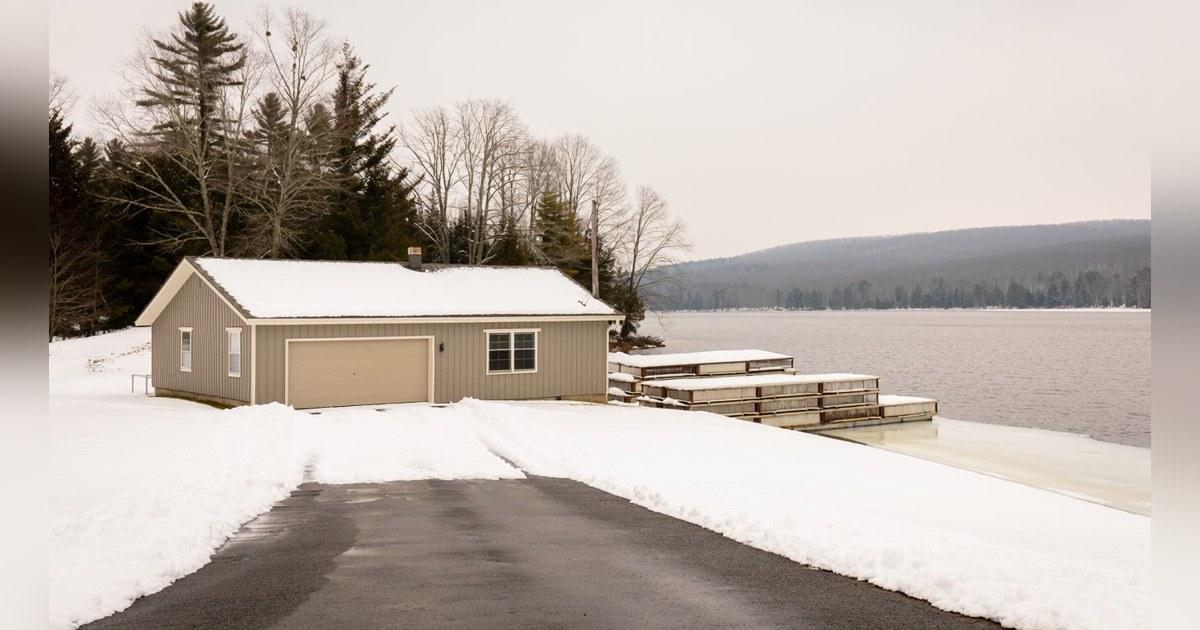
Buyers priced out of one Finger Lake often look at the next lake over and assume the lower price represents a discount on a comparable property. On the western lakes, that assumption is usually wrong, and Honeoye Lake demonstrates why the distinction matters for anyone shopping the region.
Honeoye waterfront closed 16 sales over the past year at a median of $542,500, roughly 23 percent below Conesus. The houses are also smaller, and they cost more per square foot: $443 against $389 on Conesus. The lower ticket price is buying a different property, not the same property for less. That gap has real implications for buyers who assume they can apply Conesus expectations to a Honeoye budget, and for sellers who may misprice based on a simple cross-lake comparison.
Matthew Sharman, team leader of The Sharman Team at Real Broker NY LLC, works both lakes and describes Honeoye as a distinct proposition rather than a cheaper version of its neighbor. The lake is smaller overall, and along some stretches there is consistently more space between houses than a buyer would find on Conesus. The buyer it suits follows from that: someone whose priority is being outside, on the water, in the setting, rather than inside a larger house.
"Honeoye has a more intimate, cottage-oriented feel," he says. "Some buyers want more house. Honeoye deserves a look from buyers that just want more lake." He is equally direct about the tradeoff, since Honeoye is shallow and shallowness brings vegetation challenges that recur every season.
Honeoye is not a slow market either. Ten of those 16 sales closed above asking, with a median of 10 days on market, three homes actively listed and around 2.3 months of supply. The lake next door is tighter still: 45 Conesus closings over the same period, a median around $701,000, roughly eight days to sell, and three active listings. All figures are from NYSAMLS for waterfront single-family homes, November 2025 to November 2026.
A buyer squeezed by the Conesus market has a genuine reason to widen the search, though Sharman is careful about how far to take it. "Honeoye offers a lower ticket price to waterfront ownership, but it doesn't mean that the waterfront's being given away."
The most important question on a Honeoye purchase is what the lake access actually includes. Direct waterfront is common, but so is shared access, and the lake has a number of neighborhoods governed by bylaws and arrangements similar to homeowners associations. What those arrangements deliver varies enormously. Sharman has seen shared access sited a quarter mile from the house it serves, reached by walking between two other properties because that is what the deed specifies. Shared access does not always mean boat access either, since in some arrangements it means the right to cast a line, or to swim where depth and vegetation allow, or to put out a kayak.
"Convenience and cost are directly correlated," he says. The instruction that follows is to verify the rights, responsibilities and permitted uses attached to the property before an offer rather than during a transaction.
Honeoye also raises the frontage problem that recurs across these lakes, with one additional variable. "Thirty feet of usable frontage could be better than eighty feet of treacherous frontage or curved frontage," Sharman says. The questions he puts to buyers are physical. Can you comfortably reach the water, does the depth work for the boat you intend to keep, and on a shallow lake in particular, what does the vegetation look like during the months you actually plan to use the property? That last one is the question most likely to be answered at the wrong time of year. "A beautiful view in November is not going to answer every question about swimming in August," he says.
Shoreline condition belongs in the same category and is where costs appear unexpectedly, since a breakwall problem or significant erosion is expensive and neither is visible in a listing photograph. The error Sharman sees most often from out-of-area buyers is treating the lakes as interchangeable, applying the waterfront label and assuming the category describes the experience. The lakes have different personalities, strengths and weaknesses, so the conversation he has with buyers starts further back, with what they actually want the lake for.
